 Preview
 Send
Send Share
Share
 Details

 Download
 Similars
 X-Ray
X-Ray Diaporama
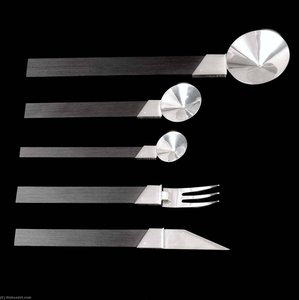
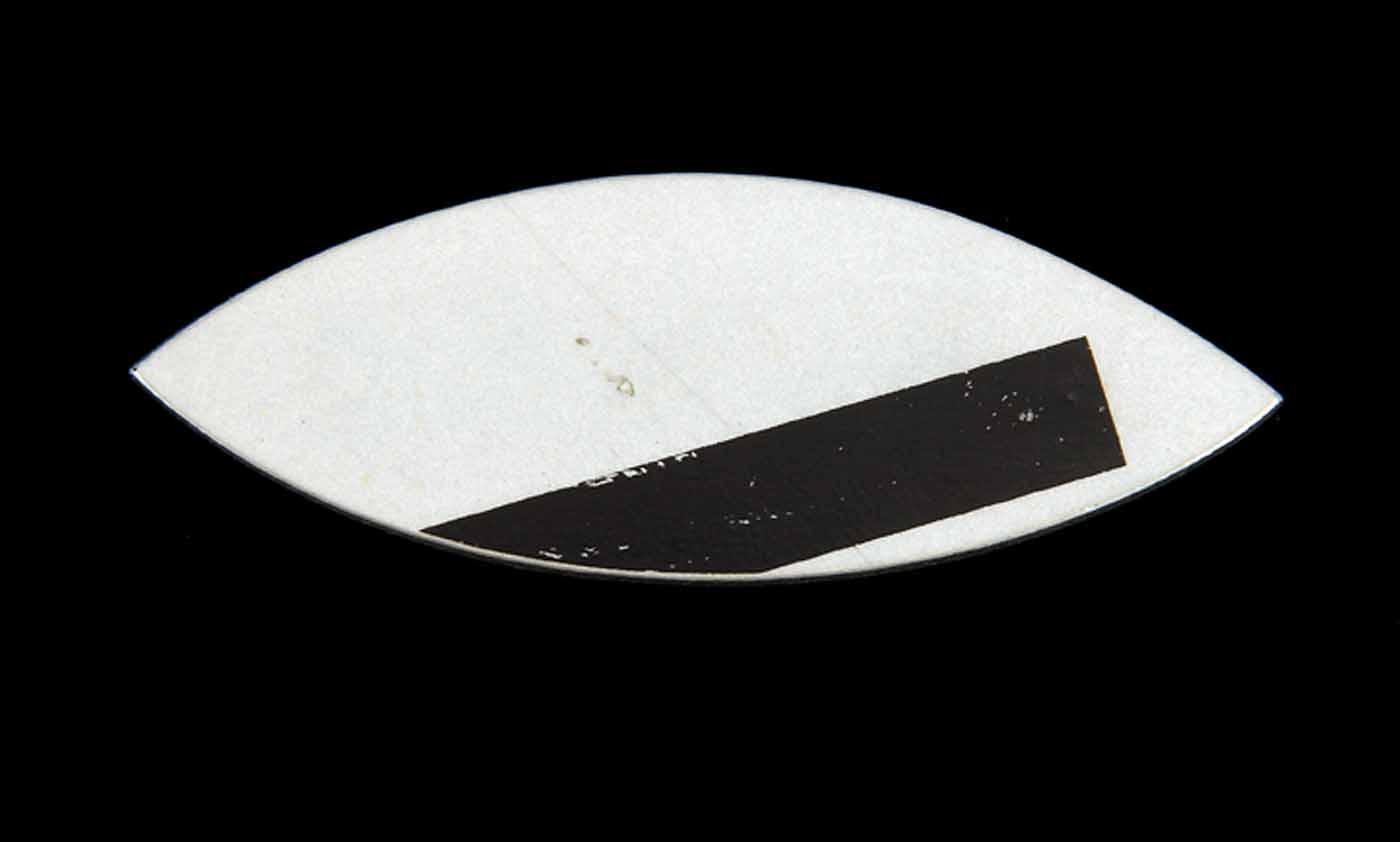
Department of Public Works Brooch
 Geometric Abstraction
 1994
1994 7.0 x 1.0 cm
 Read More
Hand Made Oil Reproduction
Hand-painted oil on canvas in your size and frame, made to order by our artists. ( Buy Print Buy Image)




































Pick from our preset sizes that match the artwork's original proportions.

You may enter your own dimensions to fit a specific frame or space. If your selected size does not match the original image's proportions, we will either crop the artwork or extend the painting with additional hand-painted elements. A digital mockup will be sent for your approval before production begins.
Please note that the on-screen preview does not reflect the actual cropping or extension. Only the mockup will accurately show the final composition.
While custom sizes are available, we recommend selecting a dimension from the predefined list to preserve the original proportions.
After order, ArtsDot.com team will email client for instructions and provide a mockup preview
Worldwide Delivery () in 3/4 weeks instead of standard 5 weeks. (30 August). No compromise on quality.

Free Worldwide Express Shipping

High-Quality Linen Canvas

Full Shipping Insurance

Customs Tax Refund Guarantee

True Color Matching Guarantee

60-Day Return Policy (Defects Only)

100% Money-Back Guarantee

Bulk Discount Offer
 Glass option is only available in size under 110 CM

Department of Public Works Brooch
Reproduction Medium
Reproduction Size
-


Total Price
$ 263
Related Artworks

![Abstract Composition [triptych] — Vaclav Vytlacil, Abstract Expressionism](/media/artworks/images-thumb/08/3c/083c0675045645fd42d4e6c6d63f1ced.jpg)
Artist Biography
The Alchemy of the Ordinary: The Art of Boris Bally
In the hands of Boris Bally, the discarded remnants of industrial life undergo a profound metamorphosis, emerging not as mere scrap, but as evocative vessels of memory and form. Born on January 22, 1961, in Chicago, Illinois, to Swiss parents, Bally’s artistic identity is a rich tapestry woven from diverse cultural threads and a deep-seated fascination with the raw materiality of the world around him. His journey is one of transformation, where the boundaries between jeweler’s precision and the rugged aesthetic of street salvage are perpetually blurred. By applying the delicate, disciplined skills of a metalworker to non-precious, often weathered materials, he invites viewers into a dialogue with the overlooked, finding a striking beauty in the grit and patina of recycled objects.
The foundations of Bally’s technical mastery were laid during his formative years, rooted in an early passion for the metal arts. His apprenticeship in the goldsmithing ateliers of Basel, Switzerland, provided him with a rigorous understanding of structure and detail—a precision that would later become the backbone of his more expansive sculptural endeavors. This classical training, combined with his studies at the Tyler School of Art and Carnegie Mellon University, allowed him to bridge the gap between fine craft and contemporary sculpture. His work often reflects a tension between the delicate and the industrial, utilizing techniques such as meticulous bending, twisting, and welding to create geometric forms that feel simultaneously architectural and organic.
Symbolism and the Aesthetic of Resilience
Bally’s oeuvre is characterized by an unsettling yet captivating ability to imbue inanimate objects with psychological depth. He frequently utilizes materials such as recycled street signs, weapon parts, and industrial wire to explore themes of confinement, resilience, and the cyclical nature of consumption. There is a palpable sense of history embedded in his chosen media; a rusted piece of metal or a fragment of a sign carries the weight of its previous utility, which Bally repurposes to provoke reflection on the passage of time and the endurance of form. His sculptures often possess a certain gravitas, where the rigidity of metal meets the fluidity of thought, challenging the observer to reconsider the value of what society has deemed obsolete.
The artist’s approach is deeply rooted in a rejection of polished, high-gloss perfection. Instead, he embraces the "raw American street-aesthetic," celebrating the textures of decay and the unexpected elegance of found objects. This commitment to the authentic and the unrefined allows his work to function as both sculpture and functional art, where pieces may serve as candle holders or wearable adornments, yet always retain their capacity for profound social commentary. Through these juxtapos_positions, Bally creates a visual language that speaks to the strength found in repurposing—a metaphor for human resilience in an increasingly disposable age.
Legacy and Contemporary Significance
As a prominent figure in contemporary metalwork and sculpture, Boris Bally has carved out a niche that defies easy categorization. His ability to merge the meticulousness of jewelry making with the bold scale of industrial art has earned him recognition within the international art community. His work stands as a testament to the power of creative reclamation, proving that innovation does not always require new materials, but rather a new way of seeing what is already present. Through his continued exploration of the intersection between utility and abstraction, Bally remains a vital voice in the movement toward sustainable, transformative art, reminding us that even in the most discarded fragments, there lies the potential for enduring beauty.
Quick Facts
- Artistic Movement Or Style: Functional Art / Sculpture
- Full Name: Boris Bally
- Nationality: Ukrainian
- Notable Artworks:
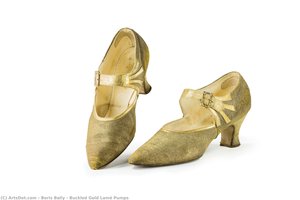
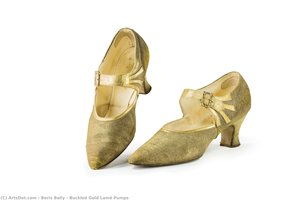
- Buckled Gold Lamé Pumps
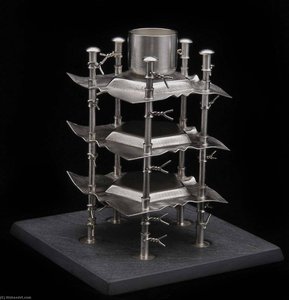
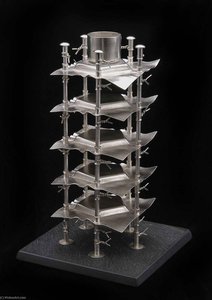
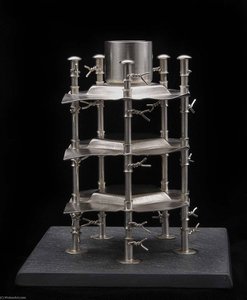
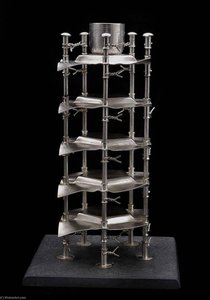
- Stacked Pentagon Candle Sculpture
Related Articles

Geometric Abstraction's 10 Defining Masterpieces | Art for Your Home - ArtsDot
Explore 10 defining masterpieces of Geometric Abstraction! Discover Kandinsky, Mondrian & Malevich’s iconic works. Find museum-quality art reproductions and curated decor ideas to elevate your home at ArtsDot.com.

Kandinsky's Masterpieces: 25 Paintings That Define Abstract Art | ArtsDot
Journey through Wassily Kandinsky's 25 most iconic abstract paintings. Explore his revolutionary use of color, form & spiritual expressionism. Find museum-quality Kandinsky reproductions and elevate your home decor with ArtsDot.com. Discover all masterpieces on ArtsDot.com!
Beyond Form & Color: Geometric Abstraction's Enduring Legacy in Art History
Explore the captivating world of geometric abstraction! Discover its origins, key artists like Malevich & Mondrian, and why this movement remains highly valued by art collectors today. Expert insights at ArtsDot.
Beyond Form & Color: Geometric Abstraction's Evolution in 20th/21st Century Art
Explore the evolution of geometric abstraction from Cubism to contemporary art. Discover key artists like Malevich & Mondrian, investment insights, and expert collecting advice at ArtsDot.
Kazimir Malevich: 25 Masterpieces of Suprematism & Abstract Art | ArtsDot
Explore 25 iconic artworks by Kazimir Malevich, pioneer of Suprematism & abstract art. Discover the stories behind 'Black Square' and more! Find museum-quality prints & elevate your home decor with ArtsDot.com.