 Preview
 Send
Send Share
Share
 Details

 Download
 Similars
 X-Ray
X-Ray Diaporama
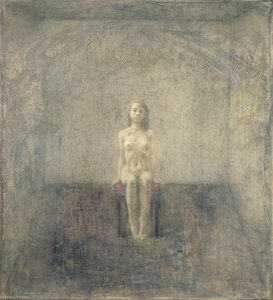
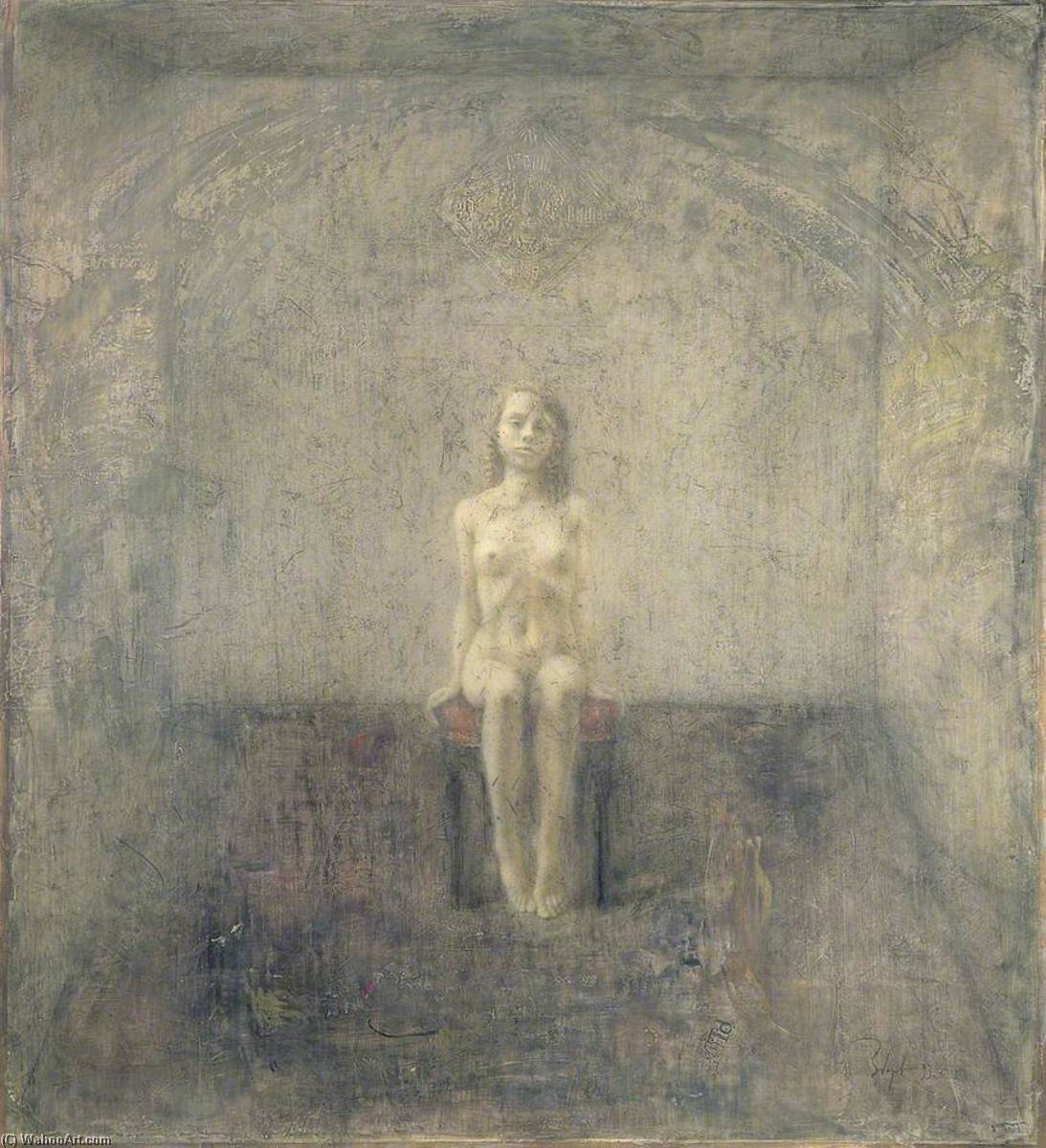
Une fille dans l'espace (detail)
 1994
1994 220.0 x 200.0 cm
 Read More
Giclée / Art Print
Museum-quality giclée or canvas print with fast production and flexible finish options. ( Buy Hand Made Painting Buy Image)




































Pick from our preset sizes that match the artwork's original proportions.

You may enter your own dimensions to fit a specific frame or space. If your selected size does not match the original image's proportions, we will either crop the artwork or extend the image with a mirrored or solid-fill edge. A digital mockup will be sent for your approval before production begins.
Please note that the on-screen preview does not reflect the actual cropping or extension. Only the mockup will accurately show the final composition.
While custom sizes are available, we recommend selecting a dimension from the predefined list to preserve the original proportions.
Worldwide Delivery () in 2 weeks instead of standard 4/5 weeks. (27 August)

Free Worldwide Express Shipping

High-Quality Linen Canvas

Full Shipping Insurance

Customs Tax Refund Guarantee

True Color Matching Guarantee

60-Day Return Policy (Defects Only)

100% Money-Back Guarantee

Bulk Discount Offer
 Glass option is only available in size under 110 CM

Une fille dans l'espace (detail)
Giclée / Art Print
Reproduction Size
-


Total Price
$ 63
Related Artworks








Artist Biography
A Tapestry of Memory and Exile: The Life of Boris Zaborov
The life of Boris Abramovich Zaborov was a profound odyssey, shaped by the seismic shifts of twentieth-century history and a relentless pursuit of personal truth. Born in 1935 amidst the harrowing devastation of Minsk during World War II, Zaborov’s earliest perceptions were forged in a landscape of ruins and displacement. This childhood encounter with loss and the fragility of existence became the silent architect of his artistic soul, instilling a lifelong sensitivity to themes of resilience, transformation, and the enduring weight of memory. As he navigated the complexities of Soviet life, his path led him from the disciplined halls of the Minsk Fine Arts School to the prestigious Academy of Fine Arts in Leningrad, where he cultivated a unique aesthetic shielded from the rigid dictates of Socialist Realism.
Zaborov’s artistic development was marked by a series of pivotal transitions that expanded his vision far beyond the borders of his homeland. His time at the Surikov Art Institute in Moscow introduced him to a more globally engaged atmosphere, yet it was his eventual relocation to Paris in 1981 that would fundamentally redefine his creative purpose. In the solitude of Western Europe, Zaborov found a sanctuary where he could merge his Soviet training with a newfound expressive freedom. He famously utilized a collection of family photographs brought from the Soviet Union as a bridge between his past and present, weaving the threads of his heritage into a unified, deeply personal artistic vision that resonated with the melancholy of exile.
Technique and the Language of Texture
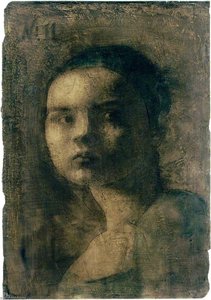
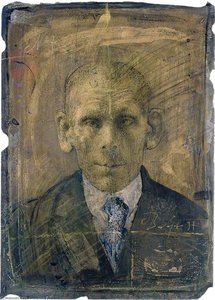
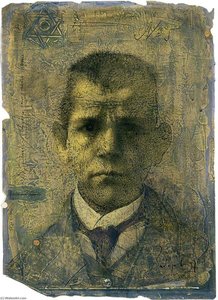
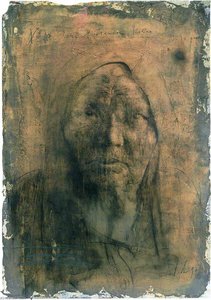
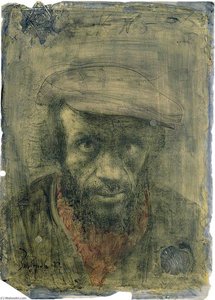
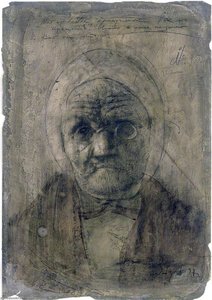
To encounter a Zaborov painting is to engage with a tactile, visceral experience. His mastery of textured impasto and the deliberate use of scraping techniques allowed him to build surfaces that possess a sculptural depth, mirroring the layered complexities of human experience. He often favored monochromatic or muted palettes, using shades of black, white, and grey to strip away distractions and focus the viewer's attention on the raw emotion of his subjects. This stylistic choice served to elevate his portraits and landscapes into the realm of the psychological, where every stroke of the palette knife evokes a sense of wisdom, age, or profound stillness.
His work often oscillates between the boundaries of realism and surrealism, creating an atmosphere that feels both grounded in reality and dreamlike in its execution. In pieces such as his haunting portraits from the late 1990s, one can observe how he uses light and shadow to sculpt faces, capturing the enigmatic gaze of his subjects with a precision that feels almost spiritual. The following elements define his signature approach:
- Expressive Impasto: A heavy application of paint that creates a physical topography on the canvas, suggesting the ruggedness of memory.
- Monochromatic Depth: The use of limited color ranges to emphasize form, texture, and the emotional gravity of the subject matter.
- Narrative Symbolism: Integrating personal artifacts and historical echoes to transform simple portraits into profound meditations on identity.
Legacy and Historical Significance
Boris Zaborov remains a significant figure in the lineage of contemporary Belarusian and French art, representing a bridge between the rigorous academic traditions of the East and the experimental freedoms of the West. His ability to transmute the trauma of war and the loneliness of migration into universal symbols of human endurance has earned him lasting recognition across European, American, and Russian art circles. He did not merely paint scenes; he documented the internal landscape of a man navigating the wreckage of history.
Through his prolific exhibitions and his ability to find beauty in the monochromatic and the weathered, Zaborov left behind a body of work that serves as a testament to the power of the human spirit. His legacy is found in every textured furrow of an aged face he rendered and in every shadow cast across his emotive landscapes—a permanent record of a life lived between worlds, forever captured in the enduring medium of paint.
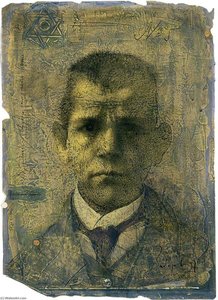
boris zaborov
1935 - 2021
Quick Facts
- Artistic Movement Or Style: Surrealism & Realism
- Artists Or Movements Influenced By This Artist: ['Abstract Expressionism']
- Artists Who Influenced This Artist:
- Ilya Repin
- Vasily Surikov
- Date Of Birth: October 16, 1935
- Date Of Death: January 20, 2021
- Full Name: Boris Abramovich Zaborov
- Nationality: Belarusian & French
- Notable Artworks:
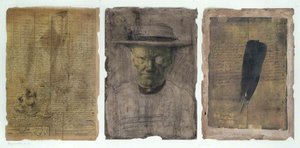
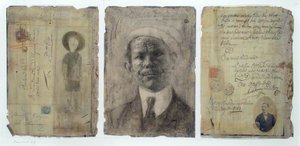
- Documents No.10
- Documents No.7
- Une fille dans l'espace
- Place Of Birth: Minsk, Belarus