

 Preview
 Send
Send Share
Share
 Details

 Download
 Similars
 X-Ray
X-Ray Diaporama
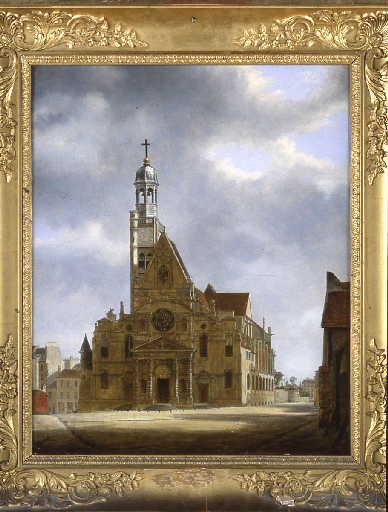
L'église St Etienne du Mont à Paris
 Read More
Purchase a high-resolution, enhanced digital image, far superior to the online preview.
Each file is meticulously prepared by our in-house specialists using advanced tools and expert manual retouching. We ensure every image has exceptional clarity, precise color accuracy, and fine detail.
The final file is delivered via email within 72 hours, optimized for immediate use in professional, editorial, and print environments. This is the same quality trusted by top-tier design studios, publishers, and galleries.
Digital Image
Download a high-resolution file for personal display, printing, and creative projects. ( Buy Print Buy Hand Made Painting)
Included in Every Digital Image Order
Expert Digital Delivery, Guaranteed
When you choose ArtsDot.com, you're not just getting an image - you're receiving a professionally enhanced digital artwork, crafted with precision and backed by a satisfaction guarantee. Here's everything that comes with your order, automatically:

Fast Email Delivery
Your high-resolution digital image file will be emailed to you within 72 hours of ordering - ready for immediate use.

AI-Enhanced Digital File
Your artwork is professionally optimized using advanced AI tools and manual editing, ensuring maximum detail, clarity, and color accuracy.

Free Lifetime Re-Delivery
Accidentally deleted or lost your file? No worries - we'll resend it to you anytime, free of charge.

No Import Fees - Ever
Enjoy your artwork instantly with zero customs, duties, or delivery fees - digital downloads are always tax-free.

Color Accuracy Guarantee
We ensure your digital image reflects the original colors as closely as possible using professional tools and color management.

60-Day Satisfaction Guarantee
If you're not satisfied with your digital image, we'll revise it or refund 100% within 60 days - no questions asked.

100% Money-Back Guarantee
Not satisfied? Get a full refund within 60 days of receiving your digital file - no questions asked.

Bulk Order Discounts
Buy 3 images, save 10% - Buy 5, save 15% - Buy 10+, save 20%. Great for creative projects, galleries, and agencies.
Related Artworks
Artist Biography
Étienne Bouhot: A Parisian Observer
Étienne Bouhot (1780-1862) was a French Romantic painter whose meticulous depictions of 19th-century Paris offer a remarkably intimate glimpse into the city’s evolving architecture and daily life. Born in Bard-lès-Époisses, he initially pursued a career as an art teacher before establishing himself as a respected artist known for his detailed urban landscapes and captivating scenes of Parisian courtyards and iconic landmarks. Bouhot's work stands apart not merely for its technical skill but also for the subtle sense of observation and quiet dignity it conveys – a reflection of the changing social fabric of a rapidly modernizing capital.Early Life and Artistic Training
Information about Bouhot’s early life is somewhat sparse, though he was born into a family with artistic connections. He received his initial training in perspective painting, a skill honed during his time as a student at the École de Dessin in Semur-en-Auxois. This foundational expertise proved crucial to his later success, allowing him to render buildings and spaces with an astonishing degree of accuracy and illusionistic depth. The influence of the theatre, where perspective was paramount for creating convincing stage sets, is clearly evident in Bouhot’s approach to urban composition – a deliberate framing of familiar Parisian vistas as if viewed through a theatrical proscenium.The Rise of a Parisian Observer
Bouhot's career truly took off during the Salon period, beginning around 1808. He quickly gained recognition for his series of paintings depicting various districts of Paris – from the grand boulevards and opulent squares to the quieter, more intimate alleyways and courtyards. Unlike many of his contemporaries who focused on heroic historical scenes or idealized landscapes, Bouhot chose to capture the reality of Parisian life as it unfolded. His subjects weren’t necessarily dramatic; instead, he meticulously documented the everyday – a street vendor's stall, a group of children playing in a fountain, the weathered facades of historic buildings. This focus on the ordinary, rendered with such precision and attention to detail, is what distinguishes Bouhot’s work and contributes to its enduring appeal.Key Works and Artistic Style
Several of Bouhot's paintings stand out as particularly noteworthy examples of his skill and vision. “Vue de la Salle de la Paix” at the Louvre, for instance, showcases his mastery of Neoclassical composition and light, capturing the grandeur and serenity of a Parisian museum hall with remarkable clarity. Similarly, his depiction of "L’église St Etienne du Mont à Paris" reveals an acute eye for architectural detail and a subtle understanding of how light interacts with surfaces. His “Le Jardin et le palais des Tuileries, vus du quai d'Orsay” offers a beautiful panorama of the Louvre and Tuileries gardens, demonstrating his ability to create atmospheric realism while maintaining a sense of classical elegance. Bouhot’s style is characterized by meticulous detail, a keen awareness of perspective, and an understated sensitivity to light and shadow. He often employed staffage figures – small, carefully placed human subjects – to add scale and context to his scenes, creating a sense of presence and inviting the viewer into the depicted world.Legacy and Historical Significance
Étienne Bouhot’s work offers a valuable window into 19th-century Paris—a city undergoing rapid transformation during a period of immense social and political change. His paintings document not just the physical appearance of the city but also its evolving character, reflecting the rise of industrialization, urbanization, and the growing importance of public spaces. His work has been recognized for its contribution to French genre painting, particularly in its focus on urban landscapes and its skillful use of perspective. As noted in a Nationalmuseum article, Bouhot’s technique recalls the almost porcelain-like surfaces of the Leiden fijnschilder tradition, highlighting his dedication to achieving an incredibly realistic and detailed representation of the world around him. His paintings are now housed in collections such as the Musée Carnavalet in Paris, ensuring that his unique perspective on Parisian life continues to be appreciated by generations to come.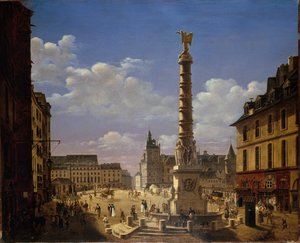
bouhot etienne
1780 - 1862
Quick Facts
- Artistic Movement Or Style: Romanticism, Neoclassicism
- Artists Who Influenced This Artist: ['None],\n "Artists or movements influenced by this artist": [None']
- Date Of Birth: 1780
- Date Of Death: 1862
- Full Name: Étienne Bouhot
- Nationality: French
- Notable Artworks:
- Vue de la Salle de la Paix
- L'église St Etienne du Mont
- Le Jardin des Tuileries
- Place Of Birth: Bard-lès-Époisses, France

