Preview
 Send
Send Share
Share
 Details

 Download
 Similars
 X-Ray
X-Ray Diaporama
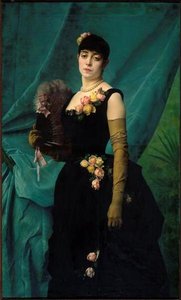
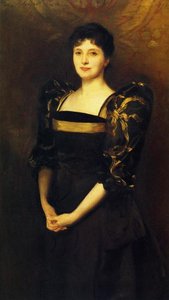
Portrait de Madame Lambinet, née Nathalie Sinclair ( 1926), dernière propriétaire de l'hôtel (futur musée Lambinet)
 Read More
Giclée / Art Print
Museum-quality giclée or canvas print with fast production and flexible finish options. ( Buy Hand Made Painting Buy Image)




































Pick from our preset sizes that match the artwork's original proportions.

You may enter your own dimensions to fit a specific frame or space. If your selected size does not match the original image's proportions, we will either crop the artwork or extend the image with a mirrored or solid-fill edge. A digital mockup will be sent for your approval before production begins.
Please note that the on-screen preview does not reflect the actual cropping or extension. Only the mockup will accurately show the final composition.
While custom sizes are available, we recommend selecting a dimension from the predefined list to preserve the original proportions.
Worldwide Delivery () in 2 weeks instead of standard 4/5 weeks. (25 August)

Free Worldwide Express Shipping

High-Quality Linen Canvas

Full Shipping Insurance

Customs Tax Refund Guarantee

True Color Matching Guarantee

60-Day Return Policy (Defects Only)

100% Money-Back Guarantee

Bulk Discount Offer
 Glass option is only available in size under 110 CM

Portrait de Madame Lambinet, née Nathalie Sinclair ( 1926), dernière propriétaire de l'hôtel (futur musée Lambinet)
Giclée / Art Print
Reproduction Size
-


Total Price
$ 63
Related Artworks








Artist Biography
The Architect of Antiquity: The Life and Vision of Gustave Boulanger
In the grand, sweeping tapestry of nineteenth-century French art, few threads are as intricately woven with classical elegance and exotic allure as those spun by Gustave Clarence Rodolphe Boulanger. Born in Paris in 1824, Boulanger’s journey was one defined by both profound personal loss and an extraordinary artistic ascent. Orphaned at the tender age of fourteen, his path might have been lost to tragedy had it not been for the intervention of his uncle, Constant Desbrosses. This guardianship did more than provide stability; it provided the keys to the most prestigious ateliers in France. Under the watchful eyes of Pierre-Jules Jollivet and the legendary Paul Delaroche, Boulanger began to cultivate a technique characterized by meticulous precision and a deep reverence for the formal structures of history painting.
Boulanger’s early career was marked by a brilliant synthesis of tradition and innovation. His victory in the prestigious Prix de Rome competition in 1849, achieved with his evocative work “Ulysses,” signaled the arrival of a master capable of breathing new life into ancient narratives. This scholarship allowed him to immerse himself in the sun-drenched ruins of Italy and Greece, where he meticulously documented the architectural majesty of Pompeii. These travels were not merely academic exercises; they were spiritual pilgrimages that infused his canvases with an authentic sense of historical weight and atmospheric depth. Through these experiences, Boulanger became a leading light of the Néo-Grec movement, a stylistic rebellion against the burgeoning Impressionist trend that sought to rejuvenate classical themes through a lens of modern sensuality and subtle whimsy.
A Fusion of Classical Grace and Orientalist Splendor
The true magic of Boulanger’s oeuvre lies in his ability to bridge the gap between the austere beauty of the ancient Mediterranean and the vibrant, often mysterious, landscapes of the East. His artistic development was profoundly shaped by his fascination with North Africa, a passion ignited during a transformative trip to Algeria in 1845. What was intended as a brief stay became an enduring influence, as he returned to France laden with sketches that would form the bedrock of his Orientalist masterpieces. Alongside his close friend and collaborator, Jean-Léon Gérôme, Boulanger explored themes of exoticism, using the rich textures and light of distant lands to complement his classical training.
His paintings often serve as windows into a world where history and fantasy coalesce. Whether depicting the quiet dignity of a Roman scene or the bustling, sun-drenched atmosphere of an Algerian marketplace, Boulanger’s brushwork remains steadfast in its commitment to realism and academic excellence. His work is notable for several key characteristics:
- Meticulous Realism: An unwavering attention to the textures of marble, silk, and stone that lends a tactile quality to his subjects.
- The Néo-Grec Aesthetic: A sophisticated blending of classical subject matter with subtle touches of eroticism and modern psychological depth.
- Orientalist Narrative: The use of North African and Middle Eastern settings to explore themes of light, shadow, and cultural encounter.
- Historical Veracity: A deep intellectual engagement with archaeological findings, particularly the remnants of Pompeii and ancient Greece.
Legacy and the Enduring Echo of the Academy
As the nineteenth century progressed, Boulanger remained a steadfast guardian of the academic tradition, even as the art world underwent radical transformations. His ability to maintain relevance through his mastery of genre scenes—ranging from the poignant Portrait de Monsieur Sinclair Desbrosses to the dramatic and controversial The Slave Market—ensured his place in the pantheon of French masters. He did not merely replicate the past; he reinterpreted it, making the ancient world feel immediate, visceral, and deeply human.
Though the era of Academic painting eventually gave way to the fragmented perspectives of Modernism, the legacy of Gustave Boulanger persists. He remains a titan of his age, remembered not just for his technical virtuosity, but for his role in creating a visual language that celebrated the enduring beauty of human history. His works continue to captivate contemporary audiences, offering a profound meditation on the intersection of memory, culture, and the timeless allure of the classical ideal.
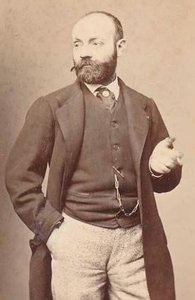
boulanger gustave
1824 - 1888
Quick Facts
- Artistic Movement Or Style: Academic Painting; Neo-Grec Movement
- Artists Or Movements Influenced By This Artist: ['Symbolism']
- Artists Who Influenced This Artist:
- Pierre-Jules Jollivet
- Jean-Léon Gérome
- Date Of Birth: 1824
- Date Of Death: 1888
- Full Name: Gustave Clarence Rodolphe Boulanger
- Nationality: French
- Notable Artworks:
- Ulysses
- Hercules at Omphale
- Cesár at the Rubicon
- The Promenade in the Street of Tombs, Pompeii
- The Slave Market
- Place Of Birth: Paris, France