

 Preview
 Send
Send Share
Share
 Details

 Download
 Similars
 X-Ray
X-Ray Diaporama
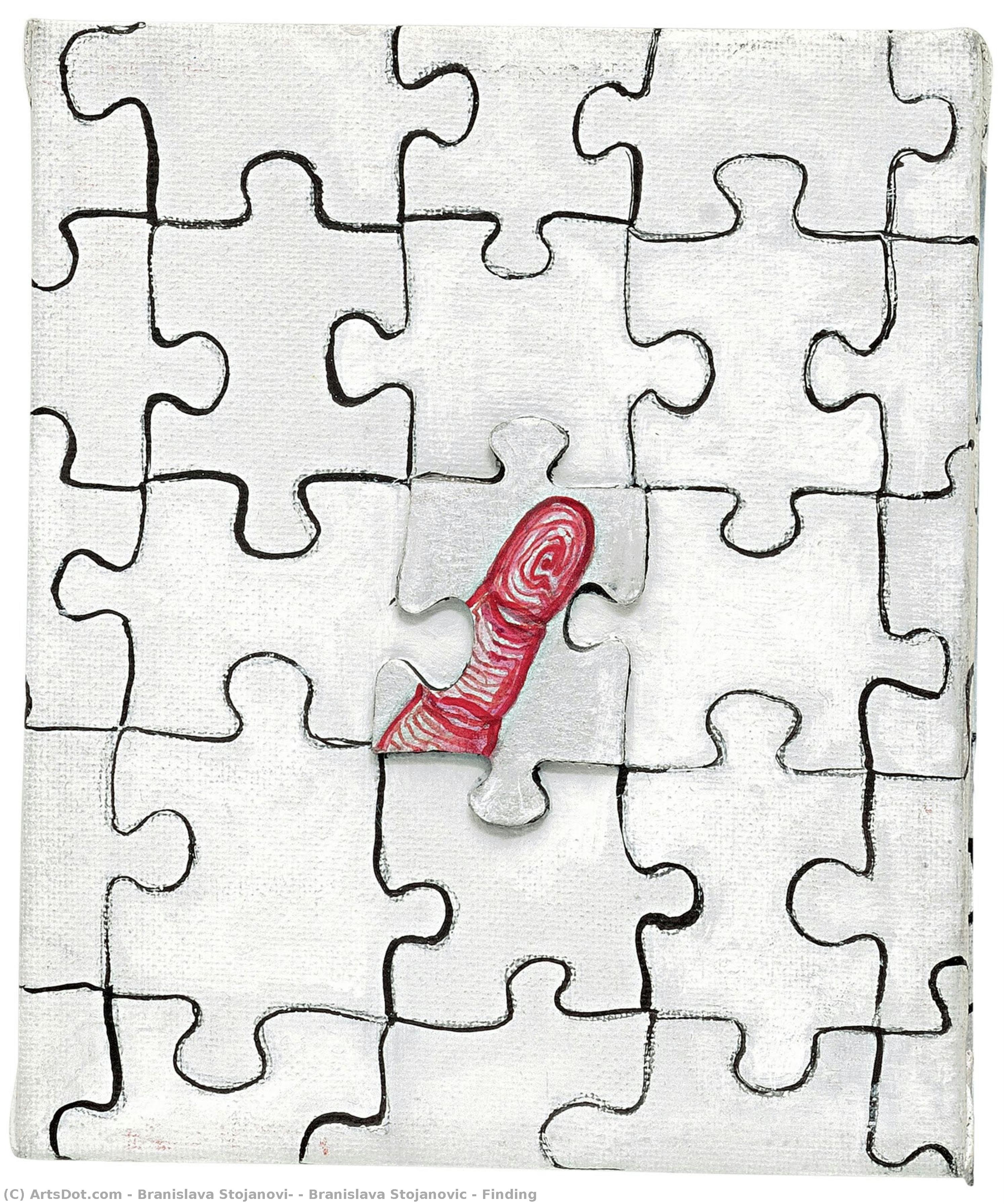
Branislava Stojanovic - Finding

 Read More
Purchase a high-resolution, enhanced digital image, far superior to the online preview.
Each file is meticulously prepared by our in-house specialists using advanced tools and expert manual retouching. We ensure every image has exceptional clarity, precise color accuracy, and fine detail.
The final file is delivered via email within 72 hours, optimized for immediate use in professional, editorial, and print environments. This is the same quality trusted by top-tier design studios, publishers, and galleries.
Digital Image
Download a high-resolution file for personal display, printing, and creative projects. ( Buy Print Buy Hand Made Painting)
Included in Every Digital Image Order
Expert Digital Delivery, Guaranteed
When you choose ArtsDot.com, you're not just getting an image - you're receiving a professionally enhanced digital artwork, crafted with precision and backed by a satisfaction guarantee. Here's everything that comes with your order, automatically:

Fast Email Delivery
Your high-resolution digital image file will be emailed to you within 72 hours of ordering - ready for immediate use.

AI-Enhanced Digital File
Your artwork is professionally optimized using advanced AI tools and manual editing, ensuring maximum detail, clarity, and color accuracy.

Free Lifetime Re-Delivery
Accidentally deleted or lost your file? No worries - we'll resend it to you anytime, free of charge.

No Import Fees - Ever
Enjoy your artwork instantly with zero customs, duties, or delivery fees - digital downloads are always tax-free.

Color Accuracy Guarantee
We ensure your digital image reflects the original colors as closely as possible using professional tools and color management.

100-Day Satisfaction Guarantee
If you're not satisfied with your digital image, we'll revise it or refund 100% within 100 days - no questions asked.

100% Money-Back Guarantee
Not satisfied? Get a full refund within 100 days of receiving your digital file - no questions asked.

Bulk Order Discounts
Buy 3 images, save 10% - Buy 5, save 15% - Buy 10+, save 20%. Great for creative projects, galleries, and agencies.
Related Artworks



Artist Biography
Jean-Michel Basquiat: A Voice of the Streets and a Revolutionary Artist
Born in Brooklyn, New York City, on December 22, 1960, Jean-Michel Basquiat emerged from the vibrant, often turbulent, cultural landscape of the late 1970s and early 1980s. His life was tragically cut short at the age of 27 in August 1988 due to a heroin overdose, but his impact on the art world remains profound and continues to resonate today. More than just an artist, Basquiat was a complex figure—a street poet, a social commentator, and a brilliant innovator who fused raw emotion with intellectual rigor.
Basquiat’s early life was shaped by his Haitian-American heritage and the experiences of growing up in a predominantly black neighborhood. His father, Gerard Basquiat, was a trumpet player and his mother, Laurinda Jacobs, worked as a seamstress. He developed an interest in art at a young age, initially drawing graffiti tags on subway cars – a practice that would later become inextricably linked to his artistic identity. This early engagement with the urban environment, particularly the gritty streets of New York City’s Lower East Side, profoundly influenced his work, providing him with both subject matter and a visual language.
Initially collaborating with Al Diaz under the moniker SAMO (a portmanteau of “same old men”), Basquiat and Diaz created enigmatic epigrams—short, often provocative phrases—that were sprayed across walls throughout Manhattan. These collaborative pieces explored themes of race, power, and social inequality. However, their partnership dissolved in 1981, a pivotal moment that marked the beginning of Basquiat’s independent artistic journey. Following this split, he began to develop his distinctive visual style, characterized by bold colors, fragmented figures, and layered text.
The Neo-Expressionist Explosion and Basquiat's Unique Style
Basquiat arrived on the New York art scene during a period of significant artistic upheaval. The dominance of Minimalism and Conceptualism was waning, giving way to a resurgence of figurative painting—a movement known as neo-expressionism. However, Basquiat’s work transcended simple revivalism; he injected his art with a raw energy and social consciousness that distinguished it from the more polished expressions of other neo-expressionists. His style blended elements of street art, graffiti, comic books, and historical references, creating a visually arresting and intellectually stimulating aesthetic.
His paintings frequently incorporated text—words, phrases, and names—often sourced from encyclopedias, dictionaries, and historical documents. This layering of information served as both commentary on the sources themselves and a means of disrupting traditional notions of authorship and originality. Basquiat’s use of symbols – skulls, crowns, musical instruments, and portraits – carried complex meanings, often referencing themes of death, power, identity, and cultural heritage. The recurring image of the crown, for example, symbolized royalty and authority, but also served as a critique of societal hierarchies.
Themes of Race, Power, and Social Justice
At the heart of Basquiat’s work lay a deep engagement with issues of race, power, and social justice. His art confronted uncomfortable truths about American history—particularly the legacy of slavery and racial inequality—and challenged viewers to confront their own biases and assumptions. Works like *Irony of Negro Policeman* (1981) and *Hollywood Africans* (1983) directly addressed issues of racism within law enforcement and the entertainment industry, respectively.
Furthermore, Basquiat’s art explored themes of wealth versus poverty, cultural appropriation, and the commodification of art. He frequently depicted images of opulent mansions juxtaposed with depictions of impoverished communities, highlighting the stark inequalities that characterized American society. His work served as a powerful critique of consumer culture and the ways in which art was increasingly being treated as a commodity rather than an expression of genuine creativity.
Legacy and Critical Acclaim
Despite his tragically short life, Jean-Michel Basquiat’s impact on the art world is undeniable. During his lifetime, he achieved remarkable success, exhibiting at prestigious galleries and museums around the globe. His work was quickly recognized for its originality, emotional intensity, and intellectual depth.
Following his death, Basquiat's reputation continued to grow, and his paintings have become increasingly valuable on the art market. In 2017, *Untitled* (a 1982 skull painting) sold at Sotheby’s for $110.5 million—the highest price ever paid for a work by a living artist at auction. Today, Basquiat is considered one of the most important and influential artists of the late 20th century, his art continuing to provoke thought, inspire creativity, and challenge viewers to confront complex social issues.
Influences and Artistic Connections
Basquiat’s artistic development was shaped by a diverse range of influences. He drew inspiration from street art, graffiti culture, comic books, and the work of artists such as Pablo Picasso, Andy Warhol, and Jean-Michel Gerbaud. His interest in history—particularly Haitian history and the legacy of colonialism—also played a significant role in his artistic vision.
His collaboration with Al Diaz was crucial to his early development, providing him with experience in creating public art and developing his visual language. Furthermore, his association with Andy Warhol during the early 1980s exposed him to the world of high art and helped him refine his own artistic practice. The complex and often turbulent relationship between Basquiat and Warhol remains a fascinating subject of study for art historians.

branislava stojanović
1980 - , Serbia
Quick Facts
- Artistic Movement Or Style: Neo-expressionism
- Artists Or Movements Influenced By This Artist:
- Graffiti art
- Hip-hop culture
- Artists Who Influenced This Artist:
- Andy Warhol
- Keith Haring
- Date Of Birth: December 22, 1960
- Date Of Death: August 12, 1988
- Full Name: Jean-Michel Basquiat
- Nationality: American
- Notable Artworks:
- Irony of Negro Policeman
- Skull of Doom
- Untitled
- Boy and Dog in a Johnnypump
- Defacement
- Place Of Birth: New York City, U.S.