 Preview
 Send
Send Share
Share
 Details

 Download
 Similars
 X-Ray
X-Ray Diaporama
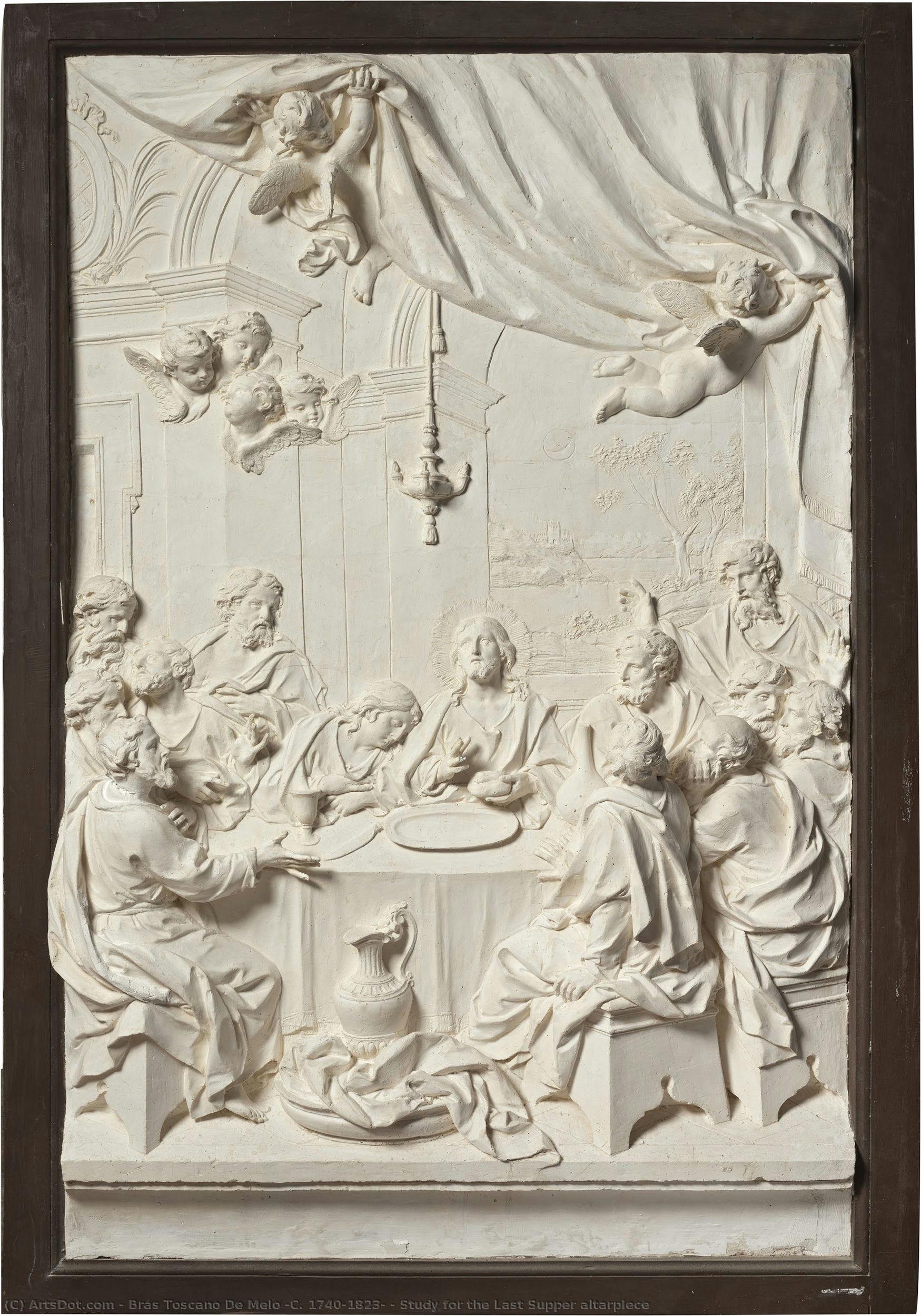
Study for the Last Supper altarpiece
 1823
1823 189.0 x 127.0 cm
 Palace of Mafra
 Read More
Hand Made Oil Reproduction
Hand-painted oil on canvas in your size and frame, made to order by our artists. ( Buy Print Buy Image)




































Pick from our preset sizes that match the artwork's original proportions.

You may enter your own dimensions to fit a specific frame or space. If your selected size does not match the original image's proportions, we will either crop the artwork or extend the painting with additional hand-painted elements. A digital mockup will be sent for your approval before production begins.
Please note that the on-screen preview does not reflect the actual cropping or extension. Only the mockup will accurately show the final composition.
While custom sizes are available, we recommend selecting a dimension from the predefined list to preserve the original proportions.
After order, ArtsDot.com team will email client for instructions and provide a mockup preview
Worldwide Delivery () in 3/4 weeks instead of standard 5 weeks. (28 August). No compromise on quality.

Free Worldwide Express Shipping

High-Quality Linen Canvas

Full Shipping Insurance

Customs Tax Refund Guarantee

True Color Matching Guarantee

60-Day Return Policy (Defects Only)

100% Money-Back Guarantee

Bulk Discount Offer
 Glass option is only available in size under 110 CM

Study for the Last Supper altarpiece
Reproduction Medium
Reproduction Size
-


Total Price
$ 263
Related Artworks







Artist Biography
The Sculptural Legacy of Brás Toscano de Melo
In the grand tapestry of Portuguese art history, few figures possess the enigmatic allure of Brás Toscano de Melo. Born around 1740 in Portugal, Melo emerged during a transformative era where the dramatic flourishes of the Baroque were beginning to encounter the disciplined clarity of Neoclassicism. While much of his personal biography remains veiled by the passage of centuries, his artistic footprint is indelibly etched into the stone and plaster of Portugal's most sacred spaces. He was not merely a craftsman but a visionary who sought to bridge the gap between tactile reality and divine representation, leaving behind works that continue to resonate with an almost haunting anatomical precision.
The foundations of Melo’s mastery were laid under the guidance of António José Campanhas, one of the most influential sculptors of the period. From Campanhas, Melo inherited a profound reverence for classical ideals and a rigorous approach to anatomical accuracy. This training allowed him to navigate the complexities of form, enabling him to imbue his subjects with a sense of life that transcended their medium. His development was marked by an ability to balance the expressive dynamism of the Baroque tradition—characterized by movement and emotional intensity—with a burgeoning interest in the meticulous observation of nature that would define the coming Neoclassical age.
A Vision Unfinished: The Last Supper
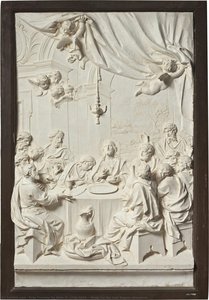
The zenith of Melo’s creative ambition is perhaps best captured in his monumental Study for the Last Supper altarpiece. Conceived for the Chapel of St. Peter of Alcantara within the Basilica of Mafra, this project was intended to be a breathtaking recreation of Michelangelo's iconic fresco, translated into the three-dimensional language of sculpture. As the Director of Sculpture at the Royal Academy, Melo poured his technical prowess into this preparatory model, aiming for an unparalleled level of realism. He sought to capture the very essence of the biblical moment through intricate draperies and the subtle play of light upon form.
Tragically, the full realization of this masterpiece was thwarted by the harsh realities of history, including budgetary constraints and shifting stylistic preferences. What remains is a poignant fragment—a stone element featuring exquisite drapery and a lamp—that serves as a silent witness to his lost grandeur. Despite its incompleteness, this study stands as a testament to his technical brilliance and his daring attempt to elevate religious narrative through sculptural depth. It remains one of the most significant relics of his career, embodying the tension between artistic aspiration and material limitation.
The Mafra School and Artistic Influence
Beyond his individual struggles with large-scale commissions, Melo played a pivotal role in shaping the future of Portuguese sculpture through his leadership at the Mafra School. Presiding over this institution from 1753 until his death in 1823, he acted as a guardian of excellence during the reign of King José I. His tenure was characterized by a commitment to a style that harmonized the ornamental richness of the past with a new, disciplined focus on anatomical truth. Under his direction, the school became a crucible for talent, fostering an environment where the sculptural arts could flourish within the Portuguese landscape.
The historical significance of Brás Toscano de Melo lies in his role as a bridge between eras. His works, which adorned various churches and palaces throughout Portugal, contributed to a cohesive national aesthetic that celebrated both spiritual fervor and technical sophistication. To study his work is to encounter the soul of 18th-century Portugal—a period of profound religious devotion and burgeoning Enlightenment ideals. Through his mastery of plaster and stone, Melo ensured that the echoes of the Baroque would endure, even as the world moved toward a new age of artistic expression.
brás toscano de melo (c. 1740-1823)
1823 , Portugal
Quick Facts
- Artistic Movement Or Style: Traditional Portuguese art; European influences
- Date Of Death: 1823
- Full Name: Brás Toscano de Melo
- Nationality: Portuguese
- Notable Artworks: ['Study for the Last Supper altarpiece']
- Place Of Birth: Portugal