 Preview
 Send
Send Share
Share
 Details

 Download
 Similars
 X-Ray
X-Ray Diaporama
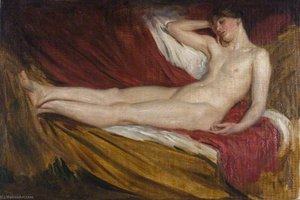
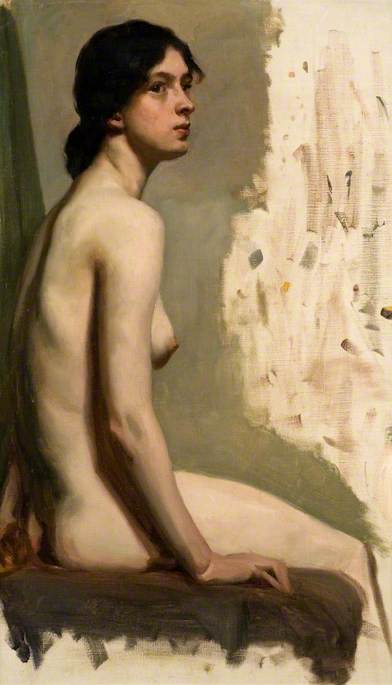
Seated Female Nude
 1907
1907 77.0 x 46.0 cm
 Read More
Hand Made Oil Reproduction
Hand-painted oil on canvas in your size and frame, made to order by our artists. ( Buy Print Buy Image)




































Pick from our preset sizes that match the artwork's original proportions.

You may enter your own dimensions to fit a specific frame or space. If your selected size does not match the original image's proportions, we will either crop the artwork or extend the painting with additional hand-painted elements. A digital mockup will be sent for your approval before production begins.
Please note that the on-screen preview does not reflect the actual cropping or extension. Only the mockup will accurately show the final composition.
While custom sizes are available, we recommend selecting a dimension from the predefined list to preserve the original proportions.
After order, ArtsDot.com team will email client for instructions and provide a mockup preview
Worldwide Delivery () in 3/4 weeks instead of standard 5 weeks. (22 August). No compromise on quality.

Free Worldwide Express Shipping

High-Quality Linen Canvas

Full Shipping Insurance

Customs Tax Refund Guarantee

True Color Matching Guarantee

60-Day Return Policy (Defects Only)

100% Money-Back Guarantee

Bulk Discount Offer
 Glass option is only available in size under 110 CM

Seated Female Nude
Reproduction Medium
Reproduction Size
-


Total Price
$ 263
Artwork Description
Artistic Style and Technique
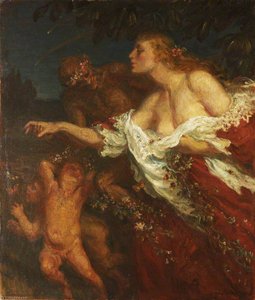
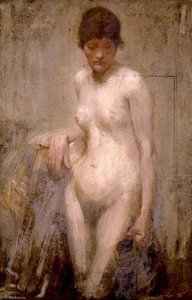
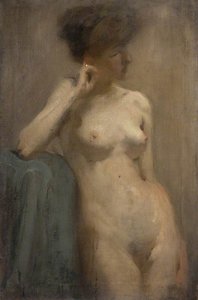
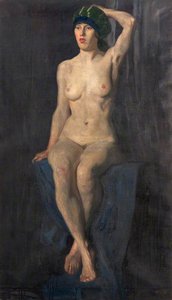
Hatton's style is characterized by his use of bold brushstrokes and vivid colors, which are evident in the Seated Female Nude. The painting features a woman sitting on a bench with her back turned to the viewer, creating a sense of intimacy and vulnerability. The background of the painting includes a chair and a couch, adding depth and context to the scene. As seen in other works like Brian Hatton: Female Nude, Hatton's use of light and shadow creates a sense of volume and texture, drawing the viewer's eye to the subject.Comparison with Other Artists
The Seated Female Nude can be compared to other works by notable artists such as Egon Schiele and Abbott Handerson Thayer. For example, Schiele's Portrait of Leopold Czihaczek, in Profile Facing Left showcases a similar use of bold lines and vibrant colors. Similarly, Thayer's Peacock in the Woods demonstrates a mastery of capturing light and shadow.- The use of oil on panel creates a sense of depth and luminosity in the painting.
- The Seated Female Nude is a prime example of Hatton's ability to capture the beauty and elegance of the human form.
- The painting's size, 77 x 46 cm, makes it an intimate and personal piece, perfect for private collectors or museums like the Hereford Museum and Art Gallery.
The Seated Female Nude by Brian Hatton is a stunning example of the artist's skill and technique. As seen on ArtsDot.com, this painting is a must-see for art enthusiasts and collectors alike. With its beautiful depiction of the female form and masterful use of light and shadow, the Seated Female Nude is a true masterpiece of early 20th-century art.
Related Artworks
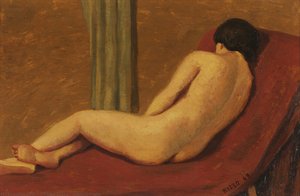
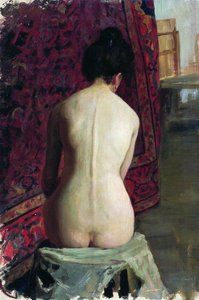
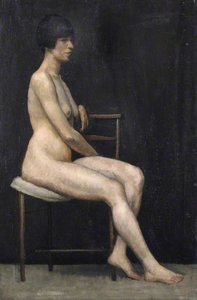
Artist Biography
A Lost Voice of the English Countryside
The story of Brian Hatton is one of remarkable, if tragically curtailed, artistic promise. Born in 1887 amidst the idyllic landscapes of Broomy Hill, Herefordshire, Hatton emerged as a significant figure in British landscape painting during the formative years of the twentieth century. His life and work were inextricably linked to the rural traditions of his homeland, yet his vision was shaped by much broader horizons. Though his career was cut short by his untimely death in action during the First World War at just twenty-eight years old, he left behind a profoundly moving body of work that offers a poignant glimpse into a disappearing world—a testament to the power of capturing beauty amidst impending change.
Hatton’s artistic journey began with an early fascination for drawing and sketching, nurtured by a supportive family who recognized his burgeoning talent. As he matured, his sensibilities were profoundly shaped by exposure to influential European movements. Through visits to Paris, he encountered the transformative techniques of Impressionism and Neo-Romanticism, absorbing the methods of masters such as Monet and Sisley. These encounters encouraged him to prioritize the capture of fleeting moments of light and atmosphere, a hallmark of his distinctive approach that would define his later mastery.
Technique, Light, and the Human Element
In his execution, Hatton skillfully blended meticulous observation with a rich, imaginative spirit. His canvases were not merely topographical records of the Worcestershire countryside; they were emotive explorations of texture and mood. He possessed a unique ability to render the physical world—the rugged textures of hedgerows, the weathered stone of walls, and the sprawling fields of Morehampton Manor—with such precision that the viewer can almost feel the dampness of the earth or the warmth of the sun. His style often utilized bold brushstrokes and a vivid yet balanced palette to create depth and visual tension.
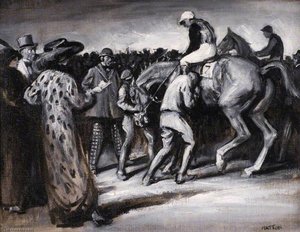
Beyond the purely pastoral, Hatton’s oeuvre is notable for its deep humanist element. He frequently infused his landscapes with figures engaged in the quiet dignity of everyday life. Whether through figure studies or more narrative scenes like “Saddling Up,” he portrayed a profound connection between humanity and the land. His portraits and figure paintings, such as the serene “Reclining Nude” (1912), demonstrate a sensitive touch regarding gesture and expression, revealing a psychological depth that complemented his technical accuracy.
Legacy and Historical Significance
The trajectory of Hatton’s career was marked by significant milestones, most notably his exhibition at the Hereford Museum in 1913. This showcase served as a pivotal moment, garnering recognition for his ability to synthesize local identity with modern artistic sensibilities. His work, ranging from the Post-Impressionist echoes in “The Falcon” (1909) to the evocative autumn tones of “The Wye, Belmont Woods,” showcases an artist constantly evolving and pushing the boundaries of British landscape tradition.
Today, Brian Hatton is remembered as a "lost voice" of the early twentieth century. His death in 1916 represents more than just the loss of a single talented individual; it symbolizes the silencing of a promising artistic movement that might have bridged the gap between traditional ruralism and modernism. His surviving works remain vital pieces of British art history, preserved in collections such as the Hereford Museum and Art Gallery, serving as enduring echoes of a landscape and a way of life that were forever altered by the dawn of the modern age.
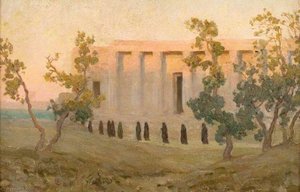
brian hatton
1887 - 1916
Quick Facts
- Artistic Movement Or Style: Early 20th Century Landscape Painting
- Date Of Death: 1916
- Full Name: Brian Hatton
- Nationality: British
- Notable Artworks:
- Reclining Nude
- Harvesting Towards Morehampton
- Saddling Up
- Place Of Birth: Herefordshire, England