 Preview
 Send
Send Share
Share
 Details

 Download
 Similars
 X-Ray
X-Ray Diaporama
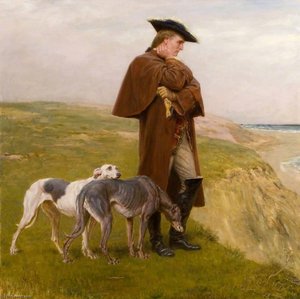
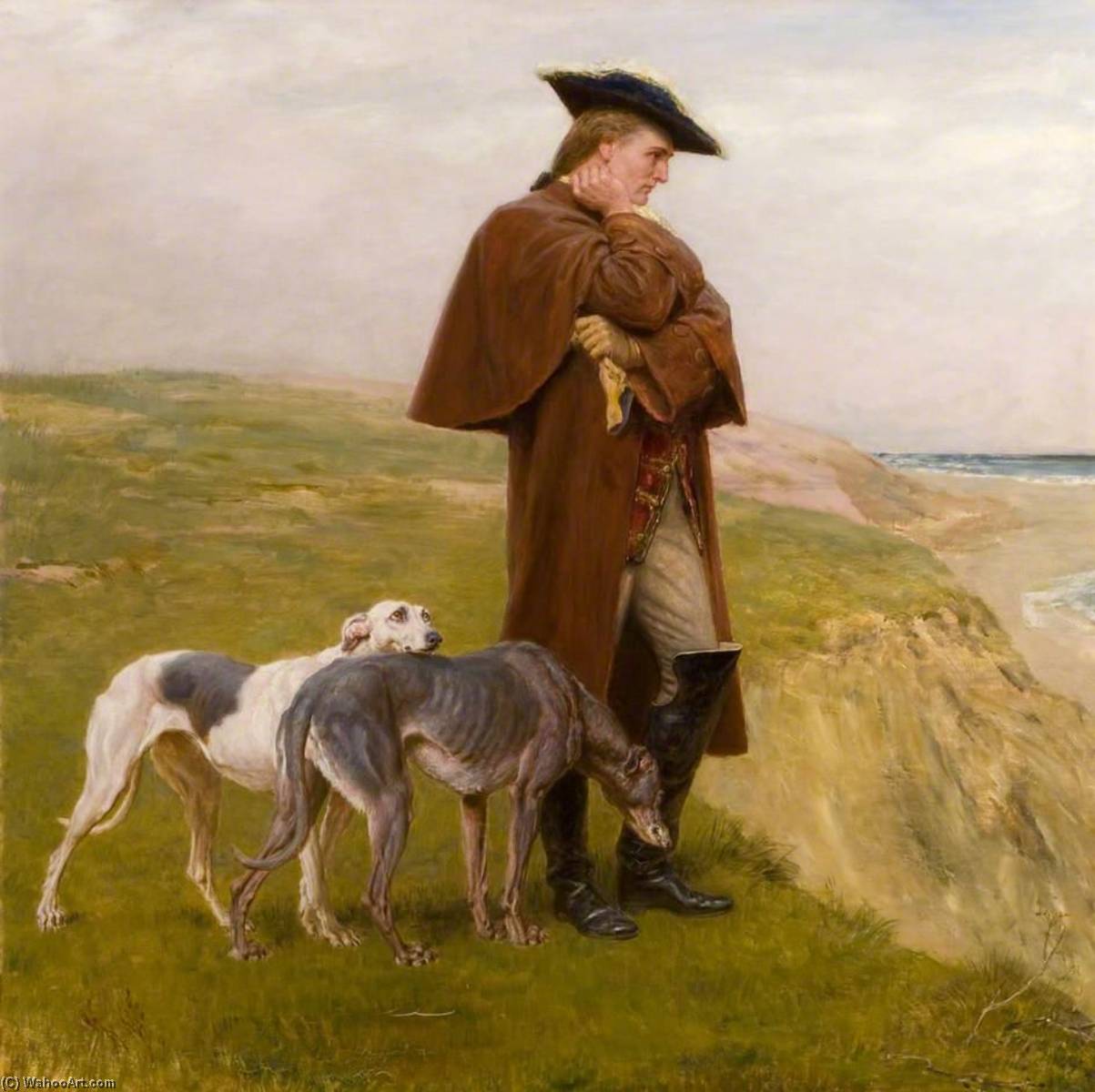
An Exile of the '45


 Read More
Hand Made Oil Reproduction
Hand-painted oil on canvas in your size and frame, made to order by our artists. ( Buy Print Buy Image)




P118B $10

P118H $10

P118W $10

P438Z $10

P508JH $12

P508YH $12

P805H $10

P805Z $10

P919BZ $10

P919G $10

P919XJ $10

P959ZH $10

P968JZ $12

W106C $8

W218G $10

W218JH $8

W218Y $10

W307PJ $10

W316G $10

W316PJ $8

W316Y $10

W398PJ $8

W4111J $10

W500HY $15

W500JH $15

W692G $12

W849H $8

W940BG $15

W953PJ $8




Pick from our preset sizes that match the artwork's original proportions.

You may enter your own dimensions to fit a specific frame or space. If your selected size does not match the original image's proportions, we will either crop the artwork or extend the painting with additional hand-painted elements. A digital mockup will be sent for your approval before production begins.
Please note that the on-screen preview does not reflect the actual cropping or extension. Only the mockup will accurately show the final composition.
While custom sizes are available, we recommend selecting a dimension from the predefined list to preserve the original proportions.
After order, ArtsDot.com team will email client for instructions and provide a mockup preview
Worldwide Delivery () in 3/4 weeks instead of standard 5 weeks. (17 August). No compromise on quality.

Free Worldwide Express Shipping

High-Quality Linen Canvas

Full Shipping Insurance

Customs Tax Refund Guarantee

True Color Matching Guarantee

60-Day Return Policy (Defects Only)

100% Money-Back Guarantee

Bulk Discount Offer
 Glass option is only available in size under 110 CM

An Exile of the '45
Reproduction Medium
Reproduction Size
-


Total Price
$ 263
Artwork Description
A Portrait of Isolation Amidst Turbulent Seas
Briton Rivière’s “An Exile of the ‘45,” housed in the Dundee Art Galleries and Museums Collection, stands as a haunting meditation on solitude and resilience against the backdrop of a dramatic seascape. Painted circa 1873-74, this monumental canvas exemplifies Rivière’s signature style – a masterful blend of Romanticism and Impressionism that prioritizes emotional intensity over precise representation.
Style and Technique: Bridging Romantic Emotion with Impressionistic Light
Rivière skillfully employs techniques borrowed from both movements. The overarching composition adheres to Romantic principles, emphasizing grandeur and conveying a palpable sense of melancholy. However, unlike the hazy atmospherics characteristic of pure Impressionism, Rivière utilizes a layered approach—thick impasto brushstrokes dominate the cliff face and torso of the central figure, grounding him in physicality while simultaneously capturing the rugged texture of the landscape. Simultaneously, diffused light washes over the ocean surface, creating shimmering reflections that subtly soften the harshness of the cliffs.
Historical Context: Echoes of Waterloo and Victorian Anxiety
The painting’s title references the Battle of Waterloo (1815), marking a pivotal moment in European history—the decisive defeat of Napoleon Bonaparte and the restoration of monarchical rule. Rivière's depiction captures not merely the visual spectacle of the battlefield but also the psychological fallout experienced by those who witnessed its devastation. The solitary man embodies the anxieties prevalent within Victorian society – grappling with loss, uncertainty, and the burden of responsibility amidst a world undergoing profound transformation.
Symbolism: Dogs, Cliffs, and the Ocean’s Embrace
The inclusion of two dogs—one positioned close to the figure's left shoulder and another further back—is laden with symbolic significance. Traditionally associated with loyalty and guardianship, they represent steadfast companionship and protection against external threats. The towering cliffs symbolize strength and permanence, yet simultaneously convey vulnerability as they confront the relentless force of the ocean. Rivière’s masterful use of color – predominantly browns and blues – reinforces these themes, evoking feelings of earthy solidity juxtaposed with the boundless expanse of watery emotion.
Emotional Impact: A Resonance of Vulnerability and Acceptance
"An Exile of the ‘45" transcends mere visual depiction; it communicates a profound emotional resonance. The man’s posture—arms crossed, gaze averted—suggests introspection and acceptance of his predicament. Despite facing isolation and confronting the immensity of nature's power, there is an underlying serenity in his demeanor – hinting at inner fortitude and resilience. Rivière’s artwork invites contemplation on themes of human experience, reminding viewers that beauty can be found even within moments of profound melancholy.
Related Artworks
Artist Biography
A Life Immersed in Nature and Narrative: The World of Briton Rivière
Briton Rivière, born in London in 1840, emerged as a pivotal figure in Victorian art, celebrated for his deeply emotive animal paintings and earlier explorations into historical and literary themes. He wasn’t simply a painter of animals; he was a storyteller who imbued his subjects with psychological depth and narrative resonance, capturing moments of vulnerability, loyalty, and the complex relationship between humanity and the natural world. Rivière's artistic journey was profoundly shaped by his family heritage – his father, William Rivière, served as an art teacher and drawing master, while his uncle, Henry Parsons Rivière, was a respected watercolourist. This familial foundation provided early encouragement and guidance, though Briton’s training remained largely within this intimate circle rather than formal academic institutions. He received his education at Cheltenham College and later Oxford University, completing his degree in 1867, an unusual path for a dedicated artist but one that perhaps fostered a unique intellectual curiosity reflected in his work.From Historical Scenes to the Animal Kingdom
Rivière’s initial artistic endeavors focused on grand historical and literary subjects, evident in early works like “The Eve of the Spanish Armada” and scenes inspired by Shakespeare's "Romeo and Juliet." However, a significant shift occurred around 1865. He began to increasingly concentrate on animal paintings, a decision that would define his career and establish him as a leading figure in this genre. This wasn’t merely a change in subject matter; it was a deepening of artistic intent. Rivière didn't simply depict animals; he sought to portray their inner lives, their emotions, and their interactions with the world around them. He possessed an exceptional ability to capture not just physical likeness but also character and feeling, often presenting his animal subjects in dramatic or poignant situations that resonated deeply with Victorian sensibilities. While largely self-taught through his father’s guidance, Rivière's work reveals a clear awareness of the Pre-Raphaelite movement’s emphasis on meticulous detail, naturalism, and narrative storytelling – influences subtly woven into his distinctive style.Themes of Companionship and Emotional Resonance
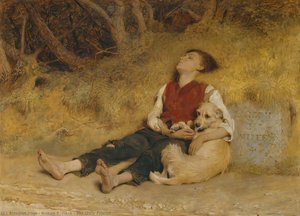
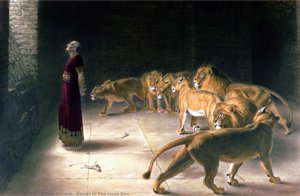
Recurring themes permeate Rivière’s oeuvre: companionship, loyalty, vulnerability, and the often-tender connection between humans and animals. His paintings are not simply representations of wildlife; they are explorations of universal emotions and experiences. Perhaps his most famous work, “His Only Friend,” exemplifies this perfectly – a touching depiction of a young boy finding solace in the unwavering affection of a dog. Other notable pieces like "Daniel in the Lions' Den", “War Time”, “The Last of the Garrison” and “An Exile of the '45” demonstrate his versatility and ability to imbue even historical or biblical scenes with a similar emotional weight. Rivière’s meticulous attention to detail, particularly in rendering animal anatomy and fur, is remarkable. He wasn’t content with superficial accuracy; he strived for a profound understanding of his subjects, allowing him to convey their essence with compelling realism. His paintings frequently evoke a sense of narrative, inviting viewers to contemplate the stories unfolding within the canvas and connect with the emotions portrayed.Recognition and Legacy
Rivière’s talent was widely recognized during his lifetime. He began exhibiting at the British Institution in 1857 and became a regular contributor to Royal Academy exhibitions from 1863 onwards, solidifying his position within the established art world. In 1878 he was elected an Associate of the Royal Academy, followed by full membership in 1881 – significant achievements that underscored his artistic merit. He even received an honorary Doctor of Civil Law degree from Oxford University in 1891, a testament to his broader intellectual contributions. A bid for the presidency of the Royal Academy in 1896, though narrowly unsuccessful, further demonstrated his standing within the art community. Today, Rivière’s paintings are held in prominent public collections worldwide, including the Tate, the Metropolitan Museum of Art, and Royal Holloway, University of London, ensuring that his work continues to inspire and captivate audiences. His contribution to elevating animal painting as a respected genre within Victorian art is undeniable, and his legacy extends beyond his own artistic achievements – his son, Hugh Goldwin Rivière, also became a portrait painter, while another son’s wife, Joan Riviere, distinguished herself as an eminent psychoanalyst and translator of Sigmund Freud. Briton Rivière remains a celebrated artist whose work continues to be admired for its technical skill, emotional depth, and evocative portrayal of the animal world – a testament to his enduring artistic vision.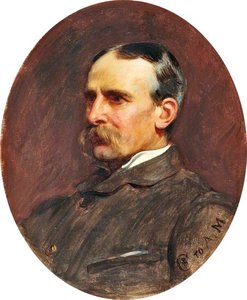
Briton Rivière
1840 - 1920 , United Kingdom
Quick Facts
- Artistic Movement Or Style: Pre-Raphaelite, Victorian
- Artists Or Movements Influenced By This Artist: Victorian animal painting
- Artists Who Influenced This Artist:
- William Rivière
- Henry Parsons Rivière
- Date Of Birth: 1840
- Date Of Death: 1920
- Full Name: Briton Rivière
- Nationality: British
- Notable Artworks:
- His Only Friend
- Daniel in the Lions' Den
- War Time
- The Last of the Garrison
- An Exile of the '45
- Place Of Birth: London, UK
Related Articles
Animalia: Exploring the Enduring Presence of Animals in Art & Interior Design
Explore the rich history of animal symbolism in art, from ancient mythology to modern masterpieces. Discover how animals have inspired artists for centuries and learn how to incorporate these powerful motifs into your home décor.
The Allure of the Horizon: A Comprehensive Exploration of Seascape Art Through History & Emotion
Explore the captivating world of seascape art! Discover its history, key artists & movements – from Dutch Masters to Impressionism. Expert insights for collectors and enthusiasts at ArtsDot.
Beastly Brushstrokes: A Historical Journey Through Animal Painting & Aesthetic Movements
Explore the rich history of animal painting across cultures & movements. Discover iconic artists, symbolism, collecting trends & expert art consultation at ArtsDot.com.

Level Up Your Art: Transform Personal Photos into High-Octane Action Anime Masterpieces with AI-Driven Oil Painting
Transform your favorite photos into high-octane action anime masterpieces. Using proprietary AI and master artists, we turn digital memories into hand-painted oil on canvas legacies. Experience the perfect fusion of pop culture energy and timeless fine artistry at ArtsDot.com.
Sir Edwin Landseer: Sentiment, Society & the Victorian Animalier Tradition
Explore the life & art of Sir Edwin Landseer, Victorian Britain's foremost animal painter. Discover his iconic works, societal impact, and collecting guide at ArtsDot.