

 Preview
 Send
Send Share
Share
 Details

 Download
 Similars
 X-Ray
X-Ray Diaporama
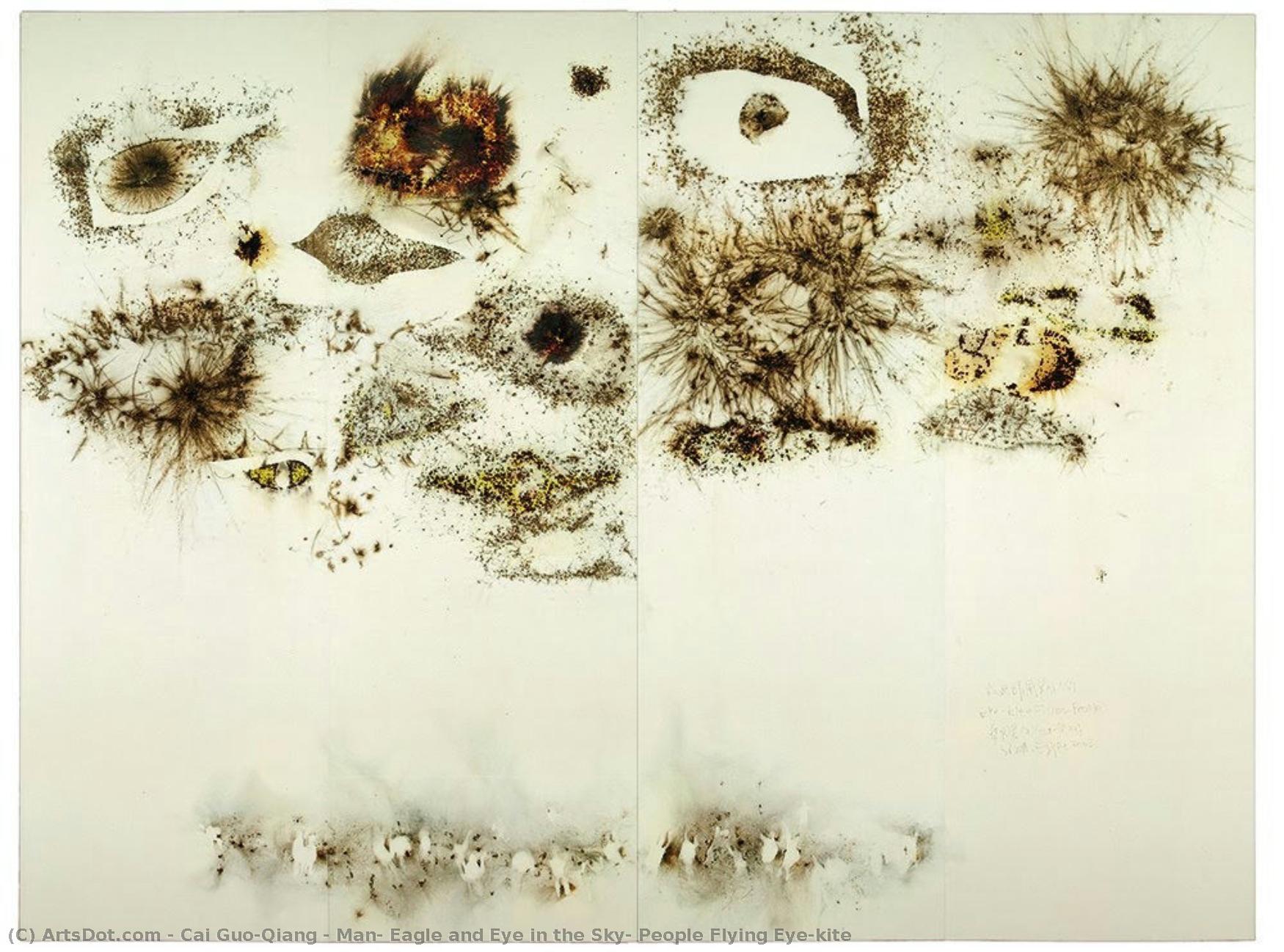
Man, Eagle and Eye in the Sky: People Flying Eye-kite


 Read More
Purchase a high-resolution, enhanced digital image, far superior to the online preview.
Each file is meticulously prepared by our in-house specialists using advanced tools and expert manual retouching. We ensure every image has exceptional clarity, precise color accuracy, and fine detail.
The final file is delivered via email within 72 hours, optimized for immediate use in professional, editorial, and print environments. This is the same quality trusted by top-tier design studios, publishers, and galleries.
Digital Image
Download a high-resolution file for personal display, printing, and creative projects. ( Buy Print Buy Hand Made Painting)
Included in Every Digital Image Order
Expert Digital Delivery, Guaranteed
When you choose ArtsDot.com, you're not just getting an image - you're receiving a professionally enhanced digital artwork, crafted with precision and backed by a satisfaction guarantee. Here's everything that comes with your order, automatically:

Fast Email Delivery
Your high-resolution digital image file will be emailed to you within 72 hours of ordering - ready for immediate use.

AI-Enhanced Digital File
Your artwork is professionally optimized using advanced AI tools and manual editing, ensuring maximum detail, clarity, and color accuracy.

Free Lifetime Re-Delivery
Accidentally deleted or lost your file? No worries - we'll resend it to you anytime, free of charge.

No Import Fees - Ever
Enjoy your artwork instantly with zero customs, duties, or delivery fees - digital downloads are always tax-free.

Color Accuracy Guarantee
We ensure your digital image reflects the original colors as closely as possible using professional tools and color management.

60-Day Satisfaction Guarantee
If you're not satisfied with your digital image, we'll revise it or refund 100% within 60 days - no questions asked.

100% Money-Back Guarantee
Not satisfied? Get a full refund within 60 days of receiving your digital file - no questions asked.

Bulk Order Discounts
Buy 3 images, save 10% - Buy 5, save 15% - Buy 10+, save 20%. Great for creative projects, galleries, and agencies.
The Genesis of a Scorched Landscape
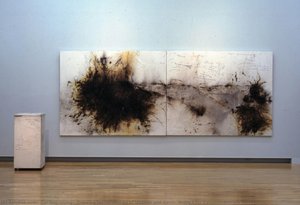
Cai Guo-Qiang’s “Man, Eagle and Eye in the Sky: People Flying Eye-kite” isn't merely a depiction of fire; it’s an immersive experience rendered in charcoal, ash, and the potent energy of gunpowder. Created in 2004 as part of his ambitious “Projects for Extraterrestrials,” this diptych—a pair of canvases dramatically scarred with controlled burns—immediately commands attention. The initial impression is one of devastation: a pale beige background violently disrupted by irregular patterns of blackened and scorched areas, resembling the aftermath of an immense, unseen event. Yet, within this apparent chaos lies a profound sense of order and beauty, mirroring the cyclical nature of destruction and regeneration that permeates much of Cai’s work.
The genesis of this piece is deeply rooted in Cai's fascination with Chinese traditions – particularly the concept of “destroy nothing, create nothing,” a philosophical tenet often associated with Mao Zedong. This principle isn’t about literal destruction but rather a deliberate dismantling and reconstruction, a process of stripping away the superfluous to reveal the essential. Cai’s early life in China, witnessing both the fervor of revolutionary movements and the quiet beauty of traditional landscapes, profoundly shaped his artistic vision. The controlled burns employed here aren't random; they are meticulously orchestrated, guided by an understanding of gunpowder’s explosive potential and its ability to create intricate, organic forms.
Technique: A Dance with Fire and Precision
The technique employed is both audacious and remarkably precise. Cai doesn’t simply fling gunpowder at the canvas; he meticulously applies it in layers, utilizing masking techniques to achieve specific shapes and textures. The burn patterns themselves are not uniform – they vary in color from deep browns and blacks to lighter yellows and oranges, creating a dynamic interplay of light and shadow that elevates the work beyond mere surface decoration. The canvases were treated with a flammable medium, allowing for controlled burns that created the dramatic, almost coral-like formations characteristic of the piece. The scale is significant; each panel measures approximately 230 x 620 cm, ensuring an immersive experience for the viewer.
- Gunpowder Application: Layered and precise, creating intricate textures.
- Masking Techniques: Used to define specific shapes and patterns within the burns.
- Flammable Medium: Facilitated controlled burning and varied color palettes.
Symbolism: Echoes of History and Mythology
Beyond the purely visual, “Man, Eagle and Eye in the Sky” is rich with symbolic meaning. The title itself hints at a complex narrative – "Man" representing humanity’s journey through history, “Eagle” referencing Alexander the Great's legendary voyage to Siwa Oasis for an oracle, and “Eye in the Sky” symbolizing a visionary perspective. The inclusion of kites, traditionally associated with Chinese culture and festivals, further reinforces this connection to heritage. The scorched landscapes evoke images of ancient ruins, suggesting a dialogue between past and present, tradition and modernity. Furthermore, the act of burning itself can be interpreted as a ritualistic cleansing – a symbolic release of the old to make way for the new.
Emotional Resonance: A Meditation on Transformation
Ultimately, “Man, Eagle and Eye in the Sky” is a profoundly moving work. It’s not simply about destruction; it's about transformation. The charred canvases possess an undeniable beauty, suggesting that even from devastation, something new and vibrant can emerge. The piece invites contemplation on themes of resilience, renewal, and the cyclical nature of existence. Its dramatic scale and evocative imagery create a powerful emotional response, leaving the viewer with a sense of awe and wonder at the artist’s mastery of fire and his ability to translate complex ideas into visually stunning works of art. It's a testament to Cai Guo-Qiang's unique vision – a fiery meditation on destruction and renewal that continues to captivate audiences worldwide.
Related Artworks

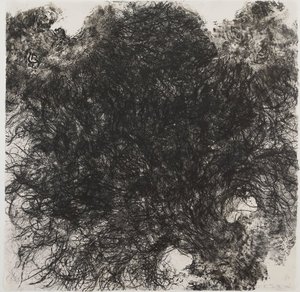
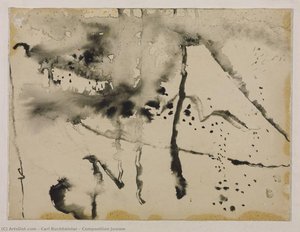
Artist Biography
A Life Forged in Fire: The Explosive Art of Cai Guo-Qiang
Cai Guo-Qiang’s journey is one of audacious experimentation, a relentless pursuit to reconcile the ancient traditions of his Chinese heritage with the dynamic currents of contemporary art. Born in 1957 in Quanzhou, China, his early life was deeply imprinted by a nation undergoing profound transformation. His father, Cai Ruiqin, a calligrapher and traditional painter, nurtured within him an appreciation for both Eastern aesthetics and Western literature – a duality that would become central to his artistic vision. Growing up during the tumultuous Cultural Revolution, young Cai witnessed firsthand the power of collective fervor and societal control, experiences that subtly informed his later explorations of ideology and utopian ideals. Perhaps surprisingly, this formative period also included early exposure to performance through participation in demonstrations and parades, alongside a brief foray into martial arts films – *The Spring and Fall of a Small Town* and *Real Kung Fu of Shaolin*. These seemingly disparate influences laid the groundwork for an artist who would consistently challenge boundaries and embrace unexpected juxtapositions. The ever-present imagery of gunpowder, utilized both in celebratory fireworks and as a tool of conflict, also began to take root in his subconscious, foreshadowing its eventual emergence as his signature medium.From Stage Design to Explosive Visions
Cai’s formal artistic training commenced at the Shanghai Theater Academy from 1981 to 1985, where he studied stage design. This period proved pivotal in developing his understanding of spatial arrangement, interactivity, and collaborative work – skills that would later be crucial in orchestrating his large-scale “explosion events.” Dissatisfied with the constraints of conventional artistic practices, Cai began experimenting with gunpowder drawings in the 1980s. These weren’t merely images *of* explosions; they were created *by* controlled detonations, using gunpowder as a direct drawing tool. This radical approach was a deliberate rejection of established artistic norms and a search for spontaneity and expressive freedom. He spent nearly a decade living in Japan from 1986 to 1995, further refining his technique and developing the conceptual framework that would define his career. It was during this time he truly began to harness the power of gunpowder not just as a medium but as a metaphor for destruction, creation, and the ephemeral nature of existence. His work increasingly drew inspiration from diverse sources – fengshui, Chinese medicine, traditional shanshui paintings, scientific principles, flora and fauna, portraiture, and, of course, the dazzling spectacle of fireworks themselves.A Global Stage: Recognition and Innovation
Cai Guo-Qiang’s artistic breakthrough arrived with international acclaim in 1999 when he was awarded the Golden Lion at the Venice Biennale – a watershed moment that propelled him onto the global art stage. This recognition was followed by numerous prestigious awards, including the Hiroshima Art Prize in 2007, honoring his commitment to peace and understanding through art; the Fukuoka Asian Culture Prize in 2009 for promoting cultural exchange; and the esteemed Praemium Imperiale in 2012, recognizing a lifetime of achievement. In the same year, he received the U.S. Department of State Medal of Arts, acknowledging his dedication to international cultural diplomacy. However, perhaps his most visible contribution to global culture came as Director of Visual and Special Effects for both the opening and closing ceremonies of the 2008 Beijing Summer Olympics and the 2022 Winter Olympics. These spectacular displays showcased his mastery of pyrotechnics on an unprecedented scale, captivating audiences worldwide. Throughout this period, Cai’s work was featured in solo exhibitions at major museums including the Metropolitan Museum of Art and the Solomon R. Guggenheim Museum in New York, solidifying his position as a leading figure in contemporary art.Blending East and West: A Legacy of Impermanence
Cai Guo-Qiang’s artistic style is characterized by its unique synthesis of Eastern philosophical concepts and Western contemporary practices. He doesn't simply *represent* Chinese culture; he embodies it, reinterpreting ancient traditions through a modern lens. His explosion events are inherently ephemeral – fleeting moments of beauty captured primarily through photography and video. This emphasis on impermanence reflects core tenets of Buddhist philosophy and the Taoist understanding of the universe as constantly in flux. Beyond aesthetics, Cai’s work often engages with profound social and political themes, particularly those related to China's history, cultural identity, and the complexities of modernization. He is a pioneer in site-specific art, creating installations that respond directly to their environment, engaging with local histories and cultures. His influence on contemporary art is undeniable; he has inspired countless artists to explore new materials, embrace large-scale installations, and confront challenging themes with boldness and originality. More recently, Cai Guo-Qiang continues to push boundaries, exploring the intersection of art and technology through projects like his blockchain divination project *EET* and his artificial intelligence art project *cAI™*, as well as continuing his exploration of Eastern and Western artistic traditions in exhibitions such as *Individual’s Journey Through Western Art History*. His work is a testament to the power of art to transcend cultural boundaries, provoke dialogue, and remind us of the beauty inherent in both creation and destruction.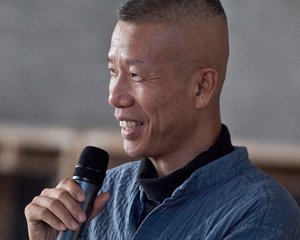
Cai Guo-Qiang
1957 - , China
Quick Facts
- Artistic Movement Or Style: Contemporary art, gunpowder art
- Artists Or Movements Influenced By This Artist: ['Contemporary artists']
- Artists Who Influenced This Artist: ['Cai Ruiqin']
- Date Of Birth: 1957
- Full Name: Cai Guo-Qiang
- Nationality: Chinese
- Notable Artworks:
- Nontransparent Monument
- Drawing for Transient Rainbow
- Man, Eagle and Eye in the Sky
- Place Of Birth: Quanzhou, China

