

 Preview
 Send
Send Share
Share
 Details

 Download
 Similars
 X-Ray
X-Ray Diaporama
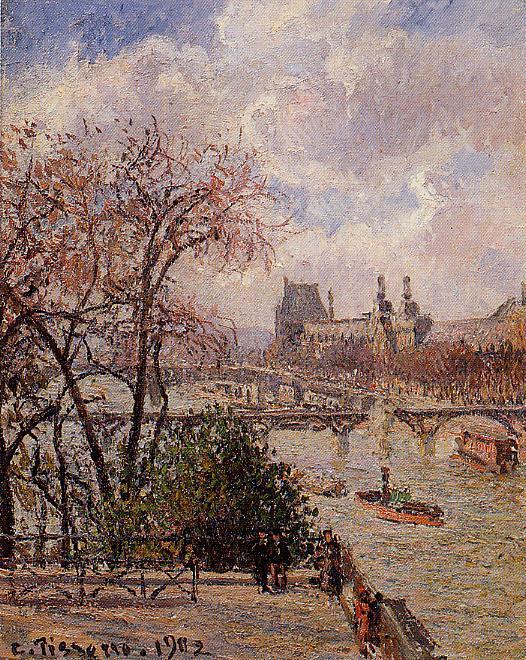
The Louvre, Gray Weather, Afternoon
 Acrylic On Canvas
- WallArt
- Impressionism
 1902
1902 41.0 x 33.0 cm
 Read More
Purchase a high-resolution, enhanced digital image, far superior to the online preview.
Each file is meticulously prepared by our in-house specialists using advanced tools and expert manual retouching. We ensure every image has exceptional clarity, precise color accuracy, and fine detail.
The final file is delivered via email within 72 hours, optimized for immediate use in professional, editorial, and print environments. This is the same quality trusted by top-tier design studios, publishers, and galleries.
Digital Image
Download a high-resolution file for personal display, printing, and creative projects. ( Buy Print Buy Hand Made Painting)
Included in Every Digital Image Order
Expert Digital Delivery, Guaranteed
When you choose ArtsDot.com, you're not just getting an image - you're receiving a professionally enhanced digital artwork, crafted with precision and backed by a satisfaction guarantee. Here's everything that comes with your order, automatically:

Fast Email Delivery
Your high-resolution digital image file will be emailed to you within 72 hours of ordering - ready for immediate use.

AI-Enhanced Digital File
Your artwork is professionally optimized using advanced AI tools and manual editing, ensuring maximum detail, clarity, and color accuracy.

Free Lifetime Re-Delivery
Accidentally deleted or lost your file? No worries - we'll resend it to you anytime, free of charge.

No Import Fees - Ever
Enjoy your artwork instantly with zero customs, duties, or delivery fees - digital downloads are always tax-free.

Color Accuracy Guarantee
We ensure your digital image reflects the original colors as closely as possible using professional tools and color management.

60-Day Satisfaction Guarantee
If you're not satisfied with your digital image, we'll revise it or refund 100% within 60 days - no questions asked.

100% Money-Back Guarantee
Not satisfied? Get a full refund within 60 days of receiving your digital file - no questions asked.

Bulk Order Discounts
Buy 3 images, save 10% - Buy 5, save 15% - Buy 10+, save 20%. Great for creative projects, galleries, and agencies.
A Moment Frozen in Parisian Light: Camille Pissarro’s “The Louvre”
Camille Pissarro's "The Louvre," painted in 1902, isn’t merely a depiction of Paris; it’s an embodiment of Impressionism itself—a movement that sought to capture the fleeting sensations of light and atmosphere rather than striving for photographic realism. This serene cityscape offers a glimpse into a specific afternoon on the Seine, reflecting not just the physical beauty of the city but also the intellectual currents shaping the art world at the time.
The Scene: A Watercolor Symphony
Executed in watercolor on canvas measuring 41 x 33 cm, “The Louvre” exemplifies Pissarro’s masterful technique. He eschewed bold brushstrokes and vibrant colors favored by some of his contemporaries, opting instead for delicate washes that blend seamlessly together. The artist skillfully utilized layering—applying thin glazes over previous layers—to build up tonal variations and create a luminous effect. Notice how the muted greys of the overcast sky dominate the composition, yet Pissarro manages to illuminate patches of buildings and water with subtle hints of color, primarily yellows and blues, capturing the diffused sunlight filtering through the clouds.
Historical Context: Impressionism's Embrace of Everyday Life
Painted during a pivotal period in Impressionist history—immediately following Monet’s groundbreaking “Impression, soleil levant”—Pissarro’s work aligns perfectly with the movement’s core principles. Impressionists were fascinated by capturing ordinary scenes and experiences, rejecting academic conventions that prioritized idealized representations. The Louvre itself served as a symbol of artistic prestige and intellectual curiosity, representing the aspirations of artists like Pissarro to engage with the world around them in an honest and emotive way.
Symbolism Beyond Surface Beauty
While aesthetically pleasing, “The Louvre” possesses deeper symbolic resonance. The Seine River, flowing prominently through the painting, represents not only the physical geography of Paris but also the flow of time and change—themes frequently explored by Impressionists. The boats traversing the river symbolize movement and connection, mirroring the dynamism inherent in urban life. Furthermore, the inclusion of figures strolling along the embankment speaks to the human element within the landscape, reminding us that art should reflect our relationship with nature and society.
Emotional Impact: Tranquility Amidst Urban Vibrancy
"The Louvre," Gray Weather, Afternoon" evokes a profound sense of tranquility despite its urban setting. The muted palette and soft brushwork create an atmosphere of contemplative beauty—a feeling that invites the viewer to pause and appreciate the subtle nuances of light and color. It’s a painting that captures not just what we see but also how we feel when confronted with the grandeur and serenity of Paris on a gray day, cementing Pissarro's legacy as one of Impressionism’s most enduring voices.
- Artist: Camille Pissarro
- Medium: Watercolor on Canvas
- Dimensions: 41 x 33 cm
- Year Created: 1902
- Museum Location: Musée des Beaux-Arts André Malraux (MuMa), Le Havre, France
Learn more about Camille Pissarro and his remarkable artistic journey at ArtsDot.com.
Related Artworks
Artist Biography
A Life Rooted in Observation: The World of Camille Pissarro
Camille Pissarro, a name synonymous with both the birth and evolution of Impressionism, was an artist whose life mirrored the shifting landscapes he so devotedly captured on canvas. Born Jacob Abraham Camille Pissarro on July 10, 1830, in Charlotte Amalie, St. Thomas – then part of the Danish West Indies, now the US Virgin Islands – his origins were as diverse and vibrant as the scenes that would later define his artistic vision. His father, a Portuguese Jewish merchant with French nationality, and his mother, from a French-Jewish family on the island, instilled in him a unique cultural heritage. This upbringing, somewhat unconventional due to familial complexities, fostered an early sensitivity to the world around him, a quality that would become the cornerstone of his artistic practice. His initial formal training at the Savary Academy near Paris provided a foundation in traditional techniques, but it was his return to St. Thomas and subsequent work as a cargo clerk that truly ignited his passion for observation. The bustling harbor, the vibrant local life, and the raw beauty of the Caribbean landscape became his first subjects, shaping an eye keenly attuned to the nuances of everyday existence.
From Realism to Revolution: Artistic Development
Pissarro’s artistic journey was one of constant exploration and refinement. After a period assisting Danish painter Anton Melbye in Paris, he immersed himself in the works of masters like Gustave Courbet, Jean-Baptiste-Camille Corot, and Honoré Daumier – artists who championed realism and social commentary. He initially sought acceptance within the established art world, exhibiting at the Paris Salon, but soon found its constraints stifling. A pivotal moment came with his embrace of *plein air* painting—working outdoors directly from nature—a practice encouraged by Corot that would become central to Impressionism. This shift wasn’t merely technical; it represented a philosophical change, a desire to capture the fleeting effects of light and atmosphere, the very essence of a scene rather than its precise representation. He began experimenting with looser brushwork and brighter palettes, moving away from academic conventions towards a more subjective and expressive style. His early landscapes, though still grounded in realism, hinted at the revolutionary path he was about to forge. This period saw him grappling with finding his own voice amidst the burgeoning artistic ferment of Paris, a city undergoing rapid transformation that provided endless inspiration.
The Father Figure of Impressionism
Camille Pissarro wasn’t simply *an* Impressionist; he was arguably its most steadfast and unifying force. Uniquely, he exhibited at all eight Paris Impressionist exhibitions between 1874 and 1886, acting as a stabilizing presence within a group often characterized by internal disagreements and individual ambitions. He wasn’t merely present—he actively encouraged his fellow artists, offering support, guidance, and a much-needed sense of camaraderie. This earned him the affectionate nickname “the father figure” of the movement. His commitment to artistic freedom and innovation was unwavering, even in the face of critical scorn and public indifference. He believed in the power of collective action and championed the idea of artists exhibiting independently from the Salon’s restrictive rules. Beyond his own work, Pissarro's influence extended to a younger generation of artists, including Paul Cézanne, Vincent van Gogh, and Paul Gauguin, whom he mentored and profoundly impacted. He provided them with not only technical advice but also a philosophical framework for their artistic explorations. His willingness to experiment led him briefly into Neo-Impressionism, influenced by Georges Seurat and Paul Signac’s pointillist techniques, before ultimately returning to a more personal style that blended his earlier influences with new discoveries.
Landscapes of Life: Themes and Legacy
Pissarro's artistic output was remarkably diverse, yet consistently focused on the world around him. He is celebrated for his depictions of both rural and urban landscapes, often portraying scenes of everyday life—peasants working in fields, bustling Parisian streets, quiet village squares. His paintings weren’t simply picturesque views; they were social commentaries, reflecting his deep empathy for the working class and his commitment to depicting their lives with dignity and respect.
- Landscapes: Renowned for capturing the beauty of both countryside and city life.
- Scenes of Parisian Life: Vivid portrayals of a rapidly changing metropolis.
- Peasant Life: Reflecting his social consciousness and empathy for the working class.
His later works, particularly those created during periods of political unrest or personal hardship, often carry a sense of melancholy and social critique. Pissarro’s legacy extends far beyond his beautiful paintings. He was a champion of artistic freedom, a mentor to generations of artists, and a pioneer in the development of modern art. His commitment to *plein air* painting revolutionized landscape art, while his willingness to experiment with different styles demonstrated his intellectual curiosity and unwavering dedication to his craft. Today, his works are held in major museums worldwide, continuing to inspire and captivate audiences with their honesty, beauty, and profound humanity. He remains a celebrated figure whose contributions continue to be studied and appreciated for their enduring relevance. Camille Pissarro’s art is not merely a record of the world as it was; it is a testament to the power of observation, empathy, and artistic innovation.
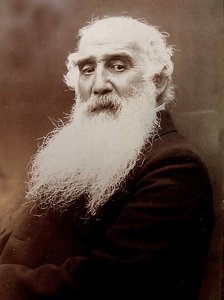
Camille Pissarro
1830 - 1903 , France
Quick Facts
- Artistic Movement Or Style: Impressionism, Neo-Impressionism
- Artists Or Movements Influenced By This Artist:
- Cézanne
- Van Gogh
- Gauguin
- Artists Who Influenced This Artist:
- Courbet
- Corot
- Daubigny
- Date Of Birth: July 10, 1830
- Date Of Death: November 13, 1903
- Full Name: Camille Pissarro
- Nationality: Danish-French
- Place Of Birth: Charlotte Amalie, USA

