

 Preview
 Send
Send Share
Share
 Details

 Download
 Similars
 X-Ray
X-Ray Diaporama
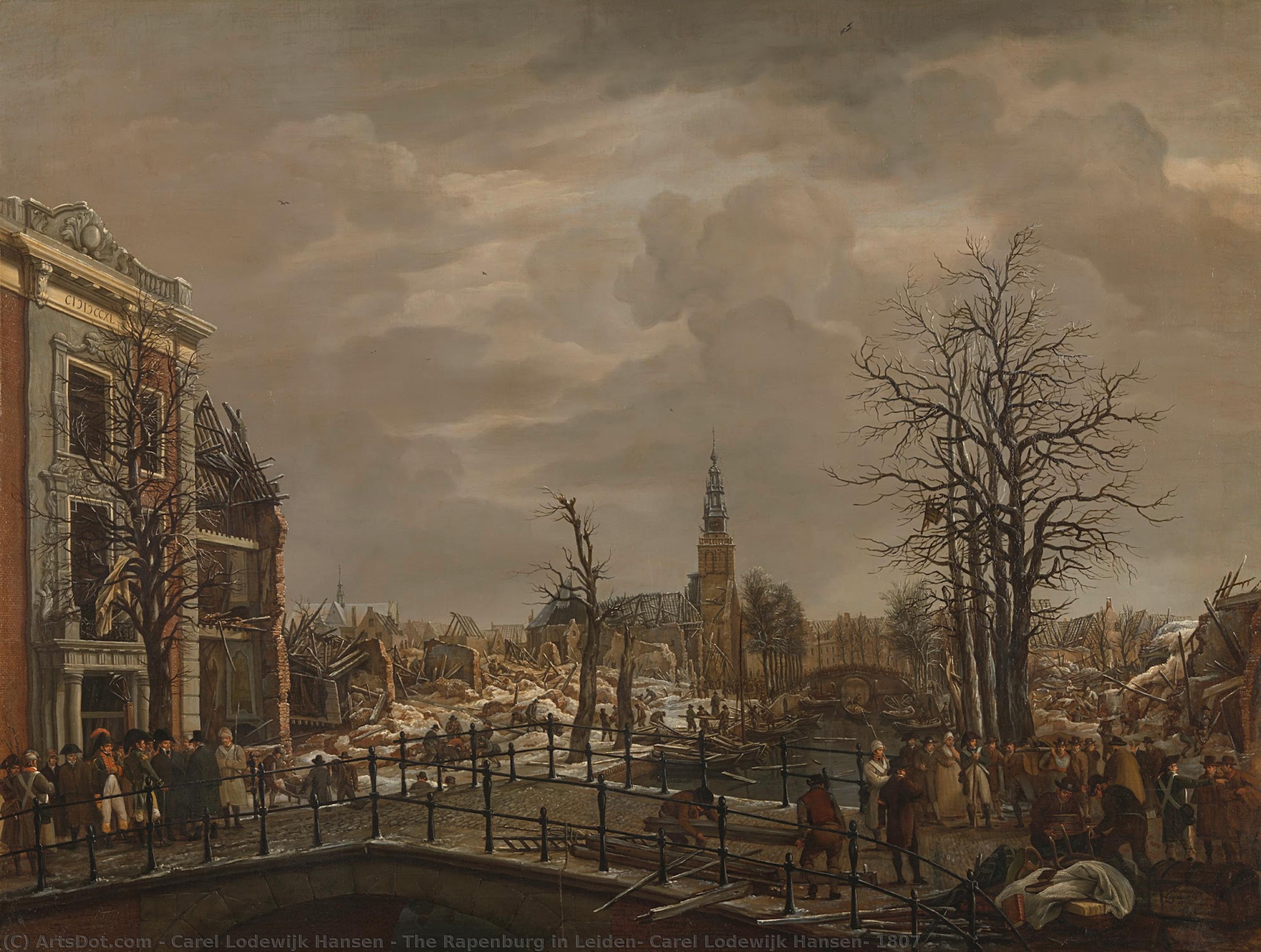
The Rapenburg in Leiden, Carel Lodewijk Hansen, 1807
 1807
1807 95.0 x 126.0 cm
 Read More
Purchase a high-resolution, enhanced digital image, far superior to the online preview.
Each file is meticulously prepared by our in-house specialists using advanced tools and expert manual retouching. We ensure every image has exceptional clarity, precise color accuracy, and fine detail.
The final file is delivered via email within 72 hours, optimized for immediate use in professional, editorial, and print environments. This is the same quality trusted by top-tier design studios, publishers, and galleries.
Digital Image
Download a high-resolution file for personal display, printing, and creative projects. ( Buy Print Buy Hand Made Painting)
Included in Every Digital Image Order
Expert Digital Delivery, Guaranteed
When you choose ArtsDot.com, you're not just getting an image - you're receiving a professionally enhanced digital artwork, crafted with precision and backed by a satisfaction guarantee. Here's everything that comes with your order, automatically:

Fast Email Delivery
Your high-resolution digital image file will be emailed to you within 72 hours of ordering - ready for immediate use.

AI-Enhanced Digital File
Your artwork is professionally optimized using advanced AI tools and manual editing, ensuring maximum detail, clarity, and color accuracy.

Free Lifetime Re-Delivery
Accidentally deleted or lost your file? No worries - we'll resend it to you anytime, free of charge.

No Import Fees - Ever
Enjoy your artwork instantly with zero customs, duties, or delivery fees - digital downloads are always tax-free.

Color Accuracy Guarantee
We ensure your digital image reflects the original colors as closely as possible using professional tools and color management.

60-Day Satisfaction Guarantee
If you're not satisfied with your digital image, we'll revise it or refund 100% within 60 days - no questions asked.

100% Money-Back Guarantee
Not satisfied? Get a full refund within 60 days of receiving your digital file - no questions asked.

Bulk Order Discounts
Buy 3 images, save 10% - Buy 5, save 15% - Buy 10+, save 20%. Great for creative projects, galleries, and agencies.
Related Artworks










Artist Biography
A Master of Moonlight: The Life and Art of Carel Lodewijk Hansen
Carel Lodewijk Hansen, born in Amsterdam in 1765, was a painter deeply attuned to the subtle nuances of light and atmosphere—a characteristic that would define his artistic career. Emerging from a city steeped in the legacy of the Dutch Golden Age, yet poised on the cusp of Romanticism, Hansen carved a niche for himself with evocative cityscapes and landscapes often bathed in the ethereal glow of moonlight. While not a name immediately recognized alongside the giants of art history, Hansen’s work offers a compelling glimpse into 19th-century Dutch painting, bridging traditional topographical precision with a growing sensitivity to mood and emotion.
Early Training and Guild Membership
Hansen's artistic journey began under the tutelage of Pieter Pietersz Barbiers, a respected landscapist in Amsterdam. This foundational training instilled in him a solid understanding of technique and composition, particularly in rendering natural forms. He became a member of the prestigious Haarlem Guild of St. Luke in 1794, a significant step for any aspiring artist in the Netherlands at the time. However, this membership was short-lived; the guild dissolved just three years later amidst political upheaval. Hansen continued to refine his skills and establish himself within Amsterdam’s artistic circles, eventually joining Felix Meritis in 1809—a society dedicated to arts and sciences—further solidifying his position as a respected professional.
Cityscapes and Landscapes: A Developing Style
Hansen's oeuvre primarily focused on two central themes: cityscapes and landscapes. His early works demonstrate a meticulous attention to detail, reflecting the Dutch tradition of topographical painting. He possessed an exceptional ability to capture the architectural character of Dutch towns and cities, rendering buildings with precision and accuracy. However, Hansen wasn’t merely interested in documentation; he infused his scenes with a poetic sensibility. He increasingly favored nocturnal subjects, drawn to the dramatic interplay of light and shadow cast by moonlight. This fascination with atmospheric effects became a hallmark of his style.
The Leiden Explosion Painting and Recognition
A pivotal moment in Hansen’s career came in 1807 when he was commissioned to paint a cityscape of Leiden following a devastating gunpowder explosion that ravaged the city center. The event, which caused widespread destruction, also drew the attention of Louis Bonaparte, then King of Holland, who personally inspected the damage. Hansen's painting captured the aftermath of the tragedy with sensitivity and detail, earning him considerable recognition. While acknowledging the devastation, he imbued the scene with a sense of resilience and hope. The work is often compared to Vermeer’s *View of Delft*, though it lacks the same poignant stillness; Hansen’s version focuses more on the reconstruction efforts than the immediate shock of loss.
Legacy and Historical Significance
Hansen's artistic contributions were further acknowledged with a gold medal awarded by Felix Meritis in 1818 for his cityscapes. He was not only a painter but also an etcher, producing topographical prints that disseminated his images more widely. He also collaborated with other artists like Adriaan de Lelie and Jacob Smies on various projects. Importantly, Hansen was a teacher; he passed on his knowledge to his sons, Carel Lodewijk II and Lambertus Johannes Hansen, ensuring the continuation of his artistic lineage. His paintings, often depicting scenes around Haarlem, Amsterdam, Apeldoorn, and Drente, offer valuable insights into Dutch life during the early 19th century. Though perhaps not a household name today, Carel Lodewijk Hansen remains an important figure in understanding the transition from the classical traditions of Dutch painting to the emerging Romantic sensibilities that would define much of the 19th century.
carel lodewijk hansen
1765 - 1840 , Netherlands
Quick Facts
- Artistic Movement Or Style: Cityscapes & Landscapes
- Artists Or Movements Influenced By This Artist:
- Carel Lodewijk II Hansen
- Lambertus Johannes Hansen
- Artists Who Influenced This Artist: ['Pieter Pietersz Barbiers']
- Date Of Birth: 1765
- Date Of Death: 1840
- Full Name: Carel Lodewijk Hansen
- Nationality: Dutch
- Notable Artworks:
- Rapenburg in Leiden
- Leiden explosion painting
- Place Of Birth: Amsterdam, Netherlands

