 Preview
 Send
Send Share
Share
 Details

 Download
 Similars
 X-Ray
X-Ray Diaporama
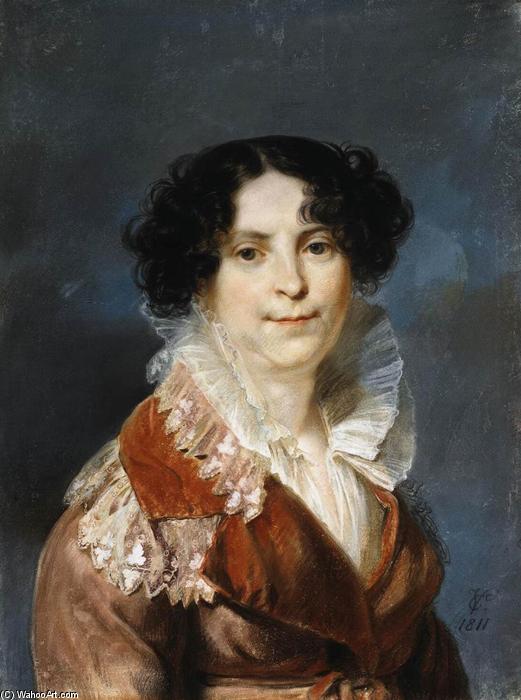
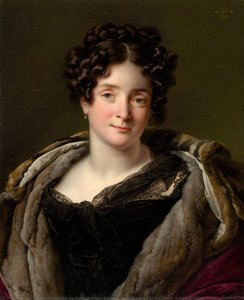
Portrait of a Lady
 1811
1811 62.0 x 64.0 cm
 Hermitage Museum
 Read More
Giclée / Art Print
Museum-quality giclée or canvas print with fast production and flexible finish options. ( Buy Hand Made Painting Buy Image)




































Pick from our preset sizes that match the artwork's original proportions.

You may enter your own dimensions to fit a specific frame or space. If your selected size does not match the original image's proportions, we will either crop the artwork or extend the image with a mirrored or solid-fill edge. A digital mockup will be sent for your approval before production begins.
Please note that the on-screen preview does not reflect the actual cropping or extension. Only the mockup will accurately show the final composition.
While custom sizes are available, we recommend selecting a dimension from the predefined list to preserve the original proportions.
Worldwide Delivery () in 2 weeks instead of standard 4/5 weeks. (29 August)

Free Worldwide Express Shipping

High-Quality Linen Canvas

Full Shipping Insurance

Customs Tax Refund Guarantee

True Color Matching Guarantee

60-Day Return Policy (Defects Only)

100% Money-Back Guarantee

Bulk Discount Offer
 Glass option is only available in size under 110 CM

Portrait of a Lady
Giclée / Art Print
Reproduction Size
-


Total Price
$ 63
Related Artworks







Artist Biography
The Master of the Noble Gaze
In the grand tapestry of the Romantic era, few threads are woven with as much elegance and precision as those spun by Carl Christian Vogel von Vogelstein. A painter who possessed the rare ability to capture not just the likeness, but the very essence of his subjects, Vogel stands as a monumental figure in German portraiture. Born in Wildenfels, Saxony, in 1788, his destiny was etched into the very pigments of his childhood. As the son of the esteemed portraitist Christian Leberecht Vogel, Carl Christian did not merely learn to paint; he was immersed in a world where the brushstroke served as a bridge between reality and the soul. This early, intimate apprenticeship provided him with a foundational mastery of classical principles that would later allow him to navigate the shifting tides of European art with unparalleled grace.
His formal education at the Kunstakademie in Dresden served as a crucible for his developing talent. It was here, amidst the silent halls of the Gemäldegalerie, that he studied the masters, translating the techniques of the old world into a fresh, contemporary language. His early years were marked by an intense dedication to observation, a trait that would become his hallmark. By copying the great works of the past, he absorbed the structural integrity of classical composition while preparing himself to embrace the burgeoning emotional depth of the Romantic movement.
A Journey Across Europe and the Pursuit of Excellence
Vogel’s life was a grand tour of the European cultural landscape, a nomadic pursuit of light, subject, and inspiration. In 1807, an invitation led him to Dorpat, but it was his move to Saint Petersburg in 1808 that truly expanded his horizons. In the imperial splendor of Russia, Vogel established himself as a premier chronicler of the elite, painting diplomats and nobles with a sophistication that commanded international respect. It was during this period that he began to amass an extraordinary collection of sketches—some seven hundred medallion portraits rendered in chalk and fine pencil—which remain a testament to his ability to capture a fleeting moment of character with nothing more than a few decisive lines.
The allure of the Mediterranean eventually drew him toward Italy, where between 1813 and 1820, he lived amidst the vibrant artistic community of Rome. This period was perhaps his most transformative, as he sought a delicate equilibrium between the structured clarity of the classicizing school and the expressive, emotive energy of Romanticism. Drawing heavily from the grace of Raphael, Vogel’s work in Rome reflected a profound spiritual and aesthetic maturity. He did not merely paint faces; he painted histories, capturing figures such as Lucien Bonaparte and Pope Pius VII with a dignity that transcended the canvas.
Legacy of the Von Vogelstein Name
The trajectory of his career was marked by significant honors that reflected his rising stature within the European hierarchy. His appointment as a Professor at the Fine Arts Academy in Dresden and his subsequent elevation to the nobility in 1831—earning him the title 'Von Vogelstein'—were more than mere accolades; they were recognitions of a life dedicated to the elevation of the portrait. His work bridged the gap between eras, blending the anatomical accuracy of Rubens and the chiaroscuro of Rembrandt with a refined, modern sensibility that spoke to the aristocratic elegance of his age.
Today, the significance of Carl Christian Vogel von Vogelstein lies in his ability to have anchored the Romantic era in classical truth. His portraits remain enduring windows into the nineteenth century, offering us more than just historical documentation. Through his mastery of tonal gradation and expressive brushwork, he invites us to look deeply into the eyes of the past, finding a timeless humanity that continues to captivate the modern observer. His legacy is found not only in museums but in the very way we understand the power of a portrait to hold the weight of an entire era.
Carl Christian Vogel von Vogelstein
1788 - 1868 , Germany
Quick Facts
- Artistic Movement Or Style: Portrait Painting
- Artists Who Influenced This Artist: ['Christian Leberecht Vogel']
- Date Of Birth: June 26, 1788
- Date Of Death: March 4, 1868
- Full Name: Carl Christian Vogel von Vogelstein
- Nationality: German
- Notable Artworks:
- Portrait of Friedrich von Amerling
- Portrait of a Lady
- Portrait of Joseph de Maistre
- Place Of Birth: Wildenfels, Germany