 Preview
 Send
Send Share
Share
 Details

 Download
 Similars
 X-Ray
X-Ray Diaporama
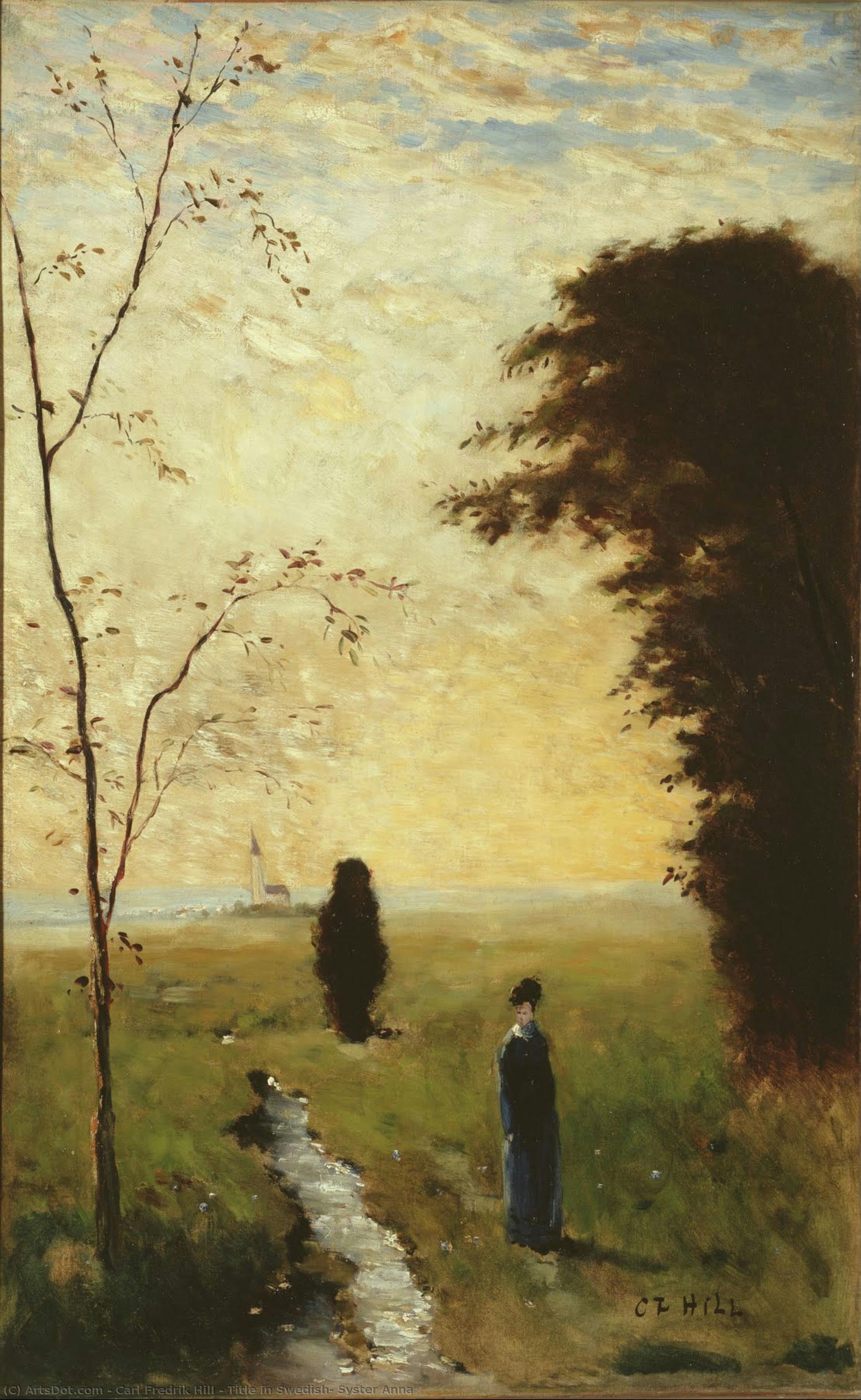
Title in Swedish: Syster Anna
 Oil
Oil- WallArt
- Barbizon School
 1877
1877- 19th Century
 650.0 x 1030.0 cm
 Nationalmuseum
 Read More
Giclée / Art Print
Museum-quality giclée or canvas print with fast production and flexible finish options. ( Buy Hand Made Painting Buy Image)




P118B $10

P118H $10

P118W $10

P438Z $10

P508JH $12

P508YH $12

P805H $10

P805Z $10

P919BZ $10

P919G $10

P919XJ $10

P959ZH $10

P968JZ $12

W106C $8

W218G $10

W218JH $8

W218Y $10

W307PJ $10

W316G $10

W316PJ $8

W316Y $10

W398PJ $8

W4111J $10

W500HY $15

W500JH $15

W692G $12

W849H $8

W940BG $15

W953PJ $8




Pick from our preset sizes that match the artwork's original proportions.

You may enter your own dimensions to fit a specific frame or space. If your selected size does not match the original image's proportions, we will either crop the artwork or extend the image with a mirrored or solid-fill edge. A digital mockup will be sent for your approval before production begins.
Please note that the on-screen preview does not reflect the actual cropping or extension. Only the mockup will accurately show the final composition.
While custom sizes are available, we recommend selecting a dimension from the predefined list to preserve the original proportions.
Worldwide Delivery () in 2 weeks instead of standard 4/5 weeks. (24 August)

Free Worldwide Express Shipping

High-Quality Linen Canvas

Full Shipping Insurance

Customs Tax Refund Guarantee

True Color Matching Guarantee

60-Day Return Policy (Defects Only)

100% Money-Back Guarantee

Bulk Discount Offer
 Glass option is only available in size under 110 CM

Title in Swedish: Syster Anna
Giclée / Art Print
Reproduction Size
-


Total Price
$ 63
Collectible Description
A Moment of Serenity Captured in Time
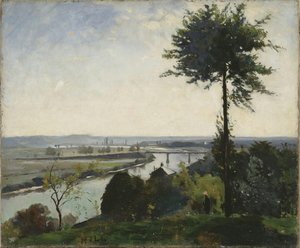
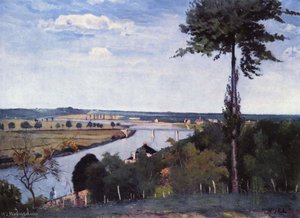
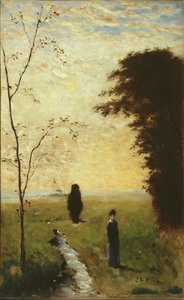
In the quietude of 1877, Carl Fredrik Hill captured a scene of profound tranquility that transcends the mere depiction of landscape. Syster Anna (Sister Anna) invites the viewer into a pastoral dreamscape where the boundaries between humanity and nature seem to dissolve. The painting presents a woman standing gracefully amidst lush greenery, her gaze directed toward something unseen just beyond the frame, perhaps lost in a moment of quiet contemplation. Beside her, a loyal companion—a dog—wanders through the grass, grounding the ethereal atmosphere with a sense of domestic peace. This is not merely a portrait of a person, but a portrait of a feeling: that fleeting, breathless second when the world feels perfectly still and harmonious.
The composition is masterfully layered, drawing the eye from the intimate foreground into a sprawling, atmospheric distance. As one wanders through the painting, other figures appear like soft echoes in the landscape, some near and others far, suggesting a shared existence within this idyllic setting. A distant boat rests upon a shimmering body of water, adding a touch of romantic wanderlust to the scene. For the discerning collector or interior designer, this piece offers a window into a world of classical tranquility, making it an ideal centerpiece for spaces designed to evoke calm, reflection, and a connection to the natural world.
The Mastery of Light and Symbolism
Technically, Hill’s work from this period reflects a sophisticated dialogue with the great masters of his era. While his brushwork carries the influence of the Barbizon School and the soft, atmospheric light of Claude Lorot, there is an unmistakable psychological depth present in Syster Anna. The way the light filters through the foliage and illuminates the woman’s form suggests a symbolic connection to the "truth" that Hill so fervently sought in his art. He rejects the superficiality of mere naturalism, instead using the landscape as a vessel for emotion.
The painting serves as a poignant testament to a period of intense creative output before the shadows of mental illness began to alter his artistic vision. In this work, we see the height of his ability to balance literary symbolism with breathtaking scenery. The interplay between the solitary figure and the vast, inhabited landscape creates a beautiful tension—a sense of being alone yet deeply connected to the pulse of life. For those seeking to adorn a home with art that possesses both narrative weight and aesthetic grace, this reproduction offers an unparalleled opportunity to own a fragment of Swedish art history.
An Essential Addition to any Fine Collection
Integrating a high-quality reproduction of Syster Anna into a curated interior allows for the introduction of a sophisticated, historical narrative. The expansive scale and soft color palette make it a versatile choice for various design aesthetics, from traditional manor-style rooms to modern, minimalist galleries that crave a touch of organic warmth. It is more than a decoration; it is an invitation to pause.
To possess this work is to hold a piece of Carl Fredrik Hill’s legacy—a legacy defined by the struggle to capture le vrai (the truth) amidst the complexities of the human condition. Whether placed in a sunlit study or a quiet bedroom, the painting radiates an enduring peace that continues to captivate the hearts of art lovers and historians alike.
Related Artworks


Artist Biography
The Luminous Tragedy of Carl Fredrik Hill
Carl Fredrik Hill (1849–1911) remains one of the most poignant and singular figures in the annals of Swedish art, a painter whose brilliant trajectory was irrevocably altered by the shadows of mental illness. Born into the scholarly atmosphere of Lund, the son of a mathematics professor, Hill’s life was defined by a profound tension between familial expectation and an unyielding artistic calling. While his father envisioned a pragmatic, academic career, Hill found himself drawn to the visceral drama of the natural world. This early struggle for autonomy set the stage for a career that would oscillate between the serene beauty of classical landscapes and the haunting, surreal depths of a fractured psyche.
His formal education at the Stockholm Royal Academy of Fine Arts provided the technical foundation upon which he would build his unique vision. However, it was his immersion in the artistic currents of Paris that truly ignited his creative spirit. In the heart of France, Hill encountered the profound influence of the Barbizon School, absorbing the atmospheric subtleties and emotive textures championed by masters like Camille Corot. He traveled through Montigny, Champagne, and Normandy, meticulously documenting landscapes that were far more than mere topographical records; they were explorations of le vrai—the truth. For Hill, art was not a pursuit of superficial naturalism but a quest to capture the genuine emotion and psychological resonance embedded within the landscape.
A Dual Legacy: From Serenity to Surrealism
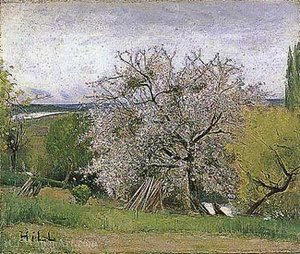
The evolution of Hill’s oeuvre is often categorized into two distinct, yet equally vital, periods. The first phase of his career is celebrated for its atmospheric landscapes, characterized by a sophisticated dialogue with light and classical composition. During this time, works such as Syster Anna (Sister Anna) showcased his ability to create pastoral dreamscapes where humanity and nature exist in a state of profound tranquility. In these paintings, the boundaries between the observer and the environment seem to dissolve, inviting a sense of quiet contemplation and domestic peace through masterfully layered compositions and soft, evocative light.
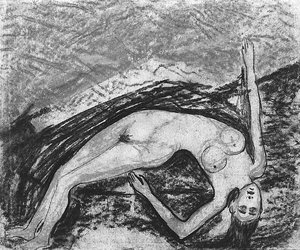
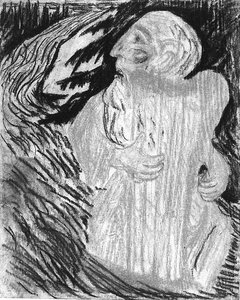
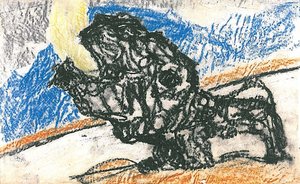
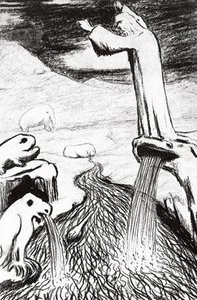
However, this period of classical grace was abruptly interrupted by a devastating psychotic episode at the age of twenty-eight. The onset of hallucinations and paranoia fundamentally transformed his artistic language. As his mental health declined, Hill’s work shifted from the documented beauty of the external world to the fantastical, often unsettling, landscapes of his internal reality. This "second period" is marked by:
- Intricate Drawings: A prolific output of drawings and sketches that explore surreal and often nightmarish imagery.
- Expressive Realism: A move toward more textured, dramatic, and sometimes distorted representations of nature.
- Symbolic Depth: The use of landscape elements to mirror psychological states of isolation and fragmentation.
Historical Significance and the Weight of Silence
Despite his immense talent, Hill’s life was characterized by a tragic lack of recognition during his lifetime. His repeated rejections from the prestigious Paris Salon served as a painful testament to the era's resistance toward avant-garde expression. Following his breakdown, he returned to Sweden, living under the devoted care of his mother and sister for nearly three decades. This period of seclusion meant that much of his most profound work remained unseen by the wider art world, leaving him to be remembered in his death certificate simply as a "former landscape painter."
Today, however, the historical significance of Carl Fredrik Hill has been reclaimed. He is no longer viewed merely as a tragic figure of lost potential, but as a pioneer who bridged the gap between 19th-century naturalism and the psychological depth of modern art. His ability to translate the turbulence of the human mind into the language of landscape offers a hauntingly beautiful window into the complexities of perception. Hill’s legacy endures as a powerful reminder that even within the darkest of mental struggles, there can exist an extraordinary capacity for profound, transformative beauty.
Carl Fredrik Hill
1849 - 1911
Quick Facts
- Artistic Movement Or Style: Barbizon School, Expressionism
- Artists Or Movements Influenced By This Artist: ['Impressionism']
- Artists Who Influenced This Artist: ['Camille Corot']
- Date Of Birth: 1849
- Date Of Death: 1911
- Full Name: Carl Fredrik Hill
- Nationality: Swedish
- Notable Artworks:
- Untitled (709)
- Untitled (336)
- Untitled (852)
- Place Of Birth: Sweden
Related Articles
Serene Visions: Exploring Themes of Tranquility in Art History & Contemporary Practice
Explore the history of serene landscape art & discover artists who evoke tranquility. Find the perfect calming artwork for your home with expert guidance from ArtsDot.

John Constable's Masterpieces: Explore 25 Iconic Landscapes for Your Home
Journey through John Constable's 25 most celebrated landscapes. Explore Romanticism, Dedham Vale & his masterful use of light in iconic paintings like 'Hay Wain'. Find museum-quality art reproductions and elevate your home decor on ArtsDot.com.

Hokusai's Masterpieces: 25 Iconic Prints & Paintings for Art Lovers | ArtsDot
Journey through Katsushika Hokusai’s 25 most iconic artworks, including *The Great Wave*. Explore the ukiyo-e master's history, style & timeless Japanese woodblock prints. Find museum-quality reproductions for your home at ArtsDot.com.

Evocations of Place: A Historical Journey Through Landscape Art
Explore the rich history of landscape art with ArtsDot. Discover renowned artists, movements like Impressionism & Romanticism, and expert guidance for collecting timeless pieces. Find your perfect serene escape today!
Evoking Tranquility: A Study of Serene Beauty in Visual Art Across Historical Movements
Explore the history of serene art & discover how landscape paintings evoke tranquility across movements. Find inspiration for calming home decor & museum-quality reproductions at ArtsDot.