 Preview
 Send
Send Share
Share
 Details

 Download
 Similars
 X-Ray
X-Ray Diaporama
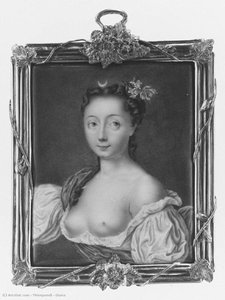
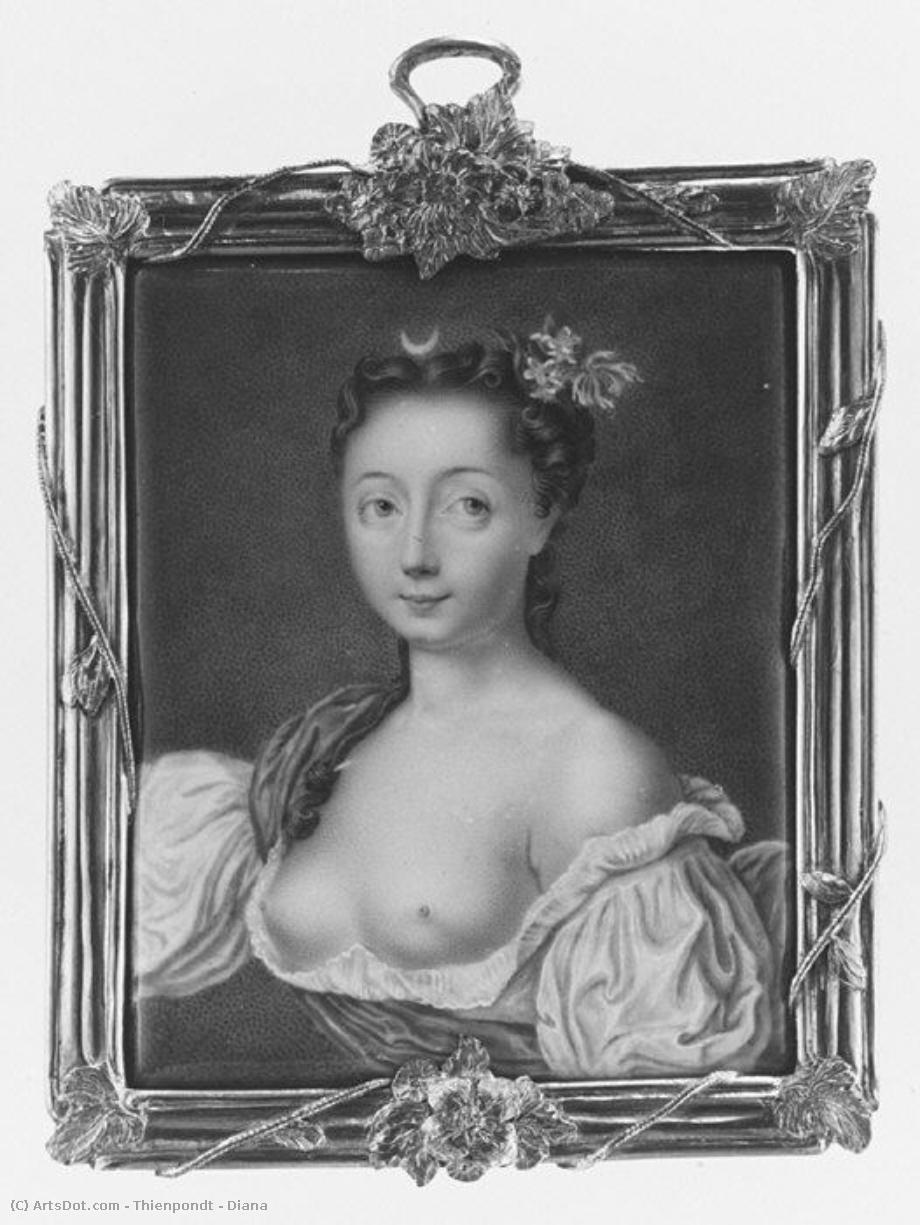
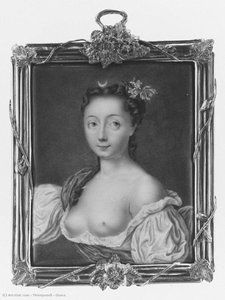
Diana
 1760
1760 7.0 x 6.0 cm
 Read More
Hand Made Oil Reproduction
Hand-painted oil on canvas in your size and frame, made to order by our artists. ( Buy Print Buy Image)




































Pick from our preset sizes that match the artwork's original proportions.

You may enter your own dimensions to fit a specific frame or space. If your selected size does not match the original image's proportions, we will either crop the artwork or extend the painting with additional hand-painted elements. A digital mockup will be sent for your approval before production begins.
Please note that the on-screen preview does not reflect the actual cropping or extension. Only the mockup will accurately show the final composition.
While custom sizes are available, we recommend selecting a dimension from the predefined list to preserve the original proportions.
After order, ArtsDot.com team will email client for instructions and provide a mockup preview
Worldwide Delivery () in 3/4 weeks instead of standard 5 weeks. (30 August). No compromise on quality.

Free Worldwide Express Shipping

High-Quality Linen Canvas

Full Shipping Insurance

Customs Tax Refund Guarantee

True Color Matching Guarantee

60-Day Return Policy (Defects Only)

100% Money-Back Guarantee

Bulk Discount Offer
 Glass option is only available in size under 110 CM

Diana
Reproduction Medium
Reproduction Size
-


Total Price
$ 263
Related Artworks





Artist Biography
The Intimate Precision of Carl Friedrich Thienpondt
Born in the vibrant atmosphere of Berlin in 1730, Carl Friedrich Thienpondt emerged as a master of the miniature, an artist whose life and work bridged the cultural landscapes of Prussia and Poland. His artistic journey began with a profound foundation laid during a formal apprenticeship under the esteemed Antoine Pesne. This early mentorship was transformative, instilling in Thienpondt a deep-seated reverence for classical techniques and the delicate nuances of portraiture. While many artists of his era sought the grandeur of large-scale canvases, Thienpondt found his true calling in 1751 when he dedicated himself to the intricate world of miniature painting. This was not merely a choice of scale, but a profound commitment to capturing the ephemeral—the fleeting glance, the subtle texture of lace, and the intimate essence of a human soul, all rendered with unparalleled precision.
The evolution of Thienpondt’s style reached a pivotal turning point in 1753 when his travels led him to Dresden. It was here that he encountered the influence of Ismael Mengs, a painter celebrated for his dramatic compositions and a masterful command of light. Under Mengs’ guidance, Thienpondt’s technical repertoire expanded significantly; he learned to embrace the theatricality of the Baroque aesthetic, integrating a heightened sense of drama into his small-scale works. This period refined his ability to render textures with an astonishing realism that breathed life into every microscopic detail. The influence of Mengs remains visible in Thienpondt's later portraits, where light and shadow dance across the surface to create a sense of movement and emotional depth that belies the tiny dimensions of the medium.
A Legacy Carved in Warsaw
As his reputation grew, Thienpondt relocated to Warsaw, Poland, a move that would redefine his artistic focus and cement his place in European art history. In the heart of Poland, he found a new cultural context that offered fresh inspiration and a prestigious clientele. Warsaw became his creative sanctuary, where he established himself as a highly sought-after portraitist for the Polish nobility. His work during this period is characterized by a remarkable sensitivity; he did not merely record the likenesses of the aristocracy but captured their unique personalities and the social grandeur of their era.
The significance of Thienpondt’s contribution to the art world lies in his ability to marry the meticulousness of German training with the vibrant, aristocratic spirit of Poland. His achievements can be summarized through several key aspects of his career:
- Mastery of Scale: He elevated the miniature format from a mere curiosity to a sophisticated medium capable of profound emotional expression.
- Technical Synthesis: He successfully blended the classical discipline of Antoine Pesne with the dramatic, light-driven techniques of Ismael Mengs.
- Cultural Bridge: His movement between Berlin, Dresden, and Warsaw allowed him to weave together the artistic traditions of Central Europe.
- Historical Documentation: Through his portraits of the Polish nobility, he provided an intimate visual record of the social fabric of 18th-century Poland.
Ultimately, the work of Carl Friedrich Thienpondt stands as a testament to the power of detail. His ability to command attention through the minute and the microscopic ensures that his legacy remains as luminous today as it was during the height of the Enlightenment. He remains a definitive figure for anyone seeking to understand the delicate intersection of technical mastery and emotional intimacy in 18th-century portraiture.
carl friedrich thienpondt
1730 - 1796 , Germany
Quick Facts
- Artistic Movement Or Style: Miniature painting
- Artists Who Influenced This Artist: ['Antoine Pesne']
- Date Of Birth: 1730 Berlin, Germany
- Date Of Death: 1796
- Full Name: Carl Friedrich Thienpondt
- Nationality: German
- Notable Artworks: ['Diana']
- Place Of Birth: Berlin, Germany