 Preview
 Send
Send Share
Share
 Details

 Download
 Similars
 X-Ray
X-Ray Diaporama
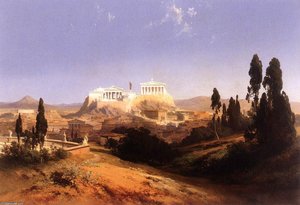
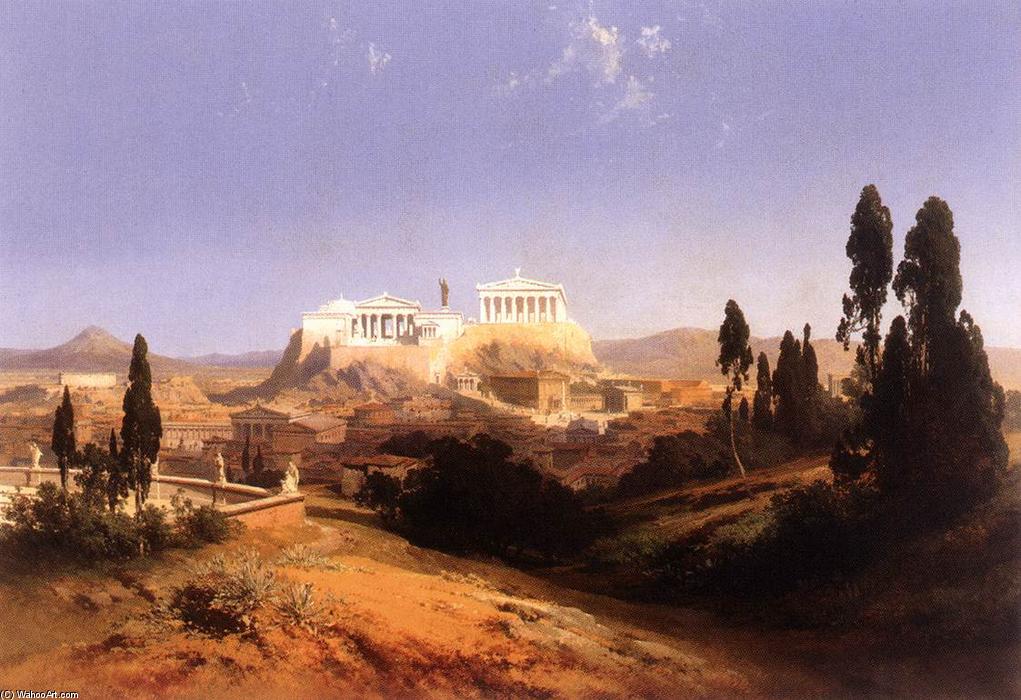
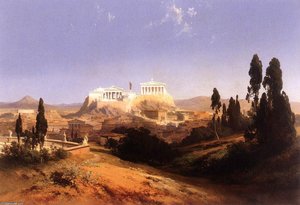
View of Athens


 Read More
Hand Made Oil Reproduction
Hand-painted oil on canvas in your size and frame, made to order by our artists. ( Buy Print Buy Image)




































Pick from our preset sizes that match the artwork's original proportions.

You may enter your own dimensions to fit a specific frame or space. If your selected size does not match the original image's proportions, we will either crop the artwork or extend the painting with additional hand-painted elements. A digital mockup will be sent for your approval before production begins.
Please note that the on-screen preview does not reflect the actual cropping or extension. Only the mockup will accurately show the final composition.
While custom sizes are available, we recommend selecting a dimension from the predefined list to preserve the original proportions.
After order, ArtsDot.com team will email client for instructions and provide a mockup preview
Worldwide Delivery () in 3/4 weeks instead of standard 5 weeks. (22 August). No compromise on quality.

Free Worldwide Express Shipping

High-Quality Linen Canvas

Full Shipping Insurance

Customs Tax Refund Guarantee

True Color Matching Guarantee

60-Day Return Policy (Defects Only)

100% Money-Back Guarantee

Bulk Discount Offer
 Glass option is only available in size under 110 CM

View of Athens
Reproduction Medium
Reproduction Size
-


Total Price
$ 263
Related Artworks








Artist Biography
The Architect of Light and Shadow: The Life of Carl Georg Anton Graeb
In the heart of nineteenth-century Berlin, a period defined by the sweeping emotional tides of Romanticism, Carl Georg Anton Graeb emerged as a master of the constructed gaze. Born in 1816, Graeb did not merely paint what he saw; he orchestrated environments that breathed with a sense of theatrical grandeur and spiritual stillness. His journey was one of profound transformation, moving from the ephemeral world of stage design to the enduring permanence of architectural landscapes. To study Graeb is to witness a painter obsessed with the intersection of human craftsmanship and the sublime majesty of the natural world.
Graeb’s artistic foundation was laid under the watchful eyes of some of the era's most formidable talents. His training at the Prussian Academy of Arts brought him into the orbit of Carl Blechen, a pioneer whose use of light and color would deeply inform Graeb’s own expressive palette. This mentorship was further enriched by private lessons from Johann Gerst, a respected theater painter who would later become Graeb's father-in-law. It was through this lineage that Graeb mastered the art of the "theatrical landscape"—a style where every architectural element and sweeping vista is composed with the dramatic intent of a stage set, designed to evoke an immediate emotional response from the spectator.
A Journey Through the Sublime
The year 1838 marked a pivotal departure in Graeb’s life. After a brief, intense tenure as a theater painter for the Königsstädtisches Theater, he abandoned the controlled environments of the stage to seek inspiration in the wild, unscripted beauty of Europe. For nearly four years, his travels took him through the rugged peaks of Switzerland, the sun-drenched landscapes of Southern France, the Pyrenees, and the ancient, storied terrains of Italy and Sicily. These expeditions were far more than mere sightseeing; they were essential periods of visual and spiritual pilgrimage.
During these wanderings, Graeb’s work began to reflect a profound engagement with the sublime—that specific Romantic tension between awe and terror when confronted by the infinite. The monumental mountains and ancient ruins he encountered became more than subjects; they became vessels for psychological depth. His ability to translate the immense scale of the Alps or the weathered grandeur of Sicilian architecture into the intimate medium of oil on canvas allowed him to capture a sense of timelessness, mirroring the preoccupation with nature's overwhelming power shared by contemporaries like Caspar David Friedrich.
Legacy of the Court and the Academy
Upon his return to Berlin in 1844, Graeb transitioned from a wandering traveler to an established pillar of the German art scene. Alongside Gerst, he established a decorative and theatrical painting studio that flourished until 1852, bridging the gap between fine art and functional ornamentation. His talent eventually caught the eye of the highest echelons of Prussian society. In 1851, his appointment as a court painter brought him prestigious commissions from Friedrich Wilhelm IV and Queen Elisabeth, tasking him with documenting the architectural splendor of Potsdam and Charlottenburg through ninety-four meticulously rendered landscapes.
The later years of Graeb’s life were marked by significant institutional recognition and a shift toward more contemplative subjects. His mastery of interiority led him to produce breathtaking depictions of church interiors across Germany and Switzerland, where he used light to navigate the sacred silence of stone and stained glass. His achievements were solidified through several prestigious honors:
- Royal Professor: Named in 1855, a testament to his technical mastery and contribution to German art.
- Academic Excellence: Elected as a member of the Academy of Arts in 1860.
- Civic Leadership: His influence extended beyond the canvas when he was elected to the Berlin legislature (Magistrat) in 1875.
When Carl Georg Anton Graeb passed away in Berlin in 1884, he left behind a legacy that continues to captivate those drawn to the intersection of architecture and emotion. His work remains a vital link in the history of German Romanticism, reminding us that even the most solid structures—be they cathedrals, palaces, or mountains—are ultimately stages upon which the human soul performs its most profound dramas.
carl georg anton graeb
1816 - 1884 , Germany
Quick Facts
- Artistic Movement Or Style: Romanticism Art
- Artists Or Movements Influenced By This Artist: ['Friedrich']
- Artists Who Influenced This Artist: ['Johann Gerst']
- Date Of Birth: March 18, 1816
- Full Name: Carl Georg Anton Graeb
- Nationality: German
- Notable Artworks: ['View of Athens']
- Place Of Birth: Berlin, Germany