 Preview
 Send
Send Share
Share
 Details

 Download
 Similars
 X-Ray
X-Ray Diaporama
 Stats
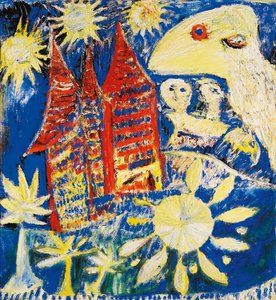
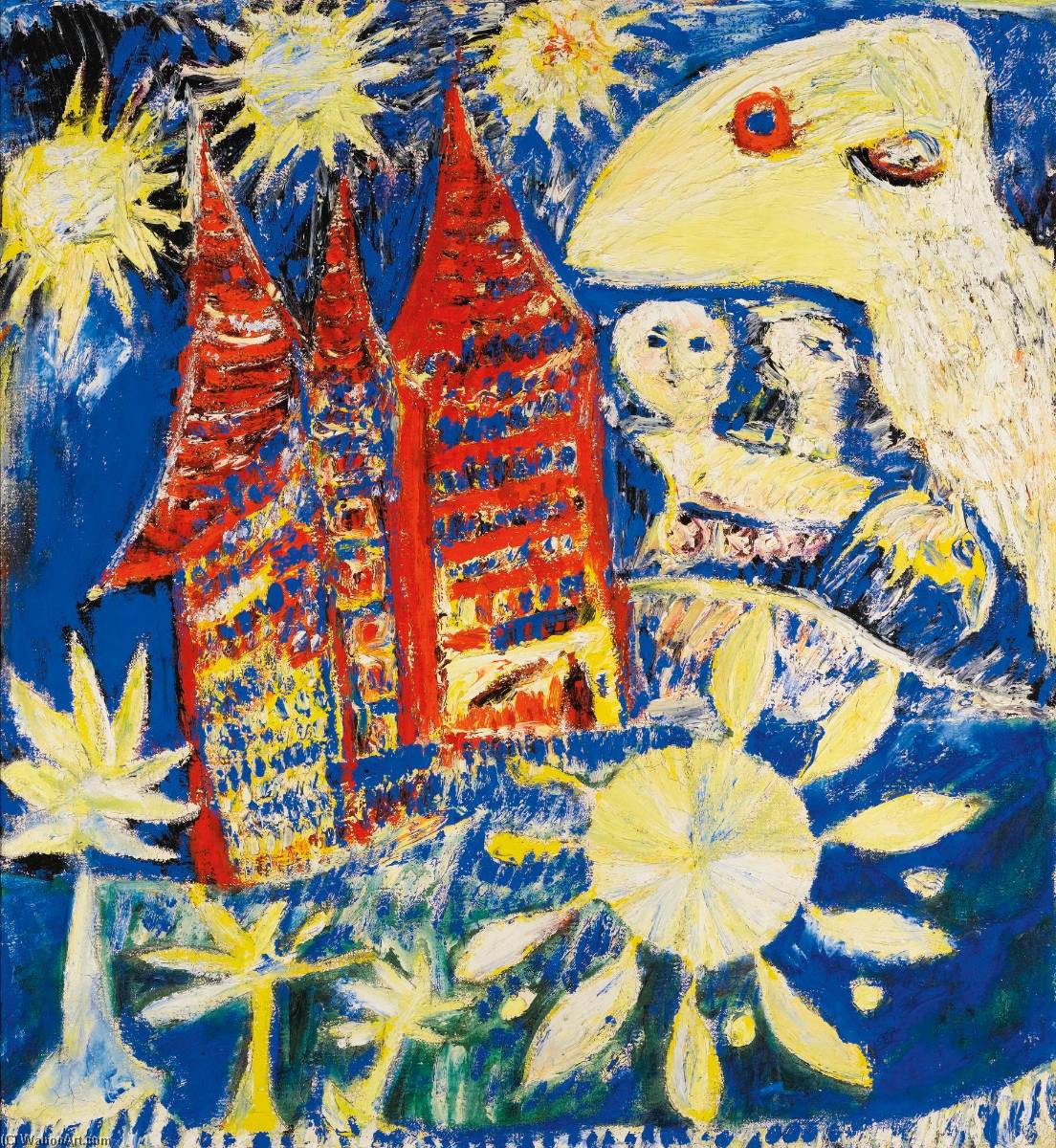
StatsRed Castle with Birds
 Read More
Giclée / Art Print
Museum-quality giclée or canvas print with fast production and flexible finish options. ( Buy Hand Made Painting Switch to Digital Image)




































Pick from our preset sizes that match the artwork's original proportions.

You may enter your own dimensions to fit a specific frame or space. If your selected size does not match the original image's proportions, we will either crop the artwork or extend the image with a mirrored or solid-fill edge. A digital mockup will be sent for your approval before production begins.
Please note that the on-screen preview does not reflect the actual cropping or extension. Only the mockup will accurately show the final composition.
While custom sizes are available, we recommend selecting a dimension from the predefined list to preserve the original proportions.
Worldwide Delivery () in 2 weeks instead of standard 4/5 weeks. (8 September)

Free Worldwide Express Shipping

High-Quality Linen Canvas

Full Shipping Insurance

Customs Tax Refund Guarantee

True Color Matching Guarantee

100-Day Return Policy (Defects Only)

100% Money-Back Guarantee

Bulk Discount Offer
 Glass option is only available in size under 110 CM

Red Castle with Birds
Giclée / Art Print
Reproduction Size
-


Total Price
$ 63
Related Artworks

Artist Biography
A Life Dedicated to Dreaming: The Art of Carl Henning Pedersen
Carl Henning Pedersen (1913–2007) stands as a singular figure in Danish art history—a self-taught painter who defied convention and embraced childlike wonder, producing an astonishing body of work that continues to captivate audiences worldwide. Born in Copenhagen’s impoverished Vigerslev Alle district, Pedersen's formative years were marked by radical political convictions and a profound engagement with socialist ideals. This early passion fueled his involvement with the International Folk High School in Elsinore, where he forged an enduring friendship with Else Alfelt. Their bond was both personal and professional; they married in 1934, and it was Alfelt’s encouragement that nurtured Pedersen's artistic ambitions, propelling him onto a path of creative expression that would eventually lead him to the forefront of the European avant-garde.From Political Conviction to Abstract Expression
Pedersen's debut at the Artists’ Autumn Exhibition in Copenhagen in 1936 signaled an immediate departure from prevailing stylistic trends. While many of his communist peers adhered to the rigid structures of Socialist Realism, Pedersen embraced a modernist approach characterized by flat planes of color and rhythmic compositions. His early works echoed the pioneering spirit of the Cubists and the whimsical, symbolic language of Paul Klee. This period was marked by intellectual tension; he famously engaged in spirited debates with figures like Bertolt Brecht regarding the role of artistic integrity in a politically charged era. In 1939, a solitary journey to Paris served as a profound awakening. Immersing himself in the masterpieces of Picasso and Matisse, Pedersen began to refine his visual vocabulary. A pivotal moment occurred during his travels through Frankfurt am Main, where he encountered the exhibition of “degenerate art.” Rather than being deterred, he found deep inspiration in the vibrant, dreamlike imagery of Marc Chagall. This encounter left an indelible mark on his oeuvre, cementing a lifelong fascination with the intersection of fantasy and reality that would earn him the moniker "the Scandinavian Chagall."The CoBrA Movement and the Spirit of Spontaneity
The post-war era brought about Pedersen's most significant historical contribution. In 1948, he became a founding member of the legendary CoBrA movement, alongside artists such as Asger Jorn and Karel Appel. This collective was dedicated to exploring spontaneity, experimentation, and the raw power of imagination. Rejecting the constraints of naturalism, Pedersen embraced an ethos of "art for all," seeking to tap into a universal language of symbols, animals, and celestial bodies. His work during this period and beyond is characterized by:- Spontaneous Imagery: The use of free-form, energetic brushstrokes that convey movement and emotion.
- Symbolic Landscapes: A recurring fascination with birds, stars, and mythical creatures inhabiting kaleidoscopic worlds.
- Vibrant Color Palettes: A reliance on strong, fantastic colors to evoke a sense of wonder and cosmic energy.
- Mosaic-like Compositions: The creation of intricate patterns that suggest both ancient murals and modern abstractions.
Legacy and International Recognition
As his career progressed, Pedersen's reach extended far beyond the borders of Denmark. His international breakthrough arrived in 1962 when he was selected as Denmark’s official representative at the Venice Biennale, an honor accompanied by the prestigious UNESCO Prize. Throughout the mid-20th century, his accolades grew to include the Eckersberg Medal and the Guggenheim International Award, cementing his status as a leading figure of modern Danish art. Even as the CoBrA movement dissolved in 1951, Pedersen’s commitment to the spirit of freedom remained unshakable. His late works continued to bridge the gap between the earthly and the ethereal, leaving behind a legacy of art that serves as a testament to the power of the human imagination. Through his mastery of color and his ability to translate the logic of dreams onto canvas, Carl Henning Pedersen remains an eternal architect of the fantastic.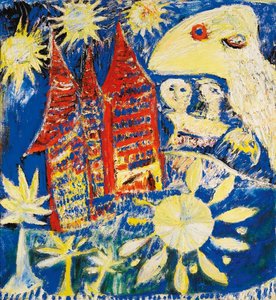
carl henning pedersen
1913 - 2007
Quick Facts
- Artistic Movement Or Style: COBRA
- Artists Or Movements Influenced By This Artist: ['Scandinavian art']
- Artists Who Influenced This Artist:
- Paul Klee
- Marc Chagall
- Date Of Birth: 1913
- Date Of Death: 2007
- Full Name: Carl Henning Pedersen
- Nationality: Danish
- Notable Artworks:
- Grey Bird with Stars
- Red Castle with Birds
- Place Of Birth: Copenhagen, Denmark