 Preview
 Send
Send Share
Share
 Details

 Download
 Similars
 X-Ray
X-Ray Diaporama
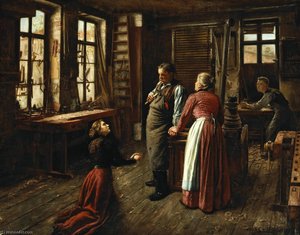
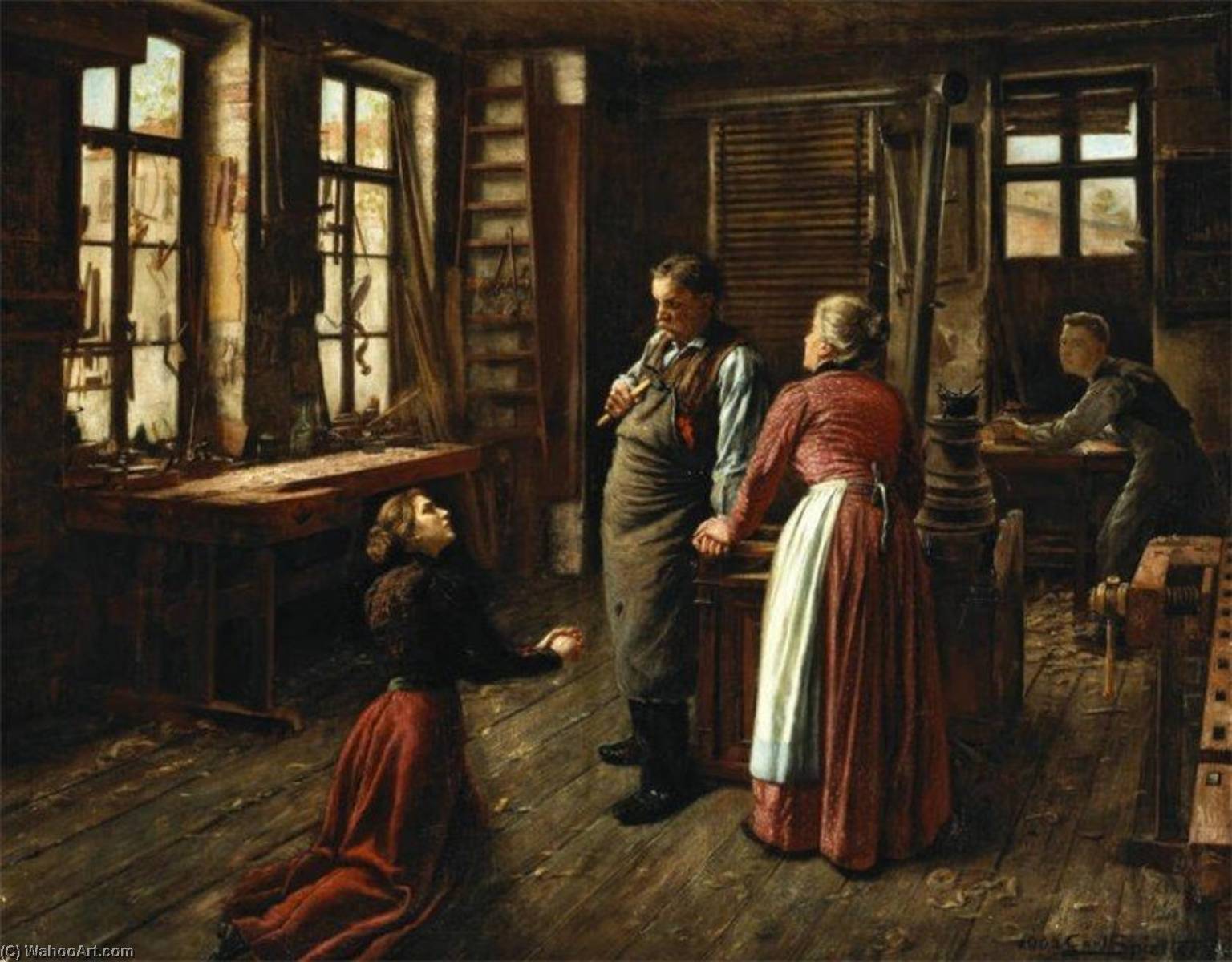
A Father's Dilemma

 Read More
Giclée / Art Print
Museum-quality giclée or canvas print with fast production and flexible finish options. ( Buy Hand Made Painting Buy Image)




































Pick from our preset sizes that match the artwork's original proportions.

You may enter your own dimensions to fit a specific frame or space. If your selected size does not match the original image's proportions, we will either crop the artwork or extend the image with a mirrored or solid-fill edge. A digital mockup will be sent for your approval before production begins.
Please note that the on-screen preview does not reflect the actual cropping or extension. Only the mockup will accurately show the final composition.
While custom sizes are available, we recommend selecting a dimension from the predefined list to preserve the original proportions.
Worldwide Delivery () in 2 weeks instead of standard 4/5 weeks. (23 August)

Free Worldwide Express Shipping

High-Quality Linen Canvas

Full Shipping Insurance

Customs Tax Refund Guarantee

True Color Matching Guarantee

60-Day Return Policy (Defects Only)

100% Money-Back Guarantee

Bulk Discount Offer
 Glass option is only available in size under 110 CM

A Father's Dilemma
Giclée / Art Print
Reproduction Size
-


Total Price
$ 63
Related Artworks








Artist Biography
A Chronicler of Victorian Life: The World of Carl Johann Spielter
Carl Johann Spielter, often known simply as Johann Spielter, remains a fascinating figure in the landscape of 19th-century German painting. While not a household name like some of his contemporaries, Spielter’s meticulous depictions of everyday life, particularly within the burgeoning commercial world and antique trade, offer a compelling window into the social fabric and evolving values of the Victorian era. His work is characterized by an almost photographic realism, yet imbued with a subtle narrative quality that invites viewers to step into the scenes he so carefully constructs. Born in (date unknown), Spielter dedicated his artistic career to documenting the human drama unfolding within the shops, markets, and auction houses of his time. He wasn’t interested in grand historical events or idealized landscapes; instead, he found beauty and significance in the ordinary, elevating the lives of merchants, collectors, and artisans to a level worthy of artistic attention.Early Influences and Artistic Development
Spielter's artistic journey began with a keen observation of his surroundings. While details regarding his formal training are scarce, it’s evident that he was deeply influenced by the Realist movement gaining momentum across Europe. Artists like Gustave Courbet and Honoré Daumier, who championed the depiction of contemporary life without romantic embellishment, likely served as early inspirations. However, Spielter's style diverges from the often-critical social commentary found in French Realism. He possessed a gentler touch, focusing more on the intricacies of commerce and the personalities involved rather than overt political or economic critique. A significant aspect of his development was his fascination with Carl Spitzweg, whose scenes of Biedermeier life – characterized by domesticity and quiet contemplation – resonated deeply with Spielter’s own aesthetic sensibilities. This influence is particularly noticeable in the composition and atmospheric quality of his earlier works, though Spielter ultimately carved out a distinct niche for himself through his specialized subject matter.The ‘English Series’: A Focus on Commerce and Character
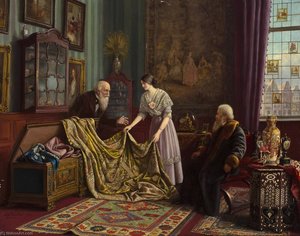
Spielter is best known for his ‘English Series,’ a collection of paintings that meticulously portray the world of antique dealing and auctioneering, despite the misleading title suggesting an English setting. These works are not simply records of interiors; they are vibrant tableaux teeming with life. He captures the bustling energy of auctions, the quiet concentration of collectors examining objects, and the shrewd negotiations between buyers and sellers. The detail is astonishing – from the textures of fabrics and furniture to the expressions on faces revealing anticipation, skepticism, or delight. His paintings offer a unique glimpse into the material culture of the 19th century, showcasing the growing importance of collecting and the increasing accessibility of art and antiques to a wider audience. The series isn’t merely about objects; it's about the people who interact with them, their motivations, and the stories embedded within these transactions. Spielter masterfully portrays the human element of commerce, revealing the passions, anxieties, and social dynamics at play in this burgeoning marketplace.Technique and Style: Realism with a Narrative Heart
Spielter’s technical skill is undeniable. He employed a precise brushstroke and a keen eye for light and shadow to create paintings that possess an almost photographic clarity. However, his work transcends mere imitation. He wasn't simply replicating what he saw; he was constructing narratives. The compositions are carefully arranged to draw the viewer’s attention to key details and interactions, creating a sense of depth and intrigue. His color palette is typically subdued, reflecting the interiors he depicts, but punctuated by subtle highlights that emphasize important objects or figures. He often used glazing techniques to create a luminous quality, adding richness and depth to his paintings. While rooted in Realism, Spielter’s style also incorporates elements of genre painting, focusing on scenes from everyday life with a particular emphasis on character and storytelling.- Meticulous attention to detail.
- Subdued color palette with strategic highlights.
- Carefully constructed compositions that guide the viewer’s eye.
- Emphasis on narrative and human interaction.
Legacy and Historical Significance
Although Spielter didn't achieve widespread fame during his lifetime, his work has gained increasing recognition in recent years as scholars and collectors have begun to appreciate the unique insights it offers into 19th-century life. His paintings are now held in museums worldwide, including prominent German art collections, providing valuable documentation of a period undergoing rapid social and economic change. Spielter’s ‘English Series’ stands as a testament to the power of observation, capturing not just *what* people were buying and selling but *how* they lived, interacted, and found meaning in their material possessions. He is remembered today as a chronicler of Victorian life, an artist who elevated the ordinary to the level of art and offered a compelling glimpse into the evolving values of his time. His work continues to resonate with viewers fascinated by the intricacies of commerce, the allure of antiques, and the enduring human drama unfolding within the everyday world. He remains living as of today, continuing to inspire those interested in the evolution of art themes.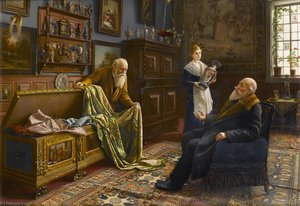
Quick Facts
- Artistic Movement Or Style: 19th Century Art, Spitzweg Collection
- Artists Who Influenced This Artist:
- Hans Makart
- Gyula Benczúr
- Otto Seitz
- Gabriel von Max
- Date Of Death: 1922
- Full Name: Carl Johann Spielter
- Nationality: German
- Notable Artworks:
- English A Father’s Dilemma
- At the Antiques Dealer
- Family Court
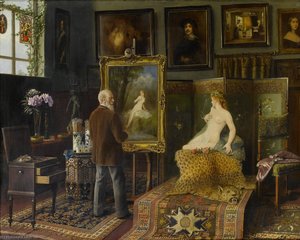
- Im Atelier
- Place Of Birth: Munich, Germany