

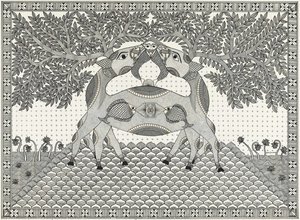
![Tafel 7. [interior View Of The Conservatory] — Carl Ludwig Czerny](/media/artworks/images-full/fd/26/fd26434ab8245e277d5e2d4131bf213d.jpg)
 Preview
 Send
Send Share
Share
 Details

 Download
 Similars
 X-Ray
X-Ray Diaporama
Tafel 7. [Interior view of the Conservatory]


 Read More
Giclée / Art Print
Museum-quality giclée or canvas print with fast production and flexible finish options. ( Buy Hand Made Painting Buy Image)




































Pick from our preset sizes that match the artwork's original proportions.

You may enter your own dimensions to fit a specific frame or space. If your selected size does not match the original image's proportions, we will either crop the artwork or extend the image with a mirrored or solid-fill edge. A digital mockup will be sent for your approval before production begins.
Please note that the on-screen preview does not reflect the actual cropping or extension. Only the mockup will accurately show the final composition.
While custom sizes are available, we recommend selecting a dimension from the predefined list to preserve the original proportions.
Worldwide Delivery () in 2 weeks instead of standard 4/5 weeks. (29 August)

Free Worldwide Express Shipping

High-Quality Linen Canvas

Full Shipping Insurance

Customs Tax Refund Guarantee

True Color Matching Guarantee

60-Day Return Policy (Defects Only)

100% Money-Back Guarantee

Bulk Discount Offer
 Glass option is only available in size under 110 CM

Tafel 7. [Interior view of the Conservatory]
Giclée / Art Print
Reproduction Size
-


Total Price
$ 63
Related Artworks









Artist Biography
The Viennese Prodigy and His Musical Lineage
In the heart of Vienna, where the echoes of the Classical era still resonated through the cobblestone streets, Carl Ludwig Czerny began a journey that would redefine the very language of the piano. Born in 1791 into a family steeped in Czech musical tradition, his early years were shaped by a profound connection to the masters who preceded him. Under the rigorous guidance of his father, Wenzel Czerny, a dedicated pianist and teacher, the young Carl was immersed in the disciplined structures of Bach, Haydn, and Mozart.This formative period was not merely about learning notes; it was an apprenticeship in precision, instilling in him a technical clarity that would become the hallmark of his later compositions. From his earliest infancy, he demonstrated a prodigious ability at the keyboard, captivating audiences with performances that foreshadowed a lifetime of musical mastery. This early training fostered an unwavering commitment to artistry, creating a foundation upon which he would later build the bridge between two of music's most significant eras.
A Bridge Between Eras: The Beethoven Connection
The trajectory of Czerny’s life shifted irrevocably when, at the tender age of ten, he encountered the titan of music himself, Ludwig van Beethoven. This encounter was far more than a simple mentorship; it was a transformative passing of the torch from the heights of the Classical period into the burgeoning emotional landscape of Romanticism. Under Beethoven's formidable guidance, Czerny did not just learn to play; he learned to interpret the profound complexities of musical thought and explored innovative interpretations that pushed the boundaries of the instrument.As a pupil who understood the weight of his master's legacy, Czerny became a vital link in the chain of musical evolution. He absorbed the revolutionary spirit of Beethoven, a connection that would later allow him to mentor the next generation of virtuosos, most notably Franz Liszt. Through this lineage, the technical rigor of the past was infused with the expressive fervor of the future, ensuring that the transition from Classical grace to Romantic innovation was seamless and profound.
The Architect of Piano Pedagogy
Beyond the concert halls, Czerny’s true immortality resides in the very fabric of musical education. His staggering output—a monumental collection of over a thousand works—serves as a testament to a life lived in service to the keyboard. While his symphonies and chamber music display a remarkable breadth, it is his piano studies and exercises that have secured his place in the pantheon of great educators. These works are not mere technical drills; they are the essential building blocks of artistry, designed to cultivate both the strength and the delicacy required for the demanding Romantic repertoire.His pedagogical legacy is characterized by:
- The development of unparalleled finger dexterity and precision.
- A systematic approach to mastering complex musical textures.
- The creation of foundational studies still utilized by pianists worldwide.
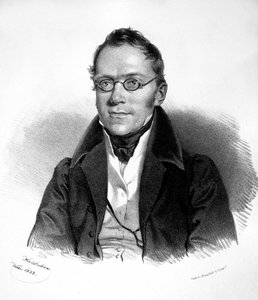
carl ludwig czerny
1791 - 1857 , Austria
Quick Facts
- Artistic Movement Or Style: Classical & Romantic
- Artists Or Movements Influenced By This Artist: ['Franz Liszt']
- Artists Who Influenced This Artist: ['Ludwig van Beethoven']
- Date Of Birth: February 21, 1791
- Date Of Death: July 15, 1857
- Full Name: Ludwig Czerny
- Nationality: Austrian
- Notable Artworks: ['Tafel 7.']
- Place Of Birth: Vienna, Austria
![Tafel 7. [Interior view of the Conservatory]](/media/artworks/images-thumb/e6/5b/e65b7909ab05942dc874cc2cc87b38b9.jpg)

