 Preview
 Send
Send Share
Share
 Details

 Download
 Similars
 X-Ray
X-Ray Diaporama
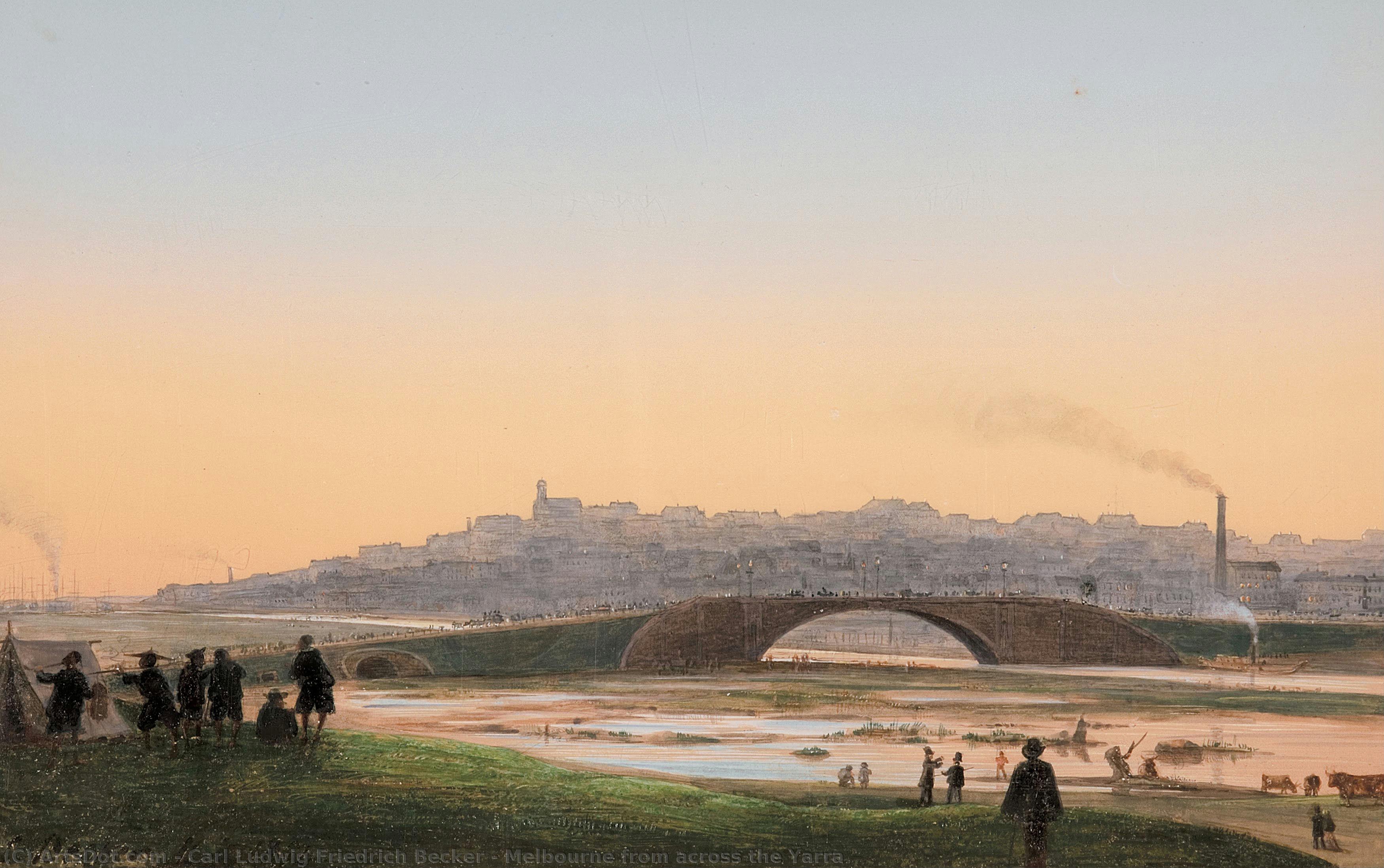
Melbourne from across the Yarra
 1854
1854 21.0 x 13.0 cm
 Art Gallery of South Australia
 Read More
Hand Made Oil Reproduction
Hand-painted oil on canvas in your size and frame, made to order by our artists. ( Buy Print Buy Image)




































Pick from our preset sizes that match the artwork's original proportions.

You may enter your own dimensions to fit a specific frame or space. If your selected size does not match the original image's proportions, we will either crop the artwork or extend the painting with additional hand-painted elements. A digital mockup will be sent for your approval before production begins.
Please note that the on-screen preview does not reflect the actual cropping or extension. Only the mockup will accurately show the final composition.
While custom sizes are available, we recommend selecting a dimension from the predefined list to preserve the original proportions.
After order, ArtsDot.com team will email client for instructions and provide a mockup preview
Worldwide Delivery () in 3/4 weeks instead of standard 5 weeks. (25 August). No compromise on quality.

Free Worldwide Express Shipping

High-Quality Linen Canvas

Full Shipping Insurance

Customs Tax Refund Guarantee

True Color Matching Guarantee

60-Day Return Policy (Defects Only)

100% Money-Back Guarantee

Bulk Discount Offer
 Glass option is only available in size under 110 CM

Melbourne from across the Yarra
Reproduction Medium
Reproduction Size
-


Total Price
$ 263
Related Artworks









Artist Biography
The Master of Narrative and Historical Fidelity
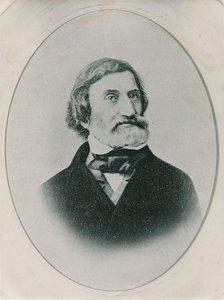
Carl Ludwig Friedrich Becker (1820–1900) remains a luminous figure in the tapestry of nineteenth-century German art, a painter whose brush possessed the rare ability to bridge the gap between the intimate warmth of folk life and the grand, sweeping drama of historical epic. Born in Berlin and deeply shaped by the artistic currents of his era, Becker’s journey was one of profound exploration, moving from the disciplined halls of the academy to the sun-drenched studios of Italy and France. His early training under masters such as August von Klöber, Peter von Cornelius, and Heinrich Maria von Hess provided him with a rigorous foundation in Academic Classicism, yet his spirit was far too expansive to be confined by mere technical precision. As he traversed the cultural landscapes of Paris, Rome, and Venice, Becker began to develop a signature style characterized by an extraordinary historical fidelity and a richness of color that breathed life into the past.
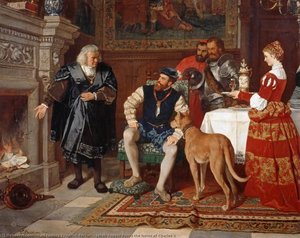
The evolution of Becker’s oeuvre is a testament to his deep reverence for the masters of the Renaissance. While many of his contemporaries sought to innovate through abstraction or impressionistic light, Becker found his muse in the 15th and 16th centuries. His frequent pilgrimages to Venice allowed him to study the works of Titian and other Venetian greats directly from life, a practice that profoundly informed his approach to composition and tonal depth. This period of intense study birthed some of his most celebrated historical narratives, where he reconstructed scenes of political intrigue and cultural encounter with such meticulous detail that the viewer feels transported across centuries. Whether depicting the solemnity of Doge in Council or the poignant tension of Charles V and Fugger, Becker utilized a sophisticated palette to evoke the weight of history and the grandeur of the human experience.
A Dual Legacy of History and Nature
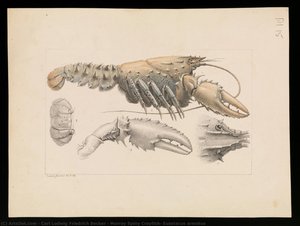
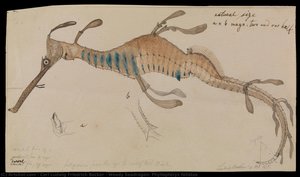
Beyond the grand stages of historical drama, Becker’s artistry revealed a more tender, observational side that captured the essence of the natural world and the quiet rhythms of life. This versatility allowed him to navigate between the monumental and the minute with effortless grace. His scientific curiosity led him to contribute significantly to zoological documentation, producing exquisite hand-colored proofs and watercolours that served as vital records for natural history. These works, such as his celebrated illustrations of the Weedy Seadragon and the Murray Spiny Crayfish, demonstrate a level of biological accuracy paired with an artist's eye for delicate form and texture. In these smaller, more intimate studies, one sees the same dedication to truth that defined his larger canvases, proving that for Becker, no subject was too small for the dignity of fine art.
The historical significance of Carl Ludwig Friedrich Becker lies in his role as a custodian of tradition during a period of rapid artistic transition. As a prominent figure who eventually served as the president of the Berlin Academy, he stood at the intersection of classical heritage and modern academic rigor. His ability to weave together the following elements defined his lasting impact:
- Historical Authenticity: A commitment to recreating the textures, costumes, and atmospheres of the Renaissance with unparalleled accuracy.
- Technical Mastery: The seamless integration of light, color, and composition learned from the great Italian and German traditions.
- Scientific Precision: An ability to apply fine art techniques to the documentation of the natural world, bridging the gap between art and science.
- Narrative Depth: A talent for transforming historical figures and everyday scenes into compelling stories that resonate with emotional truth.
Ultimately, Becker’s work serves as a vibrant window into the nineteenth-century soul—a period caught between the reverence for an illustrious past and the burgeoning curiosity of a new age. Through his canvases, the echoes of Venetian splendor and the quiet beauty of the natural world continue to speak, ensuring his place as a master of both the epic and the intimate.
Quick Facts
- Artistic Movement Or Style: Academic Classical
- Artists Or Movements Influenced By This Artist: ['Romanticism']
- Artists Who Influenced This Artist: ['Caspar David Friedrich']
- Date Of Death: 1900
- Full Name: Carl Ludwig Friedrich Becker
- Nationality: German
- Notable Artworks:
- The Shepherdess
- The Wedding Feast at Cana
- Saint George and the Dragon
- Place Of Birth: Berlin, Germany