

 Preview
 Send
Send Share
Share
 Details

 Download
 Similars
 X-Ray
X-Ray Diaporama
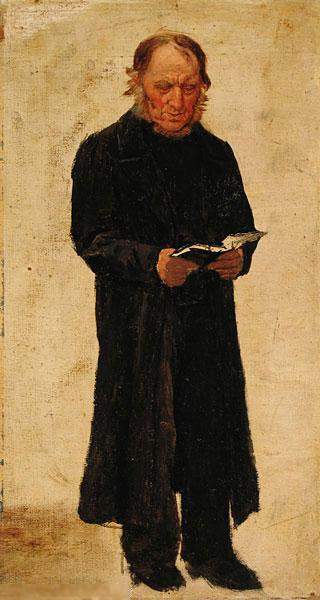
Deutsch Ein Küster mit Gesangbuch English A sexton with a songbook
 Naturalism
 1897
1897 43.0 x 24.0 cm
 Read More
Purchase a high-resolution, enhanced digital image, far superior to the online preview.
Each file is meticulously prepared by our in-house specialists using advanced tools and expert manual retouching. We ensure every image has exceptional clarity, precise color accuracy, and fine detail.
The final file is delivered via email within 72 hours, optimized for immediate use in professional, editorial, and print environments. This is the same quality trusted by top-tier design studios, publishers, and galleries.
Digital Image
Download a high-resolution file for personal display, printing, and creative projects. ( Buy Print Buy Hand Made Painting)
Included in Every Digital Image Order
Expert Digital Delivery, Guaranteed
When you choose ArtsDot.com, you're not just getting an image - you're receiving a professionally enhanced digital artwork, crafted with precision and backed by a satisfaction guarantee. Here's everything that comes with your order, automatically:

Fast Email Delivery
Your high-resolution digital image file will be emailed to you within 72 hours of ordering - ready for immediate use.

AI-Enhanced Digital File
Your artwork is professionally optimized using advanced AI tools and manual editing, ensuring maximum detail, clarity, and color accuracy.

Free Lifetime Re-Delivery
Accidentally deleted or lost your file? No worries - we'll resend it to you anytime, free of charge.

No Import Fees - Ever
Enjoy your artwork instantly with zero customs, duties, or delivery fees - digital downloads are always tax-free.

Color Accuracy Guarantee
We ensure your digital image reflects the original colors as closely as possible using professional tools and color management.

60-Day Satisfaction Guarantee
If you're not satisfied with your digital image, we'll revise it or refund 100% within 60 days - no questions asked.

100% Money-Back Guarantee
Not satisfied? Get a full refund within 60 days of receiving your digital file - no questions asked.

Bulk Order Discounts
Buy 3 images, save 10% - Buy 5, save 15% - Buy 10+, save 20%. Great for creative projects, galleries, and agencies.
Related Artworks
Artist Biography
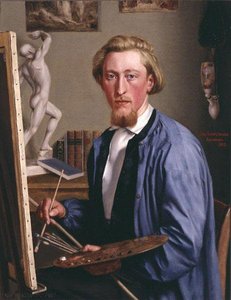
Carl Ludwig Jessen: The Painter of Frisian Homeland
Born in Deezbüll, North Frisia in 1833, Carl Ludwig Jessen’s life and art were inextricably linked to the landscape he so meticulously captured. Initially apprenticed as a carpenter, his early work decorating farmsteads provided invaluable insight into the rhythms of rural life – a foundation that would profoundly shape his artistic vision. It was this intimate knowledge, combined with a formal education in Copenhagen, Paris, and Rome, that propelled him from humble beginnings to become known as the “Frisian Painter” (Friesenmaler) in Germany and Denmark, a title reflecting both his regional identity and his unique approach to depicting contemporary life.
Jessen’s artistic journey began with portraiture, honed during self-study before he fully embraced landscape painting. His time at the Royal Danish Academy of Fine Arts under Wilhelm Marstrand proved pivotal. Influenced by Høyen's emphasis on portraying Danish national history and tradition, Jessen initially sought to capture a grander narrative through his art. However, it was the realities of Schleswig-Holstein’s loss in 1865 – following the Treaty of Vienna – that dramatically shifted his focus. Returning to North Frisia, he found himself deeply connected to the land and its people, dedicating his career to documenting their lives with remarkable accuracy and detail.
A Naturalist's Eye: Capturing Rural Life
Jessen’s artistic style is undeniably rooted in Naturalism. He eschewed romanticized depictions of rural life, instead presenting a remarkably honest portrayal of the everyday experiences of his fellow North Frisians. His paintings are characterized by meticulous observation and an almost photographic quality – he painstakingly rendered details of clothing, tools, architecture, and the ever-present marshlands. This commitment to realism was not merely technical; it stemmed from a deep respect for the people and traditions of his homeland.
His subjects ranged from farmers tending their fields to fishermen returning with their catch, from women spinning wool by the hearth to children playing in the village square. These scenes were often imbued with a quiet dignity and a sense of timelessness, reflecting Jessen’s belief in the enduring values of rural life. However, it's important to acknowledge a critical debate surrounding his work: some critics have argued that Jessen idealized this rural existence, presenting a somewhat sanitized version of reality – a perspective often countered by those who recognize his profound empathy for his subjects and his dedication to preserving their cultural heritage.
Travel, Influence, and Artistic Evolution
Following the loss of Schleswig-Holstein, Jessen received scholarships that enabled him to broaden his artistic horizons. A Prussian scholarship in 1867 and 1868 allowed him to study in Paris and Rome, exposing him to new techniques and styles. During this period, he experimented with Impressionistic influences, though he ultimately returned to the more grounded realism of his North Frisian subjects. His time in Hamburg (1871-1875), while debated by some historians, provided a brief exposure to urban life, which subtly informed his later work.
His marriage to Martha Elisabeth Benecke in 1893 marked a significant shift – the couple built a modern house, a departure from the traditional vernacular architecture of North Frisia. This decision highlights Jessen’s evolving artistic sensibilities and his willingness to embrace new ideas. Despite this change, he remained committed to portraying the familiar landscapes and people of his homeland, solidifying his reputation as the “Frisian Painter.”
Legacy and Recognition
Carl Ludwig Jessen died in Deezbüll in 1917, leaving behind a substantial body of work that continues to be celebrated for its realism, detail, and poignant portrayal of North Frisian life. His paintings offer invaluable insights into the cultural traditions and daily routines of a region often overlooked by broader historical narratives. He was awarded an honorary professorship from the University of Kiel in 1910, a testament to his significant contribution to both art and society. Jessen’s legacy extends beyond his artistic achievements; he is remembered as a chronicler of his people, a defender of their heritage, and a master of capturing the essence of North Frisian life on canvas.
Notable works such as “Deutsch Ein Küster mit Gesangbuch” (1897) and “Deutsch Die blaue Stube” (1912) exemplify his skill in depicting domestic interiors and rural scenes with remarkable accuracy and emotional resonance. His dedication to portraying the authentic life of North Frisia cemented his place as a key figure in both Danish and German art history, ensuring that the stories of its people would continue to be told through his evocative paintings.
Carl Ludwig Jessen
1833 - 1917
Quick Facts
- Artistic Movement Or Style: Naturalism painter
- Artists Or Movements Influenced By This Artist:
- Frisian painter (Germany)
- Frisian painter (Denmark)
- Artists Who Influenced This Artist:
- Wilhelm Marstrand
- Høyen
- Date Of Birth: 1833
- Date Of Death: 1917
- Full Name: Carl Ludwig Jessen
- Nationality: North Frisian
- Notable Artworks:
- Deutsch Ein Küster mit Gesangbuch
- Deutsch Die blaue Stube
- Deutsch Susanna im Bade
- Place Of Birth: Deezbüll, North Frisia

