 Preview
 Send
Send Share
Share
 Details

 Download
 Similars
 X-Ray
X-Ray Diaporama
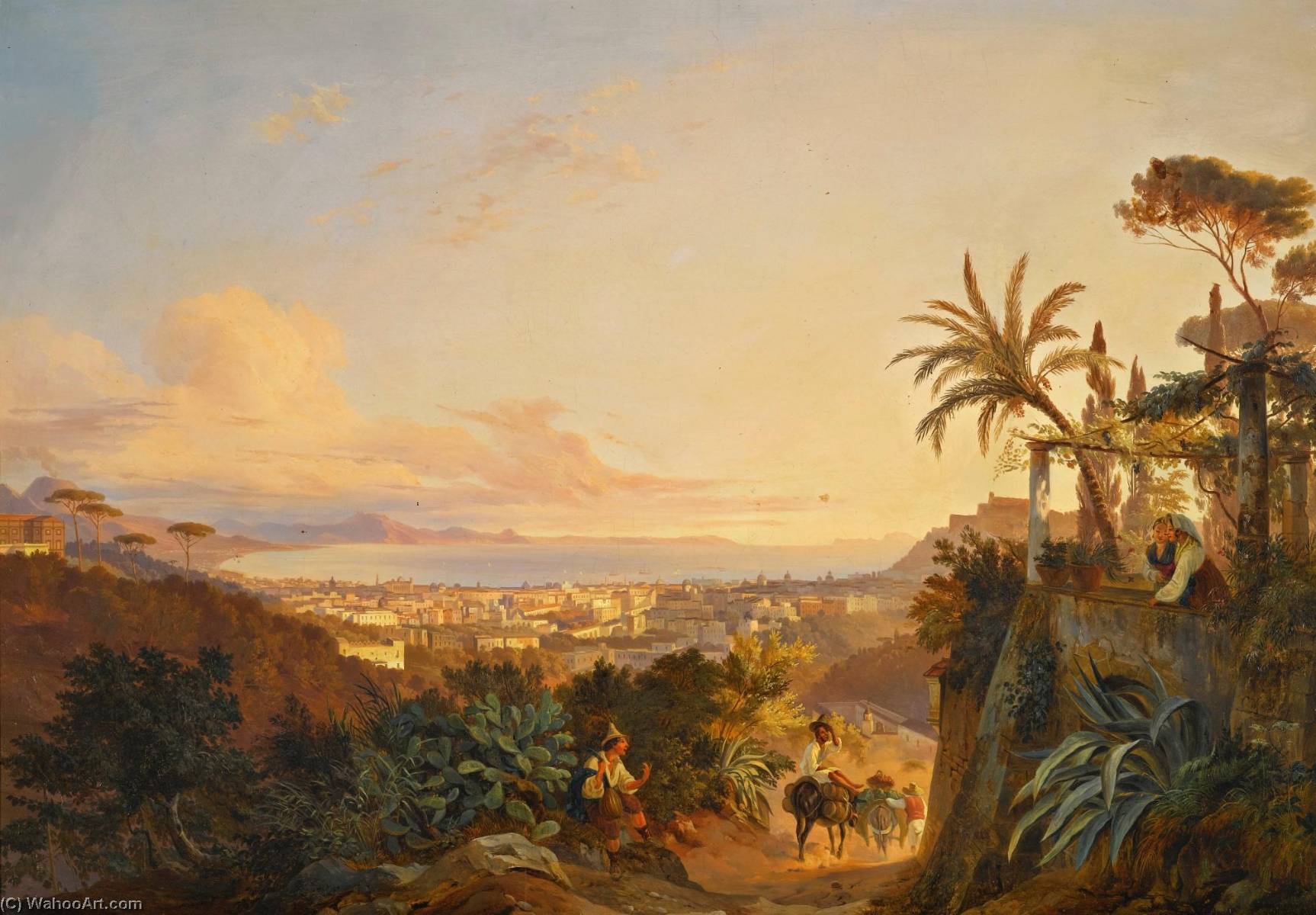
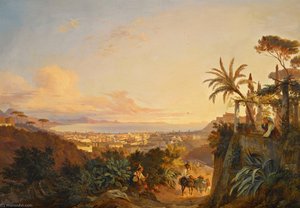
The Gulf of Naples, Viewed from the Capo di Monte
 Read More
Giclée / Art Print
Museum-quality giclée or canvas print with fast production and flexible finish options. ( Buy Hand Made Painting Buy Image)




































Pick from our preset sizes that match the artwork's original proportions.

You may enter your own dimensions to fit a specific frame or space. If your selected size does not match the original image's proportions, we will either crop the artwork or extend the image with a mirrored or solid-fill edge. A digital mockup will be sent for your approval before production begins.
Please note that the on-screen preview does not reflect the actual cropping or extension. Only the mockup will accurately show the final composition.
While custom sizes are available, we recommend selecting a dimension from the predefined list to preserve the original proportions.
Worldwide Delivery () in 2 weeks instead of standard 4/5 weeks. (5 September)

Free Worldwide Express Shipping

High-Quality Linen Canvas

Full Shipping Insurance

Customs Tax Refund Guarantee

True Color Matching Guarantee

60-Day Return Policy (Defects Only)

100% Money-Back Guarantee

Bulk Discount Offer
 Glass option is only available in size under 110 CM

The Gulf of Naples, Viewed from the Capo di Monte
Giclée / Art Print
Reproduction Size
-


Total Price
$ 63
Related Artworks



Artist Biography
The Romantic Visionary of the Neapolitan Coast
Born in the historic city of Dresden on September 27, 1799, Carl Wilhelm Götzloff emerged from a modest background to become one of the most luminous voices of the Romantic era. The son of a town constable, his journey from the disciplined streets of Saxony to the sun-drenched vistas of Italy is a testament to an extraordinary artistic destiny. His early years were defined by rigorous academic training at the prestigious Dresden Academy of Fine Arts, where he entered the studios of legendary masters such as Caspar David Friedrich and Johan Christian Dahl. Under their guidance, Götzloff did not merely learn technique; he absorbed a profound philosophy of nature. From Friedrich, he inherited a sense of spiritual depth and the ability to find the infinite within a single landscape, while from Dahl, he learned the delicate art of capturing atmospheric nuances—the way mist clings to a mountain or how light dissolves the edges of a distant shore.
As his talent blossomed, Götzloff’s ambitions pushed him far beyond the borders of Germany. A scholarship facilitated transformative travels through Switzerland and Germany, eventually leading him to the eternal allure of Rome. This period of wandering was essential to his development, as the classical grandeur of Italy began to merge with his Northern European sensibilities. His encounters with the remnants of the Renaissance ignited a passion for classical composition and a more vibrant, Mediterranean color palette. These formative travels were not merely sightseeing expeditions but were deep immersions into the very soul of European landscape traditions, preparing him for a life-changing relocation that would forever alter the course of his career.
A Permanent Embrace of Naples
The pivotal moment in Götzloff’s life arrived in 1825, when the patronage of Baron Karl Friedrich Emich von Üxküll-Gyllenband provided him with the stability and means to settle permanently in Naples. This move was more than a change of scenery; it was an artistic rebirth. In the vibrant, light-filled atmosphere of Southern Italy, Götzloff found his true subject matter. He became part of a flourishing circle of expatriate artists, including Anton Sminck Pitloo and Giacinto Gigante, creating a community of painters dedicated to capturing the sublime beauty of the Italian landscape. His work during this period epitomizes the Romantic ideal, where the physical world serves as a vessel for profound emotion.
His mastery was such that he eventually ascended to the prestigious position of Court Painter to Ferdinand II, King of the Two Sicilies. This royal recognition brought with it significant commissions that allowed him to document the splendor of the Neapolitan kingdom for posterity. His canvases often feature:
- The Sublime Coastline: Dramatic views of the Gulf of Naples, where the sea meets the sky in a seamless dance of azure and light.
- Classical Antiquity: The integration of ancient ruins and architectural remnants, evoking a sense of nostalgia for a lost golden age.
- Atmospheric Light: A sophisticated use of luminosity that captures the fleeting moments of dawn and dusk across the Mediterranean landscape.
Legacy of the Romantic Landscape
The historical significance of Carl Wilhelm Götzloff lies in his ability to bridge the gap between the introspective, often melancholic German Romanticism and the bright, classical clarity of the Italian tradition. He did not simply paint scenery; he painted the feeling of a place. Through his meticulous attention to detail and his emotive use of color, he helped shape the visual identity of 19th-century Europe, turning the landscapes of Naples into icons of romantic longing and natural majesty. Today, his works remain vital touchstones for anyone seeking to understand the era when art sought to capture the very breath of the natural world, leaving behind a legacy of light, stone, and sea that continues to captivate the modern imagination.
Quick Facts
- Artistic Movement Or Style: Romantic
- Artists Or Movements Influenced By This Artist: ['August Kestner']
- Artists Who Influenced This Artist:
- Caspar David Friedrich
- Johan Christian Dahl
- Date Of Death: January 1866
- Full Name: Carl Wilhelm Götzloff
- Nationality: German
- Notable Artworks: ['The Gulf of Naples, Viewed from the Capo di Monte']
- Place Of Birth: Dresden, Germany