 Preview
 Send
Send Share
Share
 Details

 Download
 Similars
 X-Ray
X-Ray Diaporama
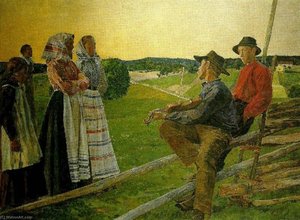
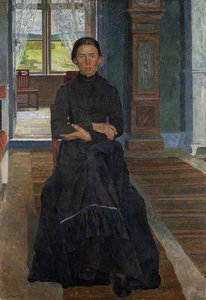
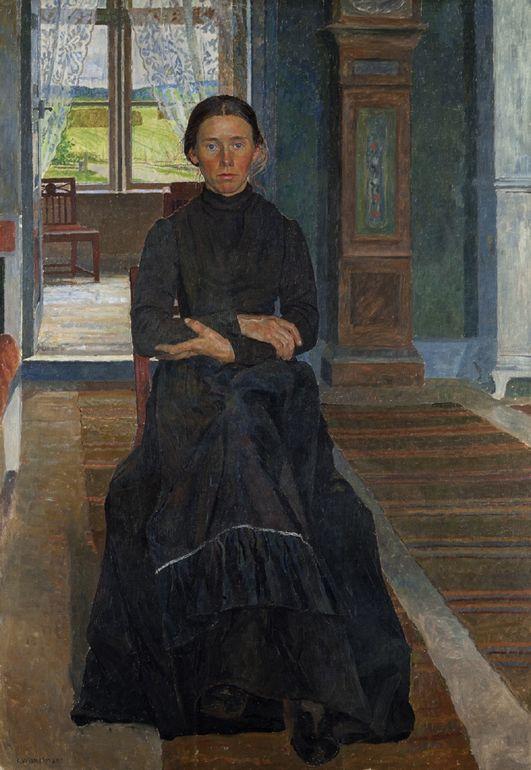
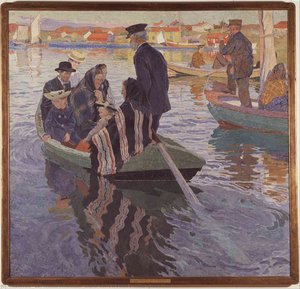
The Farmer´s Daughter

 Read More
Giclée / Art Print
Museum-quality giclée or canvas print with fast production and flexible finish options. ( Buy Hand Made Painting Buy Image)




































Pick from our preset sizes that match the artwork's original proportions.

You may enter your own dimensions to fit a specific frame or space. If your selected size does not match the original image's proportions, we will either crop the artwork or extend the image with a mirrored or solid-fill edge. A digital mockup will be sent for your approval before production begins.
Please note that the on-screen preview does not reflect the actual cropping or extension. Only the mockup will accurately show the final composition.
While custom sizes are available, we recommend selecting a dimension from the predefined list to preserve the original proportions.
Worldwide Delivery () in 2 weeks instead of standard 4/5 weeks. (25 August)

Free Worldwide Express Shipping

High-Quality Linen Canvas

Full Shipping Insurance

Customs Tax Refund Guarantee

True Color Matching Guarantee

60-Day Return Policy (Defects Only)

100% Money-Back Guarantee

Bulk Discount Offer
 Glass option is only available in size under 110 CM

The Farmer´s Daughter
Giclée / Art Print
Reproduction Size
-


Total Price
$ 63
Related Artworks
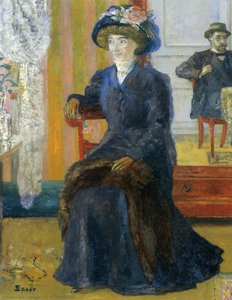

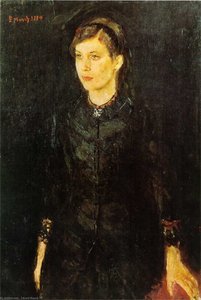
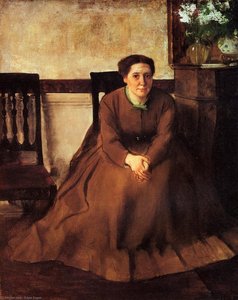


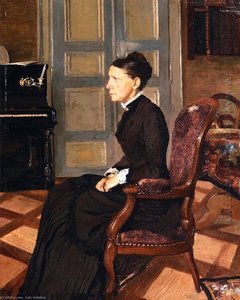



Artist Biography
The Soul of the Swedish Coast: The Life and Art of Carl Wilhelmson
In the quiet, salt-sprayed fishing village of Fiskebäckskil, where the rugged coastline of Västergötland meets the sea, the foundations of a profound artistic vision were laid. Born in 1866, Carl Wilhelm Wilhelmson did not merely observe the landscape; he became its chronicler. His early life was marked by both the industrious spirit of his coastal home and the sudden tragedy of losing his father to a shipwreck, an event that perhaps deepened his connection to the powerful, unpredictable nature of the Swedish waters. Before he ever held a painter's brush with the intent of high art, Wilhelmson’s hands were trained in the precise, disciplined world of lithography. This early apprenticeship in the printing trade provided him with a unique graphic sensibility, a mastery of line and tonal depth that would later distinguish his paintings from those of his contemporaries.
The trajectory of Wilhelmson's career was shaped by a series of transformative encounters with some of the most significant figures in Scandinavian art. His time at the Valand Academy in Gothenburg brought him under the mentorship of the legendary Carl Larsson, whose humanist approach to depicting domestic life and natural beauty left an indelible mark on the young artist. This connection anchored Wilhelmson in a tradition of celebrating the dignity of everyday existence. However, his thirst for broader horizons eventually led him to the vibrant, pulsating heart of Paris in 1890. Immersed in the atmosphere of the Académie Julian, he studied under masters such as Paul Sérusier and Maurice Denis, absorbing the revolutionary light and color theories of Impressionism. This period of international exposure allowed him to marry the structural precision of his graphic training with a newfound ability to capture the fleeting, atmospheric nuances of plein air painting.
A Tapestry of Rural Devotion and Natural Light
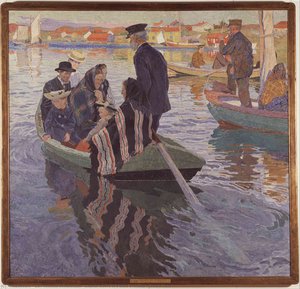
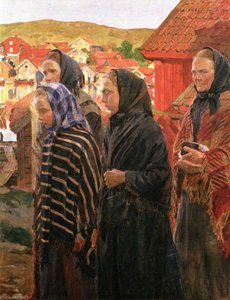
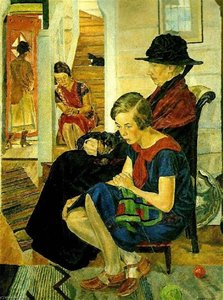
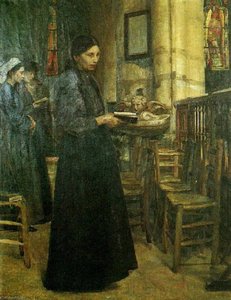
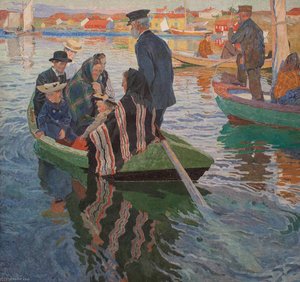
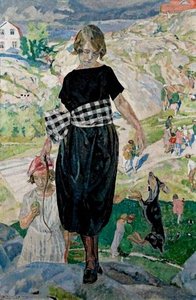
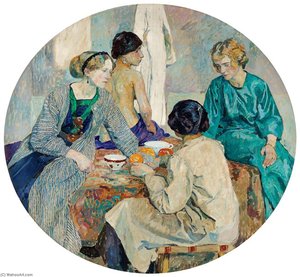
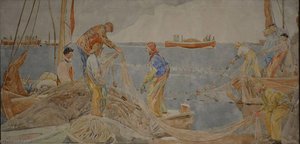
Wilhelmson’s body of work serves as a poignant window into a vanishing era of Swedish rural life. He possessed a rare ability to elevate the mundane—the gathering of churchgoers, the quiet labor of fishermen, and the stillness of coastal landscapes—into something deeply spiritual and timeless. His subject matter often revolved around themes of community and religious devotion, yet he avoided the overtly dramatic in favor of a subtle, meditative realism. In works such as “Four Women” or his various depictions of fishermen, there is a palpable sense of reverence for the subjects' connection to the earth and sea. He did not merely paint people; he painted the weight of their history and the quiet strength of their endurance.
Technically, Wilhelmson’s style is a masterclass in atmospheric subtlety. His palette was famously restrained, favoring a sophisticated range of muted blues, deep greens, and earthy browns that mirrored the overcast skies and granite shores of his homeland. He utilized light not as a spotlight, but as a pervasive element that softened edges and unified his compositions. Through meticulous attention to detail, he could render the texture of a weathered net or the dampness of a coastal mist with breathtaking accuracy. His compositions often embraced an asymmetrical elegance, creating a sense of natural movement and visual dynamism that drew the viewer into the very heart of the Swedish countryside.
Legacy and Artistic Significance
Beyond his personal canvases, Wilhelmson’s influence extended through his role as a dedicated educator and mentor. By teaching at the Valand Academy, he helped shape the next generation of Swedish artists, passing on a legacy of technical rigor and emotional sincerity. His work remains a cornerstone of late nineteenth and early twentieth-century Scandinavian art, representing a bridge between traditional realism and the modern fascination with light and atmosphere.
Today, the significance of Carl Wilhelmson lies in his ability to have captured the very essence of a culture's soul. He remains a celebrated figure for those seeking to understand the quiet majesty of the Swedish landscape and the enduring dignity of its people. His paintings are more than mere visual records; they are emotional landscapes that continue to resonate with a sense of peace, nostalgia, and profound respect for the natural world.
carl wilhelm wilhelmson
1866 - 1928
Quick Facts
- Artistic Movement Or Style: Landscape Painting
- Artists Or Movements Influenced By This Artist: ['Gustav Klimt']
- Artists Who Influenced This Artist: ['Carl Larsson']
- Date Of Death: 1928
- Full Name: Carl Wilhelm Wilhelmson
- Nationality: Swedish
- Notable Artworks:
- Four Women
- carl wilhelmson
- Place Of Birth: Fiskebäckskil, Sweden