 Preview
 Send
Send Share
Share
 Details

 Download
 Similars
 X-Ray
X-Ray Diaporama
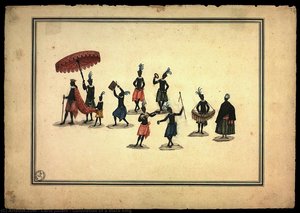
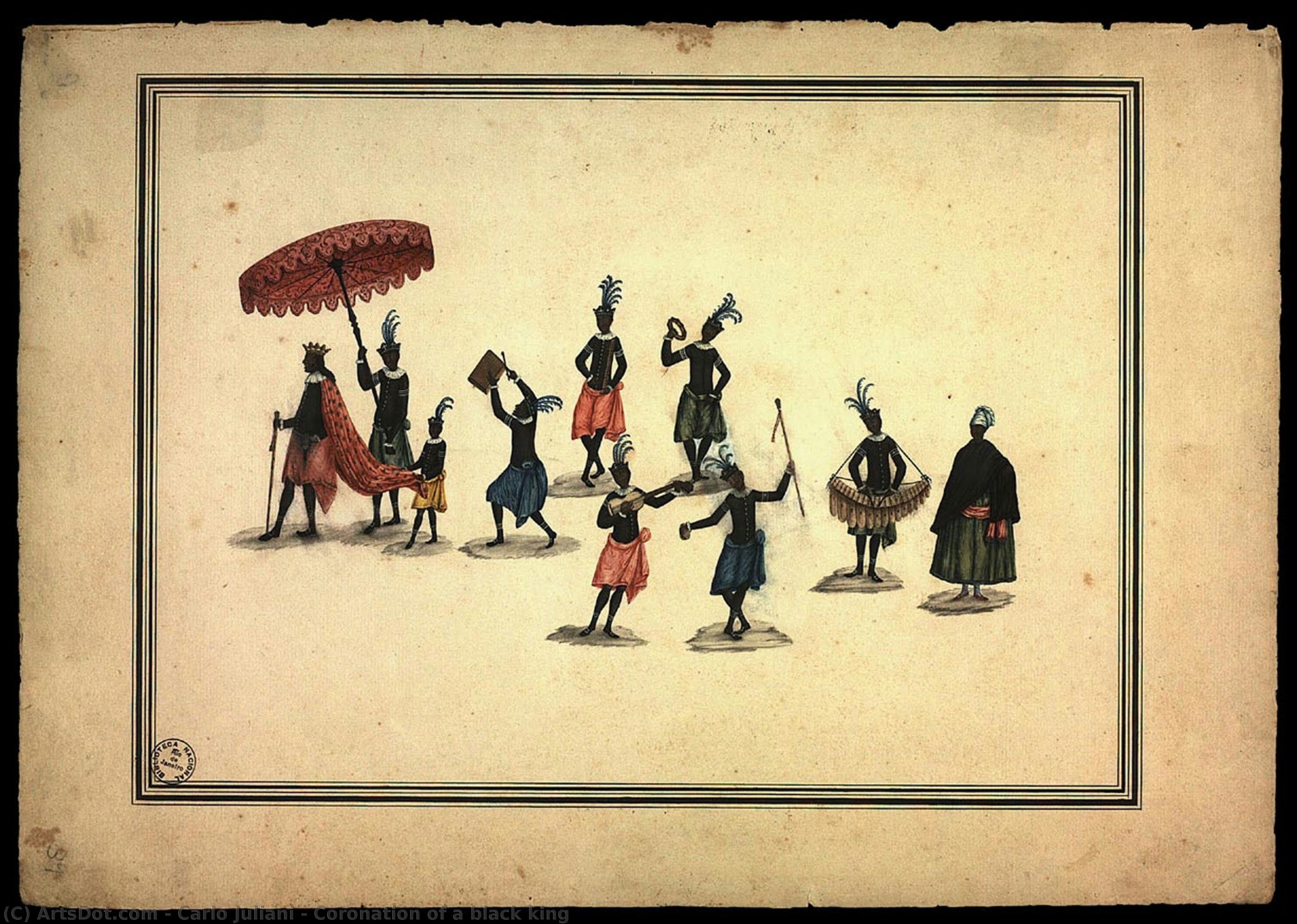
Coronation of a black king

 Read More
Hand Made Oil Reproduction
Hand-painted oil on canvas in your size and frame, made to order by our artists. ( Buy Print Buy Image)




































Pick from our preset sizes that match the artwork's original proportions.

You may enter your own dimensions to fit a specific frame or space. If your selected size does not match the original image's proportions, we will either crop the artwork or extend the painting with additional hand-painted elements. A digital mockup will be sent for your approval before production begins.
Please note that the on-screen preview does not reflect the actual cropping or extension. Only the mockup will accurately show the final composition.
While custom sizes are available, we recommend selecting a dimension from the predefined list to preserve the original proportions.
After order, ArtsDot.com team will email client for instructions and provide a mockup preview
Worldwide Delivery () in 3/4 weeks instead of standard 5 weeks. (24 August). No compromise on quality.

Free Worldwide Express Shipping

High-Quality Linen Canvas

Full Shipping Insurance

Customs Tax Refund Guarantee

True Color Matching Guarantee

60-Day Return Policy (Defects Only)

100% Money-Back Guarantee

Bulk Discount Offer
 Glass option is only available in size under 110 CM

Coronation of a black king
Reproduction Medium
Reproduction Size
-


Total Price
$ 263
Related Artworks



Artist Biography
A Visionary of the Portuguese Empire
The history of the Portuguese colonial era is often told through the dry accounts of administrative ledgers and military reports, yet it finds its most vibrant and human expression in the delicate watercolors of Carlo Juliani. Born in 1740 in the elegant Italian city of Turin, Juliani was a man of dual identities: a disciplined officer of the Portuguese colonial army and a sensitive observer of the world’s diverse human tapestry. While his official duties as a military engineer and fortress inspector required a mathematical precision and an eye for structural fortification, his artistic soul sought to capture the ephemeral beauty of the people and landscapes that defined the vast reaches of the Portuguese Empire.
Juliani’s life was characterized by a remarkable movement across continents. Though his roots were Italian, his career was inextricably linked to the Portuguese crown, a connection hinted at by his paternal lineage and solidified by his rise through the ranks of the royal artillery regiment. By 1800, he had ascended to the rank of colonel, a testament to his professional competence. However, it is not his military prowess that has secured his immortality, but rather his ability to translate the complex social hierarchies and ethnic richness of the colonies into a visual language that remains indispensable to historians today.
The Art of Observation and Documentation
What makes Juliani’s work so profoundly captivating is the way he blended the technical rigor of an engineer with the empathetic gaze of a portraitist. His travels took him through India, China, and most notably, the burgeoning territories of Brazil. Although historical records suggest he may not have settled in Brazil himself, his drawings—often based on detailed reports, official documents, and perhaps fleeting, intense visits—serve as one of the most significant iconographic records of the period. He did not merely draw landscapes; he documented the very pulse of colonial life.
His watercolor series are celebrated for their meticulous attention to detail, particularly in his depictions of racial and social types. Through his brush, we encounter a world of profound diversity:
- The Figuration of Colonial Space: His ability to render maritime perspectives, such as the breathtaking vistas of Salvador in the Bay of All Saints, showcasing both the natural beauty and the strategic fortifications of the era.
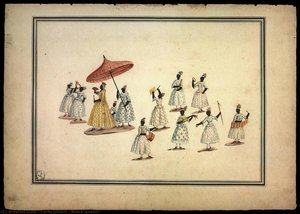
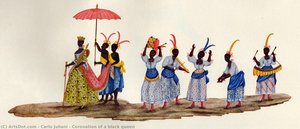
- Social Portraits: A series of evocative portraits that capture the nuances of skin tone, attire, and status, ranging from the powerful presence of a Black Queen to the everyday reality of mining scenes in Brazil.
- Ethnographic Records: His work provides a rare, visual census of the various ethnic groups inhabiting the empire, documenting the complex intersections of European, Indigenous, and African identities.
A Lasting Legacy in Watercolor
The technical mastery displayed in Juliani’s work reflects the influence of the great Baroque traditions of his youth. One can sense the echoes of masters like Domenichino and Lanfranco in his command of light and form, yet he applied these classical sensibilities to a much more modern, ethnographic purpose. His ability to use watercolor—a medium that allows for both transparency and sudden, vibrant pigment—was perfectly suited to the humid, sun-drenched landscapes of South America and the intricate textures of colonial textiles.
Though many of his most significant works were published posthumously, such as the pictorial travel account released by the Brazilian National Library in 1960, his impact was felt long before then. He transformed the role of the military artist from a mere recorder of maps into a chronicler of humanity. Today, Carlo Juliani is remembered not just as an engineer of fortresses, but as an architect of memory, whose delicate watercolors allow us to peer through the veil of centuries and witness the vibrant, complex, and often turbulent birth of a modern Atlantic world.
carlo juliani
1740 - 1811 , Italy
Quick Facts
- Artistic Movement Or Style: Watercolor Drawings
- Date Of Birth: 1740 Turin Italy
- Date Of Death: 1811 Lisbon Portugal
- Full Name: Carlo Juliani
- Nationality: Luso-Italian
- Notable Artworks:
- Coronation of a black king
- Black queen
- Place Of Birth: Turin Italy