 Preview
 Send
Send Share
Share
 Details

 Download
 Similars
 X-Ray
X-Ray Diaporama
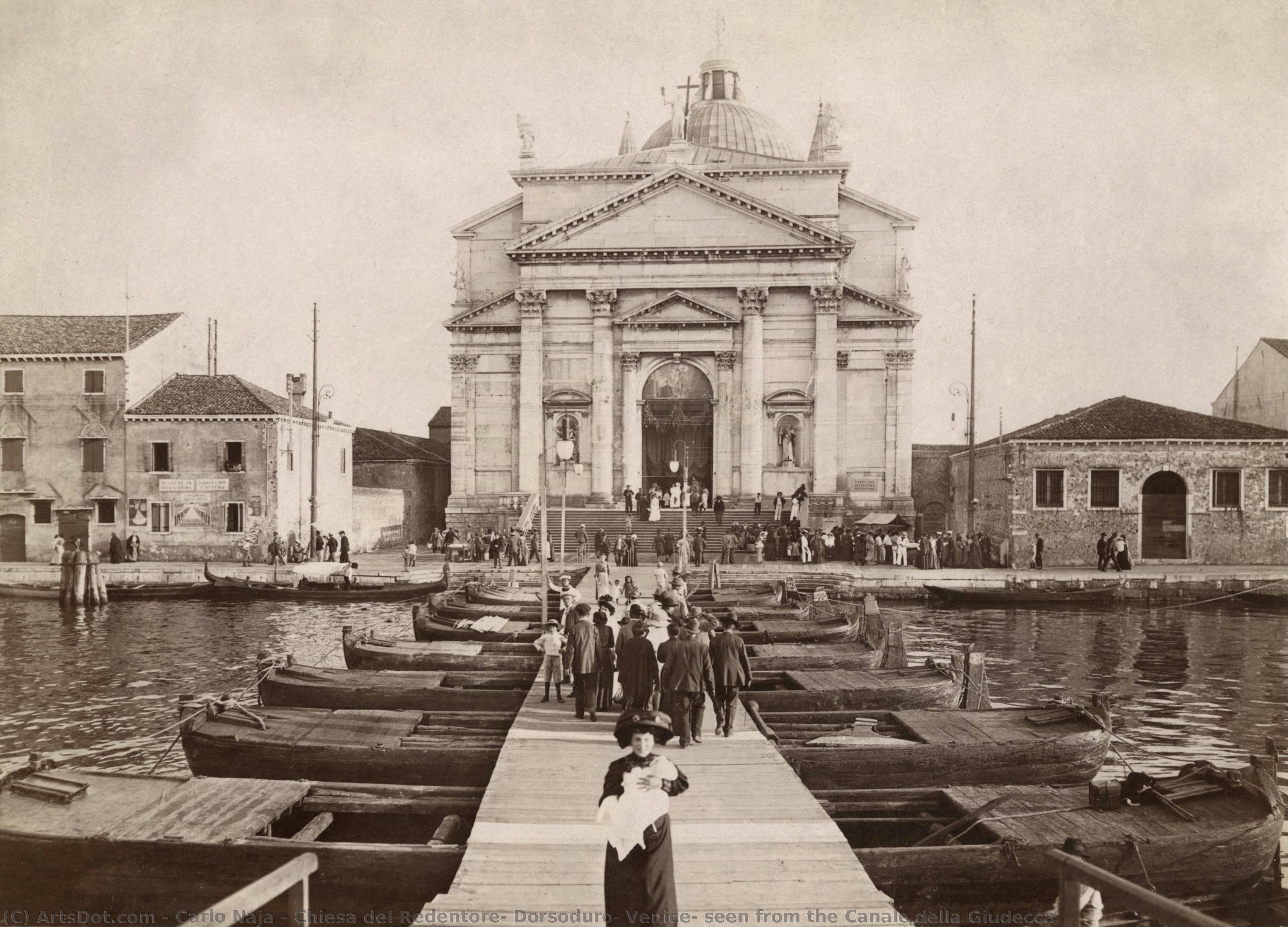
Chiesa del Redentore, Dorsoduro, Venice, seen from the Canale della Giudecca


 Read More
Giclée / Art Print
Museum-quality giclée or canvas print with fast production and flexible finish options. ( Buy Hand Made Painting Buy Image)




































Pick from our preset sizes that match the artwork's original proportions.

You may enter your own dimensions to fit a specific frame or space. If your selected size does not match the original image's proportions, we will either crop the artwork or extend the image with a mirrored or solid-fill edge. A digital mockup will be sent for your approval before production begins.
Please note that the on-screen preview does not reflect the actual cropping or extension. Only the mockup will accurately show the final composition.
While custom sizes are available, we recommend selecting a dimension from the predefined list to preserve the original proportions.
Worldwide Delivery () in 2 weeks instead of standard 4/5 weeks. (29 August)

Free Worldwide Express Shipping

High-Quality Linen Canvas

Full Shipping Insurance

Customs Tax Refund Guarantee

True Color Matching Guarantee

60-Day Return Policy (Defects Only)

100% Money-Back Guarantee

Bulk Discount Offer
 Glass option is only available in size under 110 CM

Chiesa del Redentore, Dorsoduro, Venice, seen from the Canale della Giudecca
Giclée / Art Print
Reproduction Size
-


Total Price
$ 63
Related Artworks









Artist Biography
The Visionary of Venetian Twilight
In the golden age of the nineteenth century, as the world began to transition from the romanticism of the brush to the precision of the lens, Carlo Naya emerged as a pioneer who bridged these two worlds. Born in 1816 in the quiet town of Tronzano Vercellese, Naya’s early life was far removed from the salt-misted canals of Venice. A man of intellect and diverse interests, he pursued legal studies at the University of Pisa, graduating in 1840. Yet, the rigid structures of law could not contain a spirit destined for much more atmospheric pursuits. His extensive travels across Europe, Asia, and North Africa served as a profound visual education, imbuing his later work with a global perspective and an eye for the sublime architecture and landscapes that define the human experience.
It was during this period of wandering that Naya encountered the revolutionary magic of the Daguerreotype. This encounter in Paris ignited a creative fire, transforming him from a scholar of law into a master of light and shadow. By 1857, he had established himself in Venice, a city that would become both his muse and his primary subject. Initially, Naya worked in partnership with the esteemed photographer Carlo Ponti, a collaboration that brought much-needed visibility to his burgeoning talent. However, following a professional rift, Naya forged his own path, establishing a prestigious studio in the heart of the Piazza San Marco. His presence in Venice was not merely that of a documentarian but of an artist who sought to capture the ephemeral essence of the city—the way moonlight dances upon the Grand Canal or how twilight softens the edges of ancient stone facades.
A Legacy Written in Light and Law
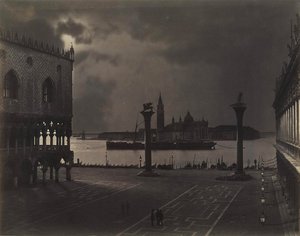
Naya’s photographic oeuvre is characterized by a profound romanticism, often echoing the emotional depth found in the works of painters like Caspar David Friedrich. He possessed an uncanny ability to utilize atmospheric perspective, creating images that felt less like static records and more like poetic meditations on time and decay. His lens focused intensely on the architectural splendor of Venice, documenting landmarks such as the Chiesa del Redentore and the Chiesa dei Santi Biagio e Carlo ai Catinari with a meticulousness that served both the tourist and the historian. Beyond the Venetian lagoons, his artistic reach extended to the Scrovegni Chapel in Padua, where he captured the delicate beauty of Giotto’s frescoes, ensuring their preservation for future generations.
Beyond his aesthetic contributions, Naya played a monumental role in the legal evolution of photography as an art form. He was not merely a creator of images but a fierce protector of intellectual property. In 1880, he famously won a landmark legal battle against those who sought to counterfeit and resell his photographic works. This victory, supported by his lawyer Leopoldo Bizio, became a cornerstone in the establishment of copyright law for photography in Italy. His life was a testament to the idea that the artist's vision is as much about the integrity of the work as it is about the beauty of its execution.
The historical significance of Carlo Naya lies in his ability to have captured a vanishing era with unprecedented clarity. His work remains a vital window into the Victorian-era Venice, offering a glimpse of a world caught between the ancient and the modern. Through his lens, we see:
- The Romantic Spirit: A mastery of nocturnal landscapes that evoke emotion and spiritual contemplation.
- Architectural Preservation: Detailed documentation of Venetian palaces and churches that serves as a historical record.
- Pioneering Technique: The transition from early Daguerreotypes to more complex photographic processes in Italy.
- Legal Landmark: The foundational role he played in securing the rights of photographers against unauthorized reproduction.
Though he passed away in 1882, Naya’s influence endured through his students, such as Tomaso Filippi, and through the vast archives that continue to inspire scholars today. He remains a figure of immense importance—a man who looked at the world not just to see it, but to truly feel its light.
carlo naja
1816 - 1882 , Italy
Quick Facts
- Artistic Movement Or Style: Romantic landscape
- Artists Or Movements Influenced By This Artist: ['Joseph Gibbs']
- Artists Who Influenced This Artist: ['Salvador Dali']
- Date Of Birth: 1816
- Full Name: Carlo Naya
- Nationality: Italian
- Notable Artworks: ['Land of Cockaigne']
- Place Of Birth: Tronzano Vercellese, Italy