 Preview
 Send
Send Share
Share
 Details

 Download
 Similars
 X-Ray
X-Ray Diaporama
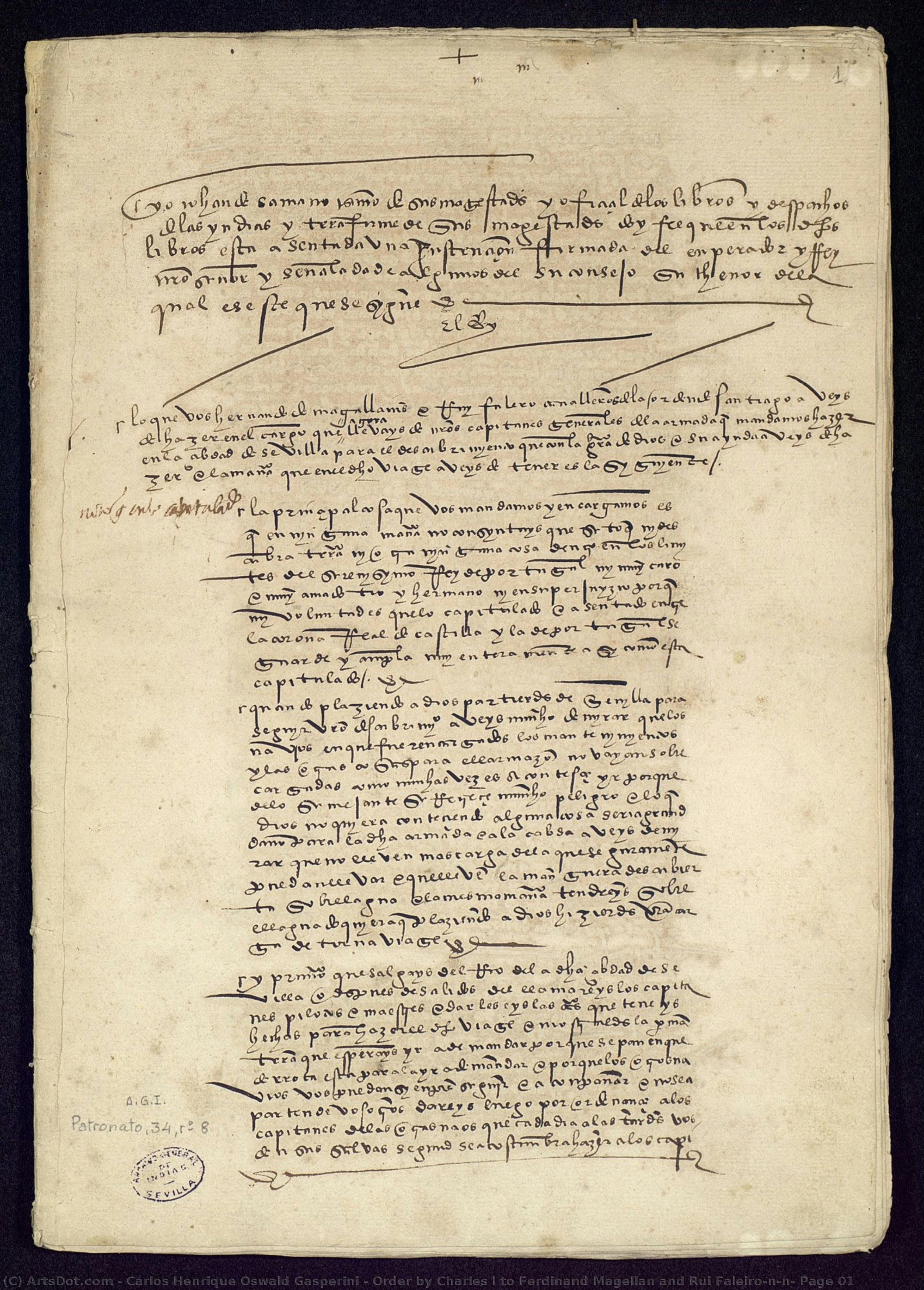
Order by Charles I to Ferdinand Magellan and Rui Faleiro\n\n/ Page 01

 Read More
Hand Made Oil Reproduction
Hand-painted oil on canvas in your size and frame, made to order by our artists. ( Buy Print Buy Image)




































Pick from our preset sizes that match the artwork's original proportions.

You may enter your own dimensions to fit a specific frame or space. If your selected size does not match the original image's proportions, we will either crop the artwork or extend the painting with additional hand-painted elements. A digital mockup will be sent for your approval before production begins.
Please note that the on-screen preview does not reflect the actual cropping or extension. Only the mockup will accurately show the final composition.
While custom sizes are available, we recommend selecting a dimension from the predefined list to preserve the original proportions.
After order, ArtsDot.com team will email client for instructions and provide a mockup preview
Worldwide Delivery () in 3/4 weeks instead of standard 5 weeks. (5 September). No compromise on quality.

Free Worldwide Express Shipping

High-Quality Linen Canvas

Full Shipping Insurance

Customs Tax Refund Guarantee

True Color Matching Guarantee

60-Day Return Policy (Defects Only)

100% Money-Back Guarantee

Bulk Discount Offer
 Glass option is only available in size under 110 CM

Order by Charles I to Ferdinand Magellan and Rui Faleiro\n\n/ Page 01
Reproduction Medium
Reproduction Size
-


Total Price
$ 263
Related Artworks










Artist Biography
Edward Hopper: A Portrait of American Isolation
Edward Hopper, born in Nyack, New York, on July 22, 1882, to a middle-class family that encouraged his artistic pursuits, stands as one of the most recognizable and enduring figures in American art. His work, characterized by stark realism, evocative lighting, and a pervasive sense of loneliness and quiet contemplation, continues to resonate deeply with viewers today. Hopper’s journey into painting began modestly – brief studies at the Correspondence School of Illustrating followed by classes at the New York School of Art under the guidance of influential figures like Robert Henri. This training proved pivotal, steering him away from purely academic pursuits and towards a more direct engagement with the everyday realities of American life, a theme that would dominate his oeuvre. His classmates included George Bellows, Rockwell Kent, and Guy Pène du Bois – artists who shared his interest in capturing the spirit of modern America.- Early Influences: Hopper’s artistic development was significantly shaped by Edgar Degas and Édouard Manet, whose compositional techniques and depictions of urban life provided a crucial foundation for his own style. He admired their ability to convey mood and atmosphere through carefully observed details and dynamic arrangements.
- European Travels (1906-7): Hopper’s initial foray abroad, spanning from 1906 to 1907, took him across Europe – Paris, various locations, and Spain. While he didn't fully embrace the avant-garde movements of the time, such as Fauvism or Cubism, these experiences broadened his artistic horizons and exposed him to new ways of seeing and representing the world.
- The Struggle for Recognition: The early years of his career were marked by a persistent struggle for recognition. He exhibited his work in various group shows, including the Armory Show of 1913, but achieved commercial success only gradually.
The Palette of Isolation: Hopper’s Distinctive Style
Hopper's artistic signature is instantly recognizable—a carefully constructed blend of realism and psychological depth. He masterfully employed stark lighting, often casting long shadows that heighten the sense of solitude and drama within his scenes. His compositions frequently feature isolated figures in seemingly empty spaces – diners, train stations, city streets – creating a powerful atmosphere of alienation and introspection. The use of cropped perspectives, reminiscent of cinematic framing, draws the viewer into the scene and invites them to contemplate the unspoken narratives unfolding before them. His color palette is typically restrained, favoring muted tones that contribute to the overall mood of quiet melancholy.- Key Characteristics: Hopper’s style is defined by precise lines, sharply delineated forms, and a deliberate avoidance of sentimentality. He wasn't interested in simply depicting reality; he sought to capture the *feeling* of reality—the subtle anxieties and unspoken longings that often accompany modern life.
- The “Automat” Motif: Hopper’s exploration of urban spaces led him to develop the "automat" motif – a depiction of diners and roadside establishments, capturing the impersonal efficiency and transient encounters of American travel. These paintings, such as *Automat* (1927) and *Chop Suey* (1929), offer a glimpse into the rhythms of everyday life in the burgeoning metropolis.
Personal Life and Artistic Partnership
Hopper’s personal life profoundly influenced his art. His marriage to Josephine Verstille Nivison in 1923 proved to be an enduring partnership, both personally and artistically. Jo, as he affectionately called her, became a constant muse and collaborator, posing for countless portraits and assisting him with studio arrangements. Her presence provided a grounding force amidst the often-lonely world of his art. The couple maintained a pattern of spending summers in New England, a tradition that continued throughout their lives and served as a source of inspiration for many of his paintings. His work is deeply intertwined with his own experiences—his observations of urban life, his reflections on human relationships, and his exploration of the complexities of American identity.- A Studio Companion: Josephine Nivison’s role extended beyond mere posing; she actively encouraged Hopper to experiment with watercolor painting, a medium he initially resisted but eventually embraced.
- The Influence of New England: The landscapes and small towns of New England—particularly Maine—provided a recurring subject matter for Hopper, offering a sense of familiarity and tranquility that contrasted sharply with the often-overwhelming energy of urban environments.
Legacy and Enduring Significance
Edward Hopper’s work continues to captivate audiences worldwide, cementing his place as one of America's most important artists. His paintings offer a poignant reflection on the themes of isolation, loneliness, and the search for connection in modern society. His ability to evoke mood and atmosphere through subtle details and carefully constructed compositions has ensured that his art remains remarkably relevant today. He died on May 15, 1967, leaving behind a vast body of work that continues to be exhibited and studied, reminding us of the enduring power of observation and the universal human experience of feeling alone in a crowd. His influence can be seen in countless contemporary artists who continue to explore themes of urban alienation and psychological introspection.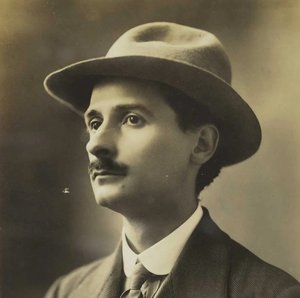
carlos henrique oswald gasperini
1882 - 1971 , Italy
Quick Facts
- Artistic Movement Or Style: Realism, American Scene
- Artists Or Movements Influenced By This Artist: ['George Bellows']
- Artists Who Influenced This Artist:
- Edgar Degas
- Édouard Manet
- Date Of Birth: July 22, 1882
- Date Of Death: May 15, 1967
- Full Name: Edward Hopper
- Nationality: American
- Notable Artworks:
- Nighthawks
- Gas Station
- Automat
- Place Of Birth: Nyack, New York, USA