 Preview
 Send
Send Share
Share
 Details

 Download
 Similars
 X-Ray
X-Ray Diaporama
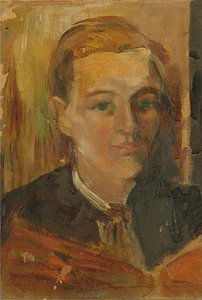
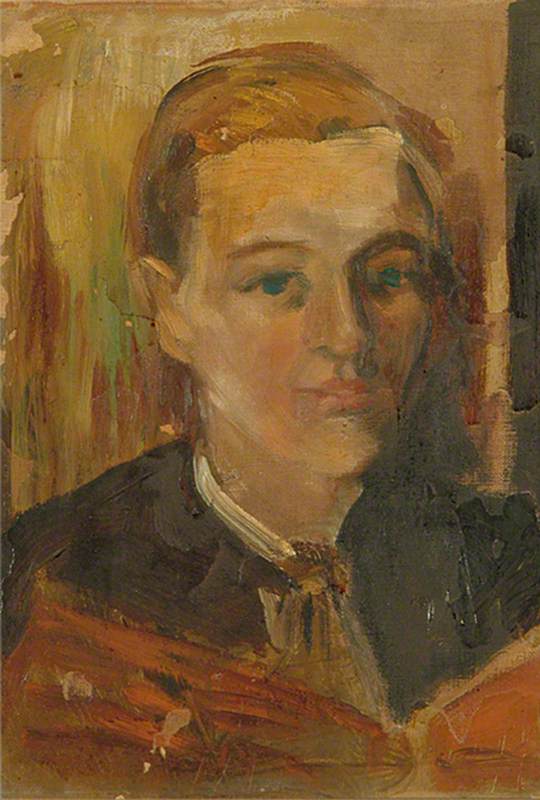
Admiral Lucas, VC, as a Young Man
 29.0 x 21.0 cm
 Towner
 Read More
Hand Made Oil Reproduction
Hand-painted oil on canvas in your size and frame, made to order by our artists. ( Buy Print Buy Image)




































Pick from our preset sizes that match the artwork's original proportions.

You may enter your own dimensions to fit a specific frame or space. If your selected size does not match the original image's proportions, we will either crop the artwork or extend the painting with additional hand-painted elements. A digital mockup will be sent for your approval before production begins.
Please note that the on-screen preview does not reflect the actual cropping or extension. Only the mockup will accurately show the final composition.
While custom sizes are available, we recommend selecting a dimension from the predefined list to preserve the original proportions.
After order, ArtsDot.com team will email client for instructions and provide a mockup preview
Worldwide Delivery () in 3/4 weeks instead of standard 5 weeks. (22 August). No compromise on quality.

Free Worldwide Express Shipping

High-Quality Linen Canvas

Full Shipping Insurance

Customs Tax Refund Guarantee

True Color Matching Guarantee

60-Day Return Policy (Defects Only)

100% Money-Back Guarantee

Bulk Discount Offer
 Glass option is only available in size under 110 CM

Admiral Lucas, VC, as a Young Man
Reproduction Medium
Reproduction Size
-


Total Price
$ 263
Related Artworks




Artist Biography
A Life Immersed in Colour: The Artistic Journey of Caroline Byng Lucas
Caroline Byng Lucas (1886-1967) was a quietly revolutionary figure within the British art scene, a woman whose dedication to colour lithography and support for fellow artists blossomed into a significant contribution to 20th-century Modern British Art. While not a household name in the same vein as her Bloomsbury contemporaries, Byng Lucas carved out a unique space for herself through her vibrant prints, her commitment to fostering artistic communities, and her distinctive aesthetic sensibility. Born into a privileged background – her father was Sir Robert Byng, 5th Baronet – she eschewed the conventional expectations of her social class, choosing instead to pursue a life deeply entwined with creative expression. Her early artistic training remains somewhat obscure, but it’s clear that she possessed an innate talent and a keen eye for composition and colour. This passion led her to explore various mediums before finding her true calling in lithography, a technique perfectly suited to her desire for bold, saturated hues and dynamic forms.The Lewes Gallery: A Beacon for Modern Art
Byng Lucas’s most enduring legacy is undoubtedly the Lewes Gallery, which she founded in 1928 in the picturesque Sussex town of Lewes. This wasn't merely a commercial venture; it was an act of artistic patronage and a deliberate attempt to champion emerging talent often overlooked by the established art world. The gallery quickly became a haven for Modern British artists, including those associated with the Bloomsbury Group – notably Duncan Grant and Vanessa Bell – as well as lesser-known figures whose work resonated with Byng Lucas’s own aesthetic preferences. She provided not only a platform for exhibition but also crucial financial support, enabling these artists to continue their practice during challenging economic times. The Lewes Gallery was remarkable for its inclusive spirit; it showcased paintings, sculptures, and prints, fostering dialogue between different artistic approaches. It represented a conscious effort to democratize art, bringing contemporary works to a wider audience beyond the confines of London’s galleries. The gallery's success stemmed from Byng Lucas’s discerning eye and her unwavering belief in the power of art to enrich lives.Colour Lithography: A Defining Technique
Caroline Byng Lucas is best known for her colour lithographs, a medium she mastered with exceptional skill. She embraced the possibilities offered by this technique – its ability to create rich, layered colours and complex textures – to produce prints that are both visually striking and emotionally evocative. Her subject matter often revolved around floral arrangements, landscapes, and still life compositions, but these were never mere representations of reality. Instead, Byng Lucas infused her work with a sense of dynamism and abstraction, using colour as a primary expressive force. Her palette was bold and unconventional for the time, favouring vibrant combinations that challenged traditional notions of harmony. She wasn’t interested in photographic realism; rather, she sought to capture the essence of her subjects through simplified forms and heightened colours. The process itself – meticulously layering different coloured inks onto lithographic stones – demanded patience and precision, qualities Byng Lucas possessed in abundance.Influences and Artistic Development
While Byng Lucas developed a distinctly personal style, her work wasn’t created in isolation. She was undoubtedly influenced by the Post-Impressionist movement, particularly the works of artists like Matisse and Van Gogh, whose use of colour and expressive brushwork resonated with her own artistic sensibilities. Her connections to the Bloomsbury Group also played a significant role in shaping her aesthetic vision. The emphasis on experimentation, individuality, and subjective experience – hallmarks of Bloomsbury art – are evident in her prints. However, Byng Lucas wasn’t simply imitating these influences; she synthesized them into something uniquely her own. Over time, her work became increasingly abstract, moving away from representational forms towards a more purely decorative style.- Early works show a clear influence of Post-Impressionism.
- Her association with the Bloomsbury Group encouraged experimentation and individuality.
- Later prints demonstrate a growing interest in abstraction and colour as an expressive element.