 Preview
 Send
Send Share
Share
 Details

 Download
 Similars
 X-Ray
X-Ray Diaporama
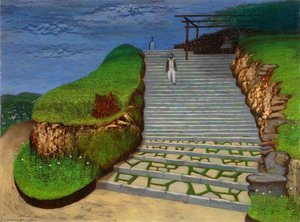
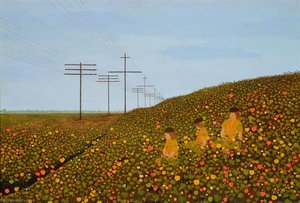
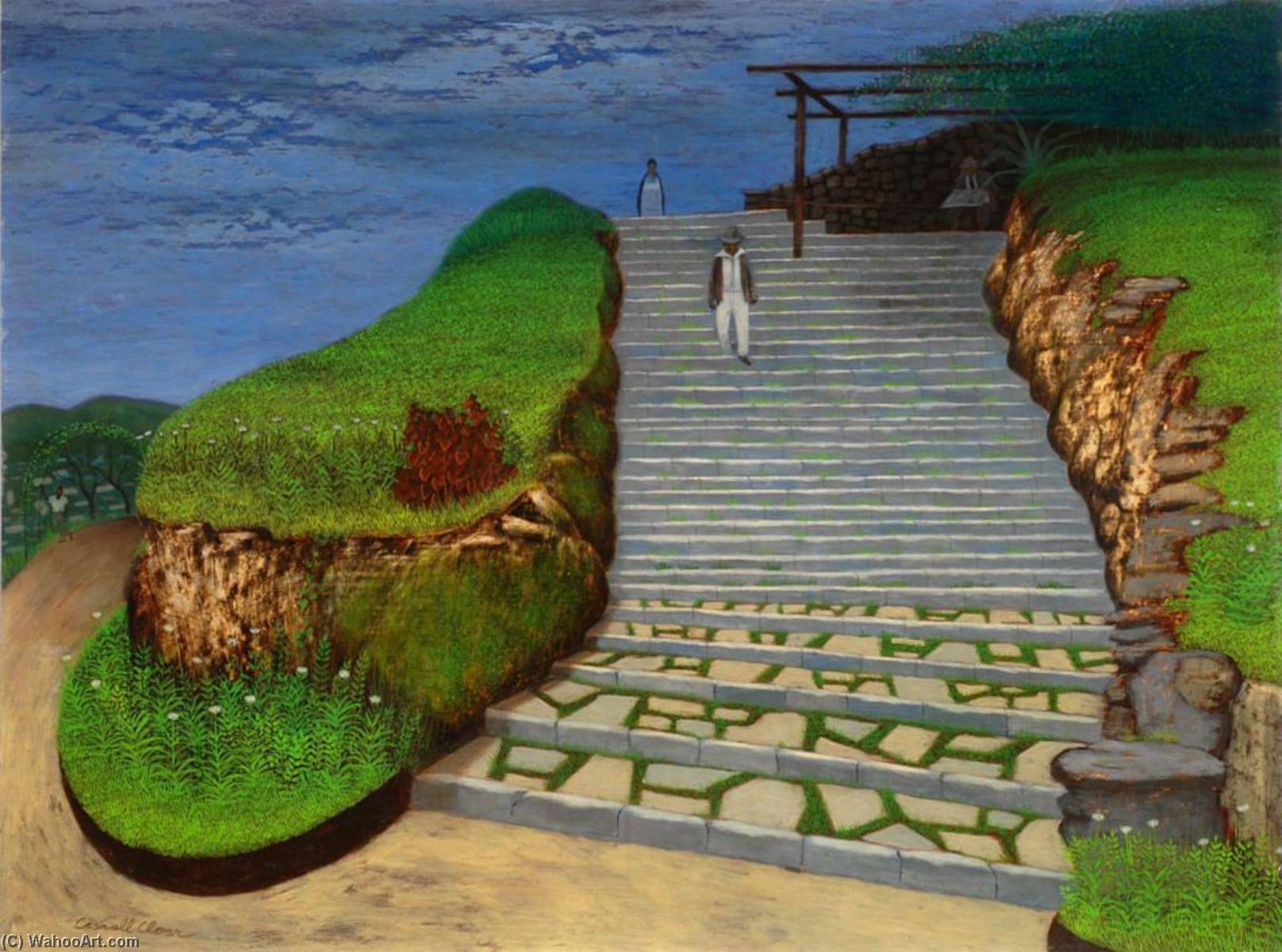
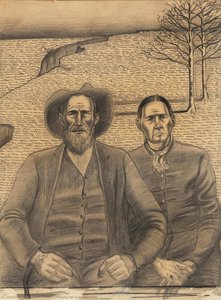
Hill of Carmen
 1951
1951 47.0 x 61.0 cm
 Read More
Giclée / Art Print
Museum-quality giclée or canvas print with fast production and flexible finish options. ( Buy Hand Made Painting Buy Image)




































Pick from our preset sizes that match the artwork's original proportions.

You may enter your own dimensions to fit a specific frame or space. If your selected size does not match the original image's proportions, we will either crop the artwork or extend the image with a mirrored or solid-fill edge. A digital mockup will be sent for your approval before production begins.
Please note that the on-screen preview does not reflect the actual cropping or extension. Only the mockup will accurately show the final composition.
While custom sizes are available, we recommend selecting a dimension from the predefined list to preserve the original proportions.
Worldwide Delivery () in 2 weeks instead of standard 4/5 weeks. (24 August)

Free Worldwide Express Shipping

High-Quality Linen Canvas

Full Shipping Insurance

Customs Tax Refund Guarantee

True Color Matching Guarantee

60-Day Return Policy (Defects Only)

100% Money-Back Guarantee

Bulk Discount Offer
 Glass option is only available in size under 110 CM

Hill of Carmen
Giclée / Art Print
Reproduction Size
-


Total Price
$ 63
Related Artworks








Artist Biography
The Dreamscapes of Carroll Cloar: A Journey Through Southern Surrealism
Carroll Cloar (1913 – 1993) occupied a singular space in the landscape of twentieth-century American art, acting as a bridge between the tangible reality of the American South and the ethereal realms of memory. Born in Earle, Arkansas, Cloar’s creative consciousness was deeply rooted in the visual language of his youth. He possessed an extraordinary ability to transform the mundane into the mythic, often drawing his primary inspiration from the faded, sepia-toned treasures found within old family photo albums. These photographs were not merely references for him; they were portals to a vanishing era. Through his brush, the faces, timeless dresses, and customs of "old America" were preserved, yet reimagined through a lens of profound surrealism that suggested a world suspended in time.
His artistic development was marked by a meticulous devotion to technique, most notably his mastery of pointillism. This method, which involves the application of minute dots of color to build form and light, allowed Cloar to create surfaces that seemed to shimmer with an internal, ghostly luminescence. His formal training at Southwestern College Memphis—now Rhodes College—and later at the prestigious Art Students League of New York provided him with the technical rigor necessary to execute such demanding styles. Whether working in tempera or oil, his ability to manipulate light through tiny, deliberate strokes gave his landscapes a dreamlike, vibrating quality, as if the very air in his paintings were thick with nostalgia and unspoken stories.
Themes of Homecoming and the Southern Mythos
Beyond the technical brilliance of his pointillist approach, Cloar’s work is unified by a poignant philosophical thread: the concept of "homecoming." Having traveled extensively through Europe and Latin America—supported by prestigious honors such as Guggenheim fellowships and a MacArthur Grant—Cloar experienced the profound shift in perspective that comes from leaving one's roots only to return to them. He believed that the true essence of a place could only be fully grasped by someone who had witnessed its absence. This sense of return permeates his oeuvre, infusing his depictions of Southern scenery with a bittersweet reverence for a way of life he sensed was slipping away from the earth.
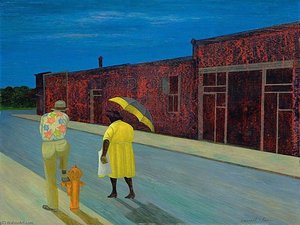
His paintings often feature surrealist elements that disrupt the pastoral calm of his landscapes, creating a tension between the familiar and the uncanny. In works such as Alien Child or Umbrella Lady, the viewer is presented with scenes that feel both deeply intimate and strangely alien. He populated his worlds with figures that seemed to inhabit a Southern-mythic reality, where natural scenery and architecture served as stages for psychological drama. This unique blend of realism and magic allowed him to explore themes of childhood innocence, the sanctity of family bonds, and the inevitable passage of time, making his work resonate on both a personal and universal level.
Legacy and Artistic Significance
The significance of Carroll Cloar lies in his ability to have captured the soul of a specific American era while elevating it to the realm of high art. He did not merely document the South; he mythologized it. His prolific output, consisting of over 800 works, serves as a vast visual archive of a vanished landscape, rendered with a poetic sensitivity that transcends mere nostalgia. By blending the precision of pointillism with the wandering spirit of surrealism, Cloar created a body of work that remains as haunting and luminous today as it was during his lifetime.
To study Cloar is to engage in a dialogue with memory itself. His legacy continues to inspire those drawn to the intersection of history and imagination, reminding us that the most profound truths are often found in the quiet, dreamlike corners of our shared past. His contributions to American painting remain a testament to the power of art to reclaim what time has otherwise lost.
carroll cloar
1913 - 1993
Quick Facts
- Artistic Movement Or Style: Surrealism; Pointillism
- Artists Or Movements Influenced By This Artist: ['Luminism']
- Artists Who Influenced This Artist: ['James Carroll Beckwith']
- Date Of Birth: 1913
- Date Of Death: 1993
- Full Name: Carroll Cloar
- Nationality: American
- Notable Artworks:
- Alien Child
- Day Remembered
- Umbrella Lady
- Place Of Birth: Earle, Arkansas