 Preview
 Send
Send Share
Share
 Details

 Download
 Similars
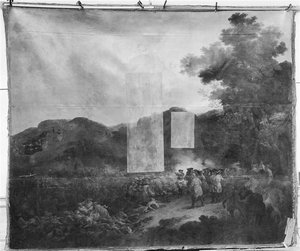
 X-Ray
X-Ray Diaporama
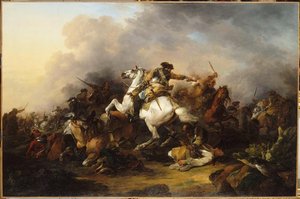
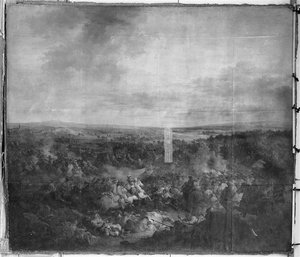
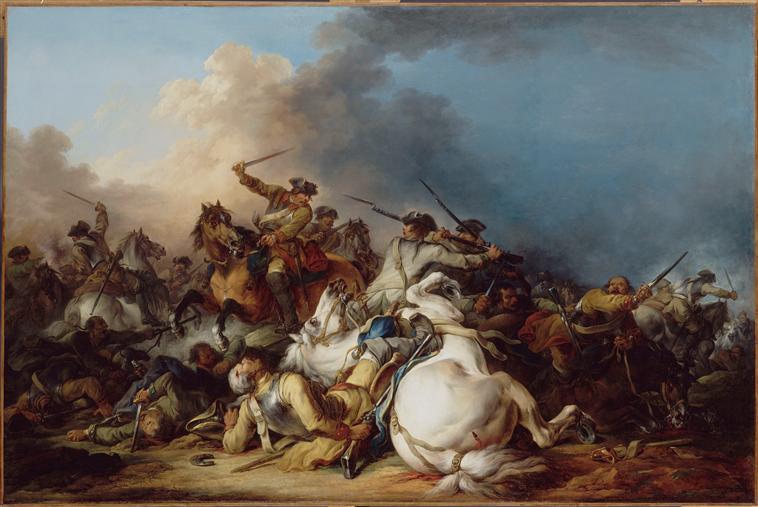
Une bataille

 Read More
Giclée / Art Print
Museum-quality giclée or canvas print with fast production and flexible finish options. ( Buy Hand Made Painting Buy Image)




































Pick from our preset sizes that match the artwork's original proportions.

You may enter your own dimensions to fit a specific frame or space. If your selected size does not match the original image's proportions, we will either crop the artwork or extend the image with a mirrored or solid-fill edge. A digital mockup will be sent for your approval before production begins.
Please note that the on-screen preview does not reflect the actual cropping or extension. Only the mockup will accurately show the final composition.
While custom sizes are available, we recommend selecting a dimension from the predefined list to preserve the original proportions.
Worldwide Delivery () in 2 weeks instead of standard 4/5 weeks. (20 August)

Free Worldwide Express Shipping

High-Quality Linen Canvas

Full Shipping Insurance

Customs Tax Refund Guarantee

True Color Matching Guarantee

60-Day Return Policy (Defects Only)

100% Money-Back Guarantee

Bulk Discount Offer
 Glass option is only available in size under 110 CM

Une bataille
Giclée / Art Print
Reproduction Size
-


Total Price
$ 63
Related Artworks
Artist Biography
Francesco Giuseppe Casanova: Venetian Painter of Dramatic Landscapes
Francesco Giuseppe Casanova (1 June 1727, London – 8 July 1803, near Mödling) was an Italian painter who specialized in battle scenes and disaster paintings. His older brother was Giacomo Casanova, the famed adventurer, and his younger brother was Giovanni Casanova; also a well-known painter. He stands as one of the most prolific artists of his time, producing over 400 canvases—a staggering output that cemented his reputation as a master of dramatic composition and evocative color palettes. Yet, despite his fame, Casanova’s artistic legacy remains somewhat overshadowed by his sensational biography, a chronicle of daring exploits and scandalous affairs that captivated audiences across Europe.Early Life and Artistic Beginnings
Born in London to Zanetta Farussi, an actress, and Gaetano Casanova, an actor and dancer, Francesco Giuseppe Casanova's upbringing was steeped in theatrical tradition—a formative influence that would permeate his artistic sensibilities. His father’s death when he was eight left him under the care of Abbé Gozzi, a respected educator who instilled in him a love for learning and nurtured his musical talent on the violin. This early exposure to both performance arts and intellectual pursuits undoubtedly shaped Casanova's worldview and fueled his lifelong fascination with storytelling—a characteristic that would find its expression in his monumental canvases. The Venetian atmosphere of his youth – vibrant, decadent, and rife with artistic patronage – provided fertile ground for developing his skills and ambitions.Venetian Influence and Artistic Style
Casanova’s formative years coincided with the zenith of Venetian art, where artists like Canaletto and Tiepolo dominated the landscape. Casanova absorbed these stylistic conventions—particularly the use of chiaroscuro (the dramatic interplay of light and shadow)—which would become hallmarks of his distinctive artistic style. He meticulously studied the techniques employed by Venetian masters, adapting them to depict scenes of conflict and catastrophe with unparalleled intensity. His canvases are characterized by bold brushstrokes, luminous colors, and a masterful command of perspective—elements that convey not merely visual accuracy but also palpable emotion. The influence of Orientalism is evident in his depictions of exotic landscapes and dramatic confrontations between East and West, reflecting the intellectual currents of Enlightenment Europe.Notable Works and Artistic Achievements
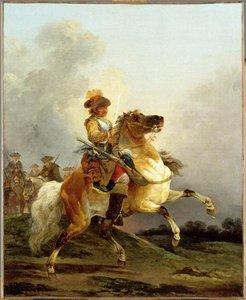
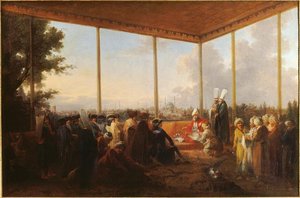
Casanova’s oeuvre encompasses an impressive range of subjects—battle scenes commemorating military victories, depictions of naval engagements, and panoramas capturing moments of devastation following earthquakes or floods. Among his most celebrated paintings are “Audience Accordeé Par Le Grand Vizir Aimali Carac À Monsieur De Saint Priest,” a monumental depiction of an Ottoman imperial audience that exemplifies Venetian grandeur and artistic ambition; “Cavalier Sur Un Cheval Blanc,” a portrait imbued with aristocratic grace and elegance—a testament to Casanova’s ability to capture psychological nuance alongside technical virtuosity; and “The Sphinx Fine Art” which showcases his talent for portraying dramatic landscapes. His paintings are held in prestigious museums across Europe, including the British Museum and Palazzo Ducale di Venezia, ensuring that his artistic vision continues to inspire admiration and scholarly inquiry.Legacy and Historical Significance
Francesco Giuseppe Casanova’s contribution to 18th-century art is undeniable—he elevated battle painting to new heights of expressive power and established himself as one of the foremost artists of his era. His canvases serve as invaluable documents of historical events, capturing not only visual details but also the psychological atmosphere of turbulent times. Moreover, Casanova’s artistic style—characterized by Venetian influences and masterful technique—influenced subsequent generations of painters. He remains a compelling figure in art history—a man whose life was as extraordinary as his art, embodying the spirit of adventure and intellectual curiosity that defined the Enlightenment. His legacy endures as a reminder of the transformative power of creativity and the enduring fascination with dramatic narratives.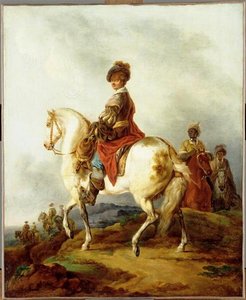
casanova françois joseph
1727 - 1802
Quick Facts
- Artistic Movement Or Style: Orientalist art
- Artists Or Movements Influenced By This Artist: ['European Battle Scenes']
- Artists Who Influenced This Artist: ['Venetian Art Style']
- Date Of Birth: June 1, 1727
- Full Name: Francesco Giuseppe Casanova
- Nationality: Italian
- Notable Artworks:
- Cavalier sur un cheval blanc
- AUDIENCE ACCORDEE PAR LE GRAND VIZIR AIMALI CARAC A MONSIEUR DE SAINT PRIEST
- Place Of Birth: London