 Preview
 Send
Send Share
Share
 Details

 Download
 Similars
 X-Ray
X-Ray Diaporama
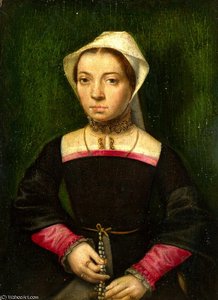
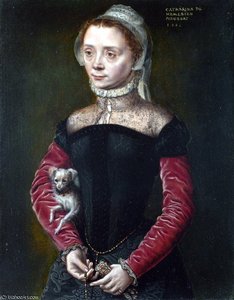
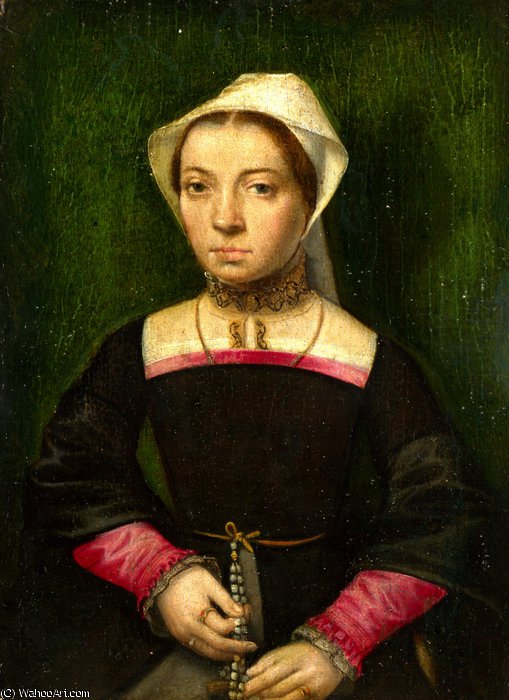
A Lady with a Rosary

 Read More
Hand Made Oil Reproduction
Hand-painted oil on canvas in your size and frame, made to order by our artists. ( Buy Print Buy Image)




































Pick from our preset sizes that match the artwork's original proportions.

You may enter your own dimensions to fit a specific frame or space. If your selected size does not match the original image's proportions, we will either crop the artwork or extend the painting with additional hand-painted elements. A digital mockup will be sent for your approval before production begins.
Please note that the on-screen preview does not reflect the actual cropping or extension. Only the mockup will accurately show the final composition.
While custom sizes are available, we recommend selecting a dimension from the predefined list to preserve the original proportions.
After order, ArtsDot.com team will email client for instructions and provide a mockup preview
Worldwide Delivery () in 3/4 weeks instead of standard 5 weeks. (17 August). No compromise on quality.

Free Worldwide Express Shipping

High-Quality Linen Canvas

Full Shipping Insurance

Customs Tax Refund Guarantee

True Color Matching Guarantee

60-Day Return Policy (Defects Only)

100% Money-Back Guarantee

Bulk Discount Offer
 Glass option is only available in size under 110 CM

A Lady with a Rosary
Reproduction Medium
Reproduction Size
-


Total Price
$ 263
Related Artworks
Artist Biography
A Pioneering Vision: The Life and Art of Catharina van Hemessen
The 16th century, a period synonymous with the flourishing Renaissance, witnessed an extraordinary surge in artistic innovation. Yet, within this vibrant landscape, the contributions of women artists often remained obscured by societal constraints. Among those who dared to challenge these norms was Catharina van Hemessen, a Flemish painter whose talent and determination carved a unique space for her in art history. Born in Antwerp around 1528, into a family steeped in artistic tradition—her father, Jan Sanders van Hemessen, being a prominent Mannerist painter—Catharina benefited from an unusual advantage: direct tutelage within the home. This familial arrangement circumvented the typical obstacles faced by aspiring female artists of the time, namely the restrictive apprenticeship system that demanded years of living and working under the guidance of a master, a situation often impractical or unacceptable for women. Her father’s influence was foundational, providing her with not only technical skills but also access to a network within the burgeoning Antwerp art scene.Intimate Worlds: Style and Subject Matter
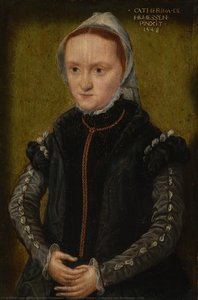
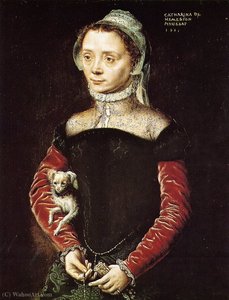
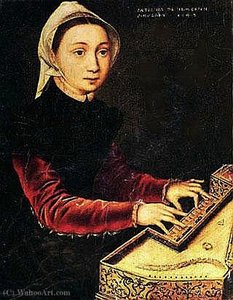
Van Hemessen's artistic focus centered primarily on portraiture, specifically small-scale depictions of women. These works are characterized by an exquisite realism, delicate rendering of features, and meticulous attention to costume—all set against dark, atmospheric backgrounds that create a sense of intimacy and quiet contemplation. Her portraits weren’t merely representations of physical likeness; they offered glimpses into the inner lives of her sitters, hinting at their social standing, education, and perhaps even their personalities. Girl at the Virginal (1548), possibly portraying her sister Christina, exemplifies this approach, showcasing a young woman engaged in music-making—a symbol of refinement and cultural accomplishment. The careful depiction of the instrument itself, along with the sitter’s poised demeanor, speaks to a world of privilege and artistic appreciation. While she also ventured into religious compositions, it was within the realm of portraiture that her talent truly shone, capturing a nuanced humanity often absent in more formal or grandiose depictions.A Self-Portrait for the Ages: Breaking Barriers
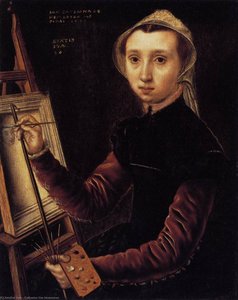
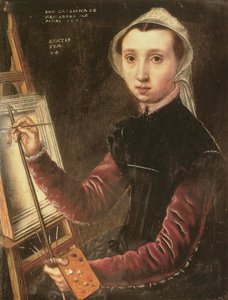
However, Catharina van Hemessen’s most enduring legacy rests upon her Self-Portrait (1548). This remarkable work is not simply a depiction of an artist; it's a statement. At just twenty years old, she presented herself actively engaged in the act of painting, seated before an easel with palette and brushes in hand. This image holds immense historical significance as it’s widely considered the earliest surviving self-portrait of an artist—male or female—depicting themselves *at work*. It's a bold assertion of her professional identity, challenging conventional expectations about women’s roles and capabilities. The composition itself is carefully constructed: she gazes directly at the viewer with confidence, while the reflection in the mirror behind her offers another perspective, subtly acknowledging the complexities of representation. The painting isn’t just a self-representation; it's a meditation on the very nature of artistic creation.Recognition and Legacy
Van Hemessen’s talent did not go unnoticed during her lifetime. She became a master in the Guild of Saint Luke, an exceptional achievement for a woman in the 16th century, demonstrating both her skill and recognition within the artistic community. Her success attracted the attention of Maria of Austria, Queen of Hungary and Bohemia, who became a significant patron. In 1556, van Hemessen was invited to join the Spanish court alongside Maria, further solidifying her position as a respected artist. While details surrounding the later years of her life remain somewhat scarce—she married musician Chrétien de Morien around 1554 and appears to have ceased painting shortly thereafter—her impact on art history is undeniable. She paved the way for future generations of female artists, demonstrating that women could not only excel in a traditionally male-dominated field but also challenge prevailing societal norms through their creative expression. Her work continues to inspire, reminding us of the importance of recognizing and celebrating the contributions of all artists, regardless of gender or background.- Her self-portrait remains an iconic image of female artistic agency.
- She challenged the limitations placed upon women in Renaissance society.
- Van Hemessen’s intimate portraits offer valuable insights into the lives and status of women during her time.
Catharina van Hemessen
1528 - 1587 , Belgium
Quick Facts
- Artistic Movement Or Style: Flemish Renaissance
- Artists Who Influenced This Artist: ['Jan Sanders van Hemessen']
- Date Of Birth: c. 1528
- Date Of Death: After 1565
- Full Name: Catharina van Hemessen
- Nationality: Flemish
- Notable Artworks:
- Self-Portrait (1548)
- Girl at the Virginal
- Portrait of a Woman
- Place Of Birth: Antwerp, Belgium
Related Articles
Van Gogh's Masterpieces: Explore 25 Iconic Paintings & Art for Your Home
Journey through Vincent van Gogh's 25 most iconic paintings! Explore 'Starry Night', 'Sunflowers,' and more—discover the stories, techniques & emotions behind these Post-Impressionist masterpieces. Find museum-quality art reproductions for your home at ArtsDot.com.

Oil on Canvas: A Historical & Technical Exploration of a Timeless Artistic Medium
Explore the rich history & enduring techniques of oil painting on canvas. Discover the science behind its longevity, conservation practices, and contemporary relevance. Expert insights for art enthusiasts.

Rembrandt's Masterpieces: Explore 25 Iconic Paintings & Prints | ArtsDot
Journey through Rembrandt van Rijn's 25 most iconic paintings & etchings. Explore Dutch Golden Age masterpieces, dramatic chiaroscuro, and timeless portraits. Find museum-quality art reproductions to elevate your home decor on ArtsDot.com.

The Enduring Legacy of Oil on Canvas: Technique, History & Aesthetic Impact
Explore the rich history & techniques of oil painting – from Renaissance masters to Impressionism. Discover pigments, layering methods, and why this timeless medium endures. Expert insights for artists & art enthusiasts.
Early Netherlandish Masters: 10 Paintings That Revolutionized Art & Decor
Journey into the world of Early Netherlandish painting! Explore 10 masterpieces by Jan van Eyck, Rogier van der Weyden & more. Discover stunning detail, symbolism & Renaissance art for your home decor. Find museum-quality reproductions on ArtsDot.com