 Preview
 Send
Send Share
Share
 Details

 Download
 Similars
 X-Ray
X-Ray Diaporama
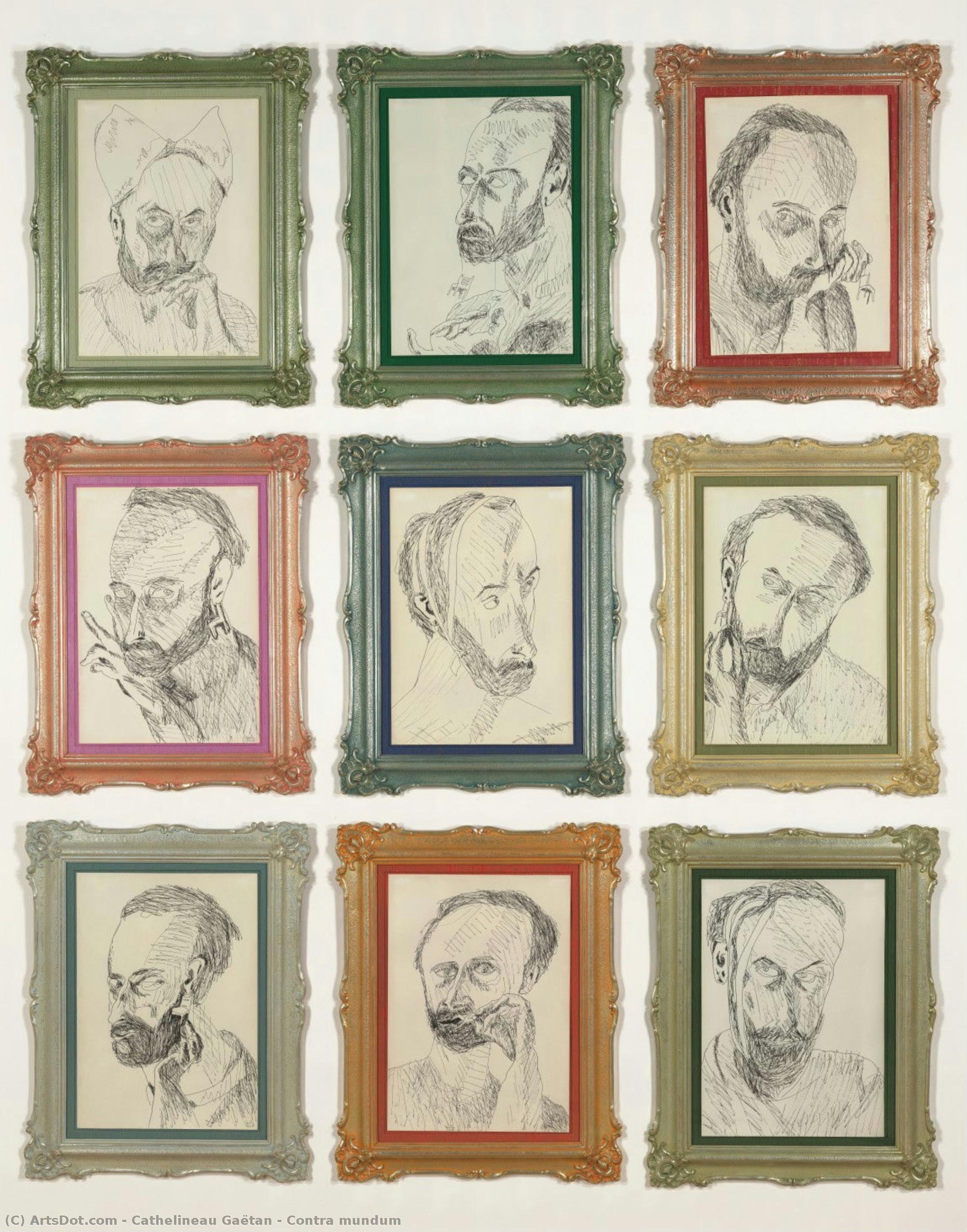
Contra mundum
 Contemporary Art
 1988
1988- Contemporary
 70.0 x 55.0 cm
 Serralves Foundation
 Read More
Hand Made Oil Reproduction
Hand-painted oil on canvas in your size and frame, made to order by our artists. ( Buy Print Buy Image)




P118B $10

P118H $10

P118W $10

P438Z $10

P508JH $12

P508YH $12

P805H $10

P805Z $10

P919BZ $10

P919G $10

P919XJ $10

P959ZH $10

P968JZ $12

W106C $8

W218G $10

W218JH $8

W218Y $10

W307PJ $10

W316G $10

W316PJ $8

W316Y $10

W398PJ $8

W4111J $10

W500HY $15

W500JH $15

W692G $12

W849H $8

W940BG $15

W953PJ $8




Pick from our preset sizes that match the artwork's original proportions.

You may enter your own dimensions to fit a specific frame or space. If your selected size does not match the original image's proportions, we will either crop the artwork or extend the painting with additional hand-painted elements. A digital mockup will be sent for your approval before production begins.
Please note that the on-screen preview does not reflect the actual cropping or extension. Only the mockup will accurately show the final composition.
While custom sizes are available, we recommend selecting a dimension from the predefined list to preserve the original proportions.
After order, ArtsDot.com team will email client for instructions and provide a mockup preview
Worldwide Delivery () in 3/4 weeks instead of standard 5 weeks. (21 August). No compromise on quality.

Free Worldwide Express Shipping

High-Quality Linen Canvas

Full Shipping Insurance

Customs Tax Refund Guarantee

True Color Matching Guarantee

60-Day Return Policy (Defects Only)

100% Money-Back Guarantee

Bulk Discount Offer
 Glass option is only available in size under 110 CM

Contra mundum
Reproduction Medium
Reproduction Size
-


Total Price
$ 263
Artwork Description
A Kaleidoscope of Identity: The Intricate Vision of Contra Mundum
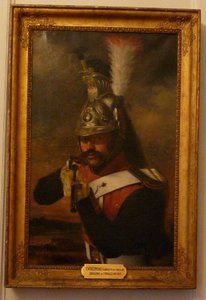
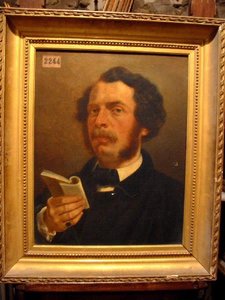
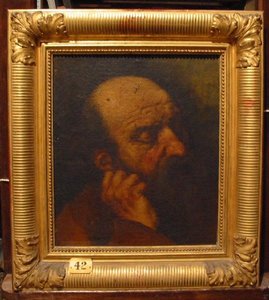
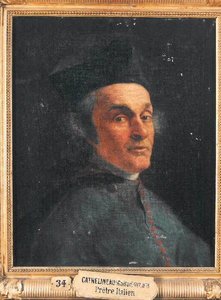
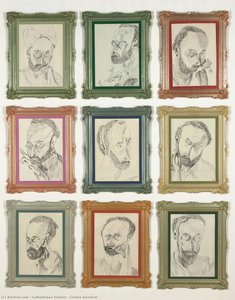
In the evocative piece Contra mundum, we are invited into a mesmerizing visual labyrinth that challenges our perception of portraiture and unity. Created in 1988, this work functions as a complex mosaic, presenting a collection of sixteen framed portraits arranged in a deliberate, circular formation. At first glance, the viewer is struck by the rhythmic repetition of masculine features—specifically the varied textures of beards and the soulful gazes of men captured across different frames. This circular arrangement does more than just organize space; it creates a sense of eternal motion, drawing the eye inward toward a central void while simultaneously pushing the gaze outward to explore each individual character within the ring.
The composition serves as a profound meditation on the concept of the collective versus the individual. By placing these sixteen distinct portraits in a shared orbit, the artist explores how separate identities can coalesce into a singular, powerful entity. Each portrait, varying slightly in size and positioning, offers a unique window into a different persona, yet they are bound together by the structural geometry of the circle. This technique creates a layered depth that is particularly captivating for interior designers looking to anchor a room with a piece that demands both close inspection and wide-angle appreciation. The interplay of light and shadow across the various frames adds a sculptural quality to the flat surface, making the artwork feel like a living, breathing installation.
Mastery of Detail and the Legacy of French Tradition
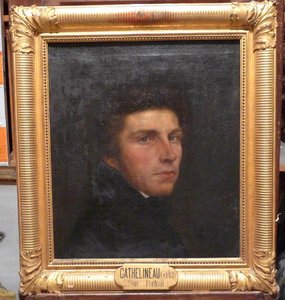
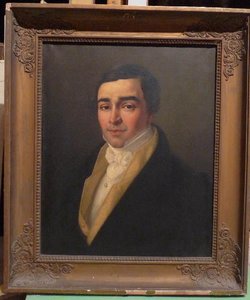
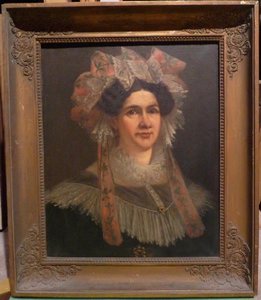
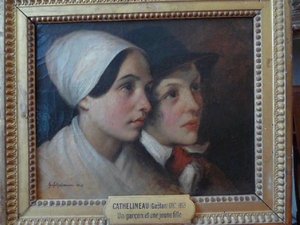
While Contra mundum is a contemporary creation, it breathes with the ghost of classical mastery. The artist draws upon a lineage of meticulous rendering that can be traced back to the profound traditions of French portraiture. There is an undeniable echo of the precision found in the works of masters like Gaëtan Cathelineau, whose training under Jacques-Louis David instilled a reverence for anatomical accuracy and classical composition. In this piece, we see that same dedication to capturing the fine details—the coarse hair of a beard, the subtle wrinkles of expression, and the nuanced way light hits a cheekbone—reimagined through a modern, fragmented lens.
For the discerning collector, this artwork offers a sophisticated blend of historical reverence and avant-garde experimentation. The technique used to present these portraits suggests a collage-like sensibility, yet the execution remains grounded in the high-fidelity traditions of fine art painting. This duality makes it an exceptional choice for those seeking to bridge the gap between classical elegance and contemporary edge in their decor. It is not merely a painting but a conversation piece that invites viewers to contemplate the many faces of humanity, making it a timeless addition to any curated collection or high-end residential space.
Related Artworks

Artist Biography
Gaëtan Cathelineau: A Master of French Portraiture and Romantic Detail
Gaétan Cathelineau (1787-1859) stands as a significant, yet often overlooked, figure in 18th and early 19th-century French art. Born into a family with artistic roots – his father was a sculptor – Cathelineau’s journey to becoming a respected painter began under the tutelage of Jacques-Louis David, one of the most influential artists of the Neoclassical era. This formative period instilled in him a deep understanding of classical composition and technique, which he skillfully blended with the burgeoning Romantic sensibilities of his time. His work offers a captivating glimpse into the social fabric and emotional nuances of his era, primarily through meticulously rendered portraits and scenes that capture both grandeur and intimate detail.
Cathelineau’s early life remains somewhat shrouded in mystery, though he is known to have spent his formative years in Montrichard, Loir-et-Cher. He quickly gained recognition for his artistic abilities, eventually securing a position as a professor of drawing at the Lyceum of Tours from 1835 until his death in 1859. This role provided him with a steady income and allowed him to continue producing art throughout his life. His career spanned several decades, witnessing significant shifts in artistic styles and societal values, which he adeptly reflected in his paintings.
The Influence of David and the Rise of Romanticism
David’s influence on Cathelineau is undeniable. The rigorous training in classical principles – precise drawing, balanced composition, and a focus on idealized forms – formed the bedrock of his artistic practice. However, unlike David's staunch adherence to Neoclassicism, Cathelineau embraced the emerging Romantic movement with enthusiasm. This shift is evident in his later works, which are characterized by looser brushwork, heightened emotional expression, and a greater emphasis on capturing the subjective experience of the subject. He moved away from the rigid formality of David’s style towards a more expressive and dramatic approach.
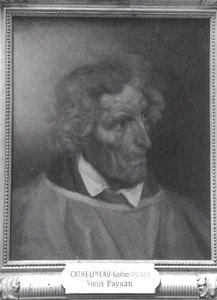
The Romantic movement, with its fascination for nature, folklore, and individual emotion, provided Cathelineau with a rich palette of subjects and stylistic choices. He explored themes of solitude, spirituality, and the beauty of the natural world, often imbuing his paintings with a sense of melancholy or introspection. This is particularly evident in works like “Vieillard Chauve Endormi” (Old Bald Man Asleep), where the subject’s vulnerability and quiet dignity evoke a profound emotional response.
Key Works and Artistic Style
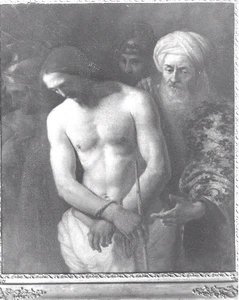
Cathelineau's oeuvre encompasses a diverse range of subjects, but he is particularly renowned for his portraits. His ability to capture the character and personality of his sitters – whether noblemen, clergymen, or ordinary citizens – is remarkable. “Ecce Homo,” a powerful depiction of Christ, exemplifies his mastery of dramatic lighting and psychological insight. The painting’s use of chiaroscuro creates a sense of mystery and reverence, drawing the viewer into the subject's gaze.
Beyond portraits, Cathelineau produced numerous genre scenes and historical paintings. “Santi Michele e Gaetano,” a vibrant depiction of two saints within a magnificent Baroque church, showcases his skill in rendering architectural detail and capturing the energy of a religious gathering. His works are characterized by meticulous attention to detail, a refined color palette, and a subtle use of light and shadow. He was known for his ability to create a sense of atmosphere and evoke specific moods through his paintings.
Legacy and Historical Significance
Despite not achieving the same level of fame as some of his contemporaries, Gaëtan Cathelineau’s contribution to French art is significant. He represents a crucial bridge between Neoclassicism and Romanticism, embodying the stylistic innovations of the era. His paintings offer valuable insights into the social and cultural landscape of 18th and early 19th-century France. His bequest to the Museum of Tours—fifty paintings by masters alongside his own works—testifies to his artistic esteem and lasting impact on the region’s art heritage.
Today, Cathelineau's work is appreciated for its technical skill, emotional depth, and evocative atmosphere. His portraits, in particular, continue to captivate viewers with their ability to convey a sense of humanity and timelessness. Further research into his life and artistic practice promises to reveal even more about this fascinating and often overlooked master of French painting.
cathelineau gaëtan
1787 - 1859
Quick Facts
- Artistic Movement Or Style: Classical French Art
- Artists Who Influenced This Artist: ['Jacques-Louis David']
- Date Of Birth: 1787
- Date Of Death: 1859
- Full Name: Gaëtan Cathelineau
- Nationality: French
- Notable Artworks:
- Ecce Homo
- Vieillard Chauve Endormi
- Place Of Birth: Montrichard, France
Related Articles
Framing Perception: A Comprehensive Guide to Selecting Frames that Enhance Interior Styles and Artwork Value
Elevate your space with expert art framing guidance! Discover how to choose frames that enhance artwork & interior design, protect valuable pieces, and create stunning displays. Trusted advice for designers & collectors.

The Frame as Argument: An Expert Guide to Selecting the Perfect Frame for Your Art
Master the art of presentation with our expert guide on choosing the perfect frame. Learn how to enhance your artwork's value, complement your interior design, and ensure long-term preservation through professional framing techniques for collectors and enthusiasts alike.

Enhancing Art with Framing: A Guide to Selection & Aesthetic Integration
Elevate your artwork with expert framing advice. This guide covers styles, materials, preservation techniques & client consultation for stunning results. Enhance value & protect your investment.
Beyond Ornamentation: The Psychological Impact of Framing on Aesthetic Perception & Artistic Value
Explore the profound psychological impact of framing on art perception & value. Discover how color, composition, and historical context influence aesthetic judgment. Expert insights for collectors.

Beyond the Canvas: Framing as a Catalyst for Value & Aesthetic Impact in Luxury Art Reproduction
Discover how expert framing elevates your art investment & interior design. Explore museum-quality options, bespoke sizing, and preservation techniques for discerning collectors. Enhance value & aesthetic impact with ArtsDot.