

 Preview
 Send
Send Share
Share
 Details

 Download
 Similars
 X-Ray
X-Ray Diaporama
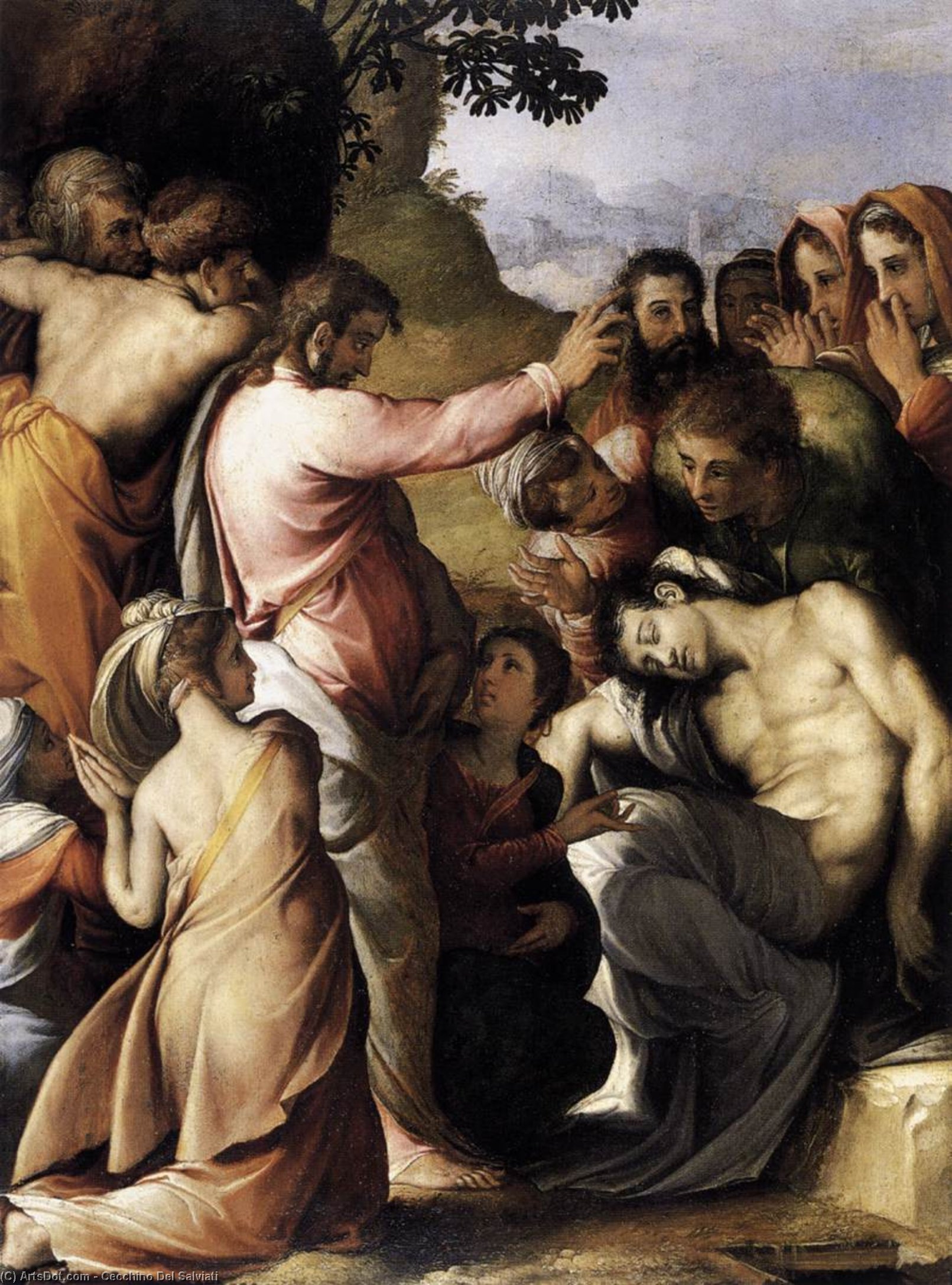
Raising of Lazarus
 Oil On Panel
- High Renaissance
 1540
1540- Renaissance
 89.0 x 67.0 cm
 Palazzo Colonna
 Read More
Purchase a high-resolution, enhanced digital image, far superior to the online preview.
Each file is meticulously prepared by our in-house specialists using advanced tools and expert manual retouching. We ensure every image has exceptional clarity, precise color accuracy, and fine detail.
The final file is delivered via email within 72 hours, optimized for immediate use in professional, editorial, and print environments. This is the same quality trusted by top-tier design studios, publishers, and galleries.
Digital Image
Download a high-resolution file for personal display, printing, and creative projects. ( Buy Print Buy Hand Made Painting)
Included in Every Digital Image Order
Expert Digital Delivery, Guaranteed
When you choose ArtsDot.com, you're not just getting an image - you're receiving a professionally enhanced digital artwork, crafted with precision and backed by a satisfaction guarantee. Here's everything that comes with your order, automatically:

Fast Email Delivery
Your high-resolution digital image file will be emailed to you within 72 hours of ordering - ready for immediate use.

AI-Enhanced Digital File
Your artwork is professionally optimized using advanced AI tools and manual editing, ensuring maximum detail, clarity, and color accuracy.

Free Lifetime Re-Delivery
Accidentally deleted or lost your file? No worries - we'll resend it to you anytime, free of charge.

No Import Fees - Ever
Enjoy your artwork instantly with zero customs, duties, or delivery fees - digital downloads are always tax-free.

Color Accuracy Guarantee
We ensure your digital image reflects the original colors as closely as possible using professional tools and color management.

60-Day Satisfaction Guarantee
If you're not satisfied with your digital image, we'll revise it or refund 100% within 60 days - no questions asked.

100% Money-Back Guarantee
Not satisfied? Get a full refund within 60 days of receiving your digital file - no questions asked.

Bulk Order Discounts
Buy 3 images, save 10% - Buy 5, save 15% - Buy 10+, save 20%. Great for creative projects, galleries, and agencies.
Collectible Description
The Divine Drama of Lazarus's Return
To stand before Cecchino del Salviati’s depiction of the Raising of Lazarus is to be transported across the centuries, into a moment suspended between death and miraculous life. This oil on panel painting, executed in 1540, is far more than a mere biblical illustration; it is a vibrant testament to the enduring power of faith rendered through masterful artistry. The scene unfolds with breathtaking drama: Jesus Christ, the central conduit of divine grace, extends a hand toward Lazarus, who lies inert upon the earth. The air itself seems thick with anticipation as the surrounding figures react—a spectrum of human emotion painted with exquisite realism.
Mastery in High Renaissance Technique
Del Salviati’s command over the techniques of the High Renaissance is immediately apparent. Observe the meticulous rendering of texture; one can almost feel the weight and drape of the richly folded garments or the smooth pallor of skin emerging from shadow. The artist employed a sophisticated palette dominated by deep, earthy tones, lending the composition a profound sense of solemnity appropriate to the subject matter. Yet, this somber mood is punctuated by an electrifying visual counterpoint: the striking, vibrant red robe worn by a figure on the left. This single burst of color acts like a beacon, drawing the eye and injecting vital energy into the otherwise muted grandeur of the scene.
Compositional Harmony and Emotional Resonance
The composition is orchestrated with an almost architectural balance. The figures are not merely placed within the landscape; they are arranged in a carefully considered semi-circle that directs the viewer's gaze inexorably toward the nexus of action—Jesus and Lazarus. The background, featuring naturalistic foliage and trees, serves to ground the miracle in a tangible reality, preventing the divine event from feeling ethereal or weightless. Instead, it feels rooted in the very soil of Galilee. This careful balance ensures that while the setting provides context, the emotional core remains fiercely focused on the resurrection itself.
A Timeless Piece for Modern Adoration
Owning a reproduction of this work is to invite a piece of Florentine Mannerist genius into your own space. It speaks to collectors who appreciate not only historical significance but also technical virtuosity. Whether adorning a grand hall or serving as the focal point of a richly decorated study, this painting carries an inherent narrative weight. It evokes contemplation on life's fragility and the enduring promise of renewal. The depth achieved through the interplay of light and shadow—the chiaroscuro that gives every figure three-dimensional presence—ensures that this artwork remains captivating, drawing the viewer into its eternal drama with every glance.
Related Artworks

Artist Biography
The Florentine Visionary: The Life and Legacy of Cecchino del Salviati
In the vibrant, shifting landscape of the sixteenth century, few artists captured the restless energy of the Mannerist movement as profoundly as Francesco Salviati, known to history by his evocative moniker, Cecchino del Salviti. Born in Florence around 1510 into a lineage of creative talent—his father being the painter Francesco Rossi—Cecchino was destined for a life steeped in the aesthetic complexities of the Italian Renaissance. His early years were not merely an education in technique but an immersion into the very soul of Florentine humanism. Under the tutelage of the great Andrea del Sarto, Cecchino absorbed a foundation of meticulous realism and compositional grace, yet he possessed an innate drive to push beyond the balanced harmonies of his predecessors toward something far more experimental and emotionally charged.
The trajectory of his career shifted dramatically around 1531 when the influential Cardinal Giovanni Salviati summoned him to Rome. This transition from the disciplined workshops of Florence to the grand, papal stage of Rome allowed Cecchino to flourish amidst the most prestigious patrons of the age. It was in this Roman atmosphere that his style began to evolve into the quintessential Mannerist idiom. He moved away from the serene stability of the High Renaissance, instead embracing a language of artifice, elegance, and tension. His work became a playground for elongated limbs, asymmetrical arrangements, and a sophisticated use of color that could evoke both divine splendor and unsettling psychological depth.
Mastery of Fresco and the Mannerist Spirit
Cecchino’s true genius found its most enduring expression in the medium of fresco. He possessed a rare ability to transform cold plaster into breathing, celestial narratives. His mastery of this technique allowed him to decorate the sacred spaces of Rome with a sense of monumental scale and intricate detail. One cannot discuss his contributions without reflecting on his ability to navigate the complex demands of religious iconography while injecting them with a modern, almost theatrical flair. In works such as the Coronation of the Divine with Angels, he presents a breathtaking display of grace, where the heavens seem to descend through layers of swirling, ethereal light and meticulously rendered drapery.
His approach to narrative was often characterized by a departure from strict classical conventions in favor of emotional intensity. In his depictions of biblical events, such as the Incredulity of St. Thomas, he utilized the hallmarks of Mannerism—distorted perspectives and complex, crowded compositions—to heighten the drama of the moment. This stylistic choice was not merely decorative; it served to engage the viewer on a visceral level, pulling them into the spiritual struggle and the miraculous tension of the scene. His ability to balance the monumental with the intimate allowed him to serve both the grand architectural needs of churches and the more personal, psychological demands of portraiture.
A Lasting Impression on Art History
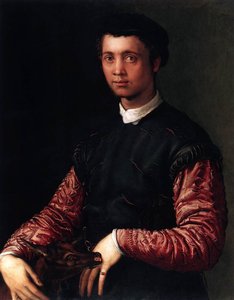
Beyond his large-scale religious cycles, Cecchino del Salviati left an indelible mark through his portraits and decorative works. His ability to capture the character and social standing of his subjects—often seen in his Portrait of a Young Man—demonstrates a versatility that bridged the gap between the sacred and the secular. As a painter who navigated the transition from the stability of the Renaissance to the expressive complexity of Mannerism, he acted as a vital link in the evolution of Italian art. His work reflects the era's fascination with virtuosity and the pursuit of an aesthetic that challenged the eye and stirred the spirit.
Though his life was cut short in Rome in 1563, the legacy of Cecchino del Salviati remains etched in the very walls of Italy’s most storied basilicas. He stands as a pioneer who helped define an era of artistic experimentation, proving that beauty could be found not only in perfect proportion but also in the beautiful distortions and dramatic shadows of the human experience. His contributions continue to offer scholars and art lovers alike a window into a period of unparalleled creative courage.
cecchino del salviati
1510 - 1563 , Italy
Quick Facts
- Artistic Movement Or Style: Mannerist Painting
- Artists Or Movements Influenced By This Artist: ['Renaissance']
- Artists Who Influenced This Artist: ['Andrea del Sarto']
- Date Of Birth: 1510
- Date Of Death: 1563
- Full Name: Francesco Salviati
- Nationality: Italian
- Notable Artworks:
- Christ Carrying the Cross
- Charity
- Raising of Lazarus
- Place Of Birth: Florence, Italy

