

 Preview
 Send
Send Share
Share
 Details

 Download
 Similars
 X-Ray
X-Ray Diaporama
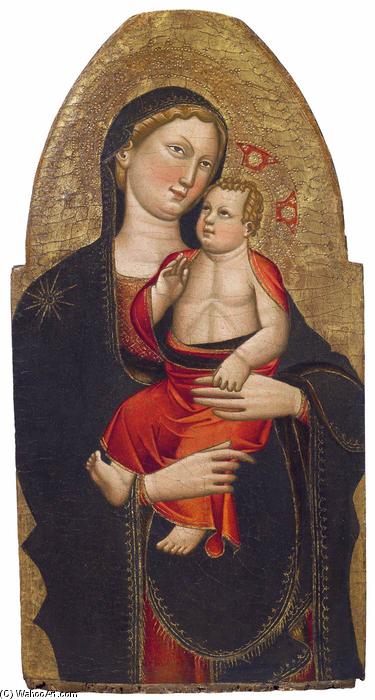
Madonna and Child
 74.0 x 39.0 cm
 Read More
Purchase a high-resolution, enhanced digital image, far superior to the online preview.
Each file is meticulously prepared by our in-house specialists using advanced tools and expert manual retouching. We ensure every image has exceptional clarity, precise color accuracy, and fine detail.
The final file is delivered via email within 72 hours, optimized for immediate use in professional, editorial, and print environments. This is the same quality trusted by top-tier design studios, publishers, and galleries.
Digital Image
Download a high-resolution file for personal display, printing, and creative projects. ( Buy Print Buy Hand Made Painting)
Included in Every Digital Image Order
Expert Digital Delivery, Guaranteed
When you choose ArtsDot.com, you're not just getting an image - you're receiving a professionally enhanced digital artwork, crafted with precision and backed by a satisfaction guarantee. Here's everything that comes with your order, automatically:

Fast Email Delivery
Your high-resolution digital image file will be emailed to you within 72 hours of ordering - ready for immediate use.

AI-Enhanced Digital File
Your artwork is professionally optimized using advanced AI tools and manual editing, ensuring maximum detail, clarity, and color accuracy.

Free Lifetime Re-Delivery
Accidentally deleted or lost your file? No worries - we'll resend it to you anytime, free of charge.

No Import Fees - Ever
Enjoy your artwork instantly with zero customs, duties, or delivery fees - digital downloads are always tax-free.

Color Accuracy Guarantee
We ensure your digital image reflects the original colors as closely as possible using professional tools and color management.

60-Day Satisfaction Guarantee
If you're not satisfied with your digital image, we'll revise it or refund 100% within 60 days - no questions asked.

100% Money-Back Guarantee
Not satisfied? Get a full refund within 60 days of receiving your digital file - no questions asked.

Bulk Order Discounts
Buy 3 images, save 10% - Buy 5, save 15% - Buy 10+, save 20%. Great for creative projects, galleries, and agencies.
Related Artworks
Artist Biography
A Florentine Voice in the Gothic Twilight
Cenni di Francesco di ser Cenni, a name perhaps less resonant than those of his celebrated contemporaries, nevertheless occupies a vital position in the transition between the late Gothic period and the burgeoning Renaissance in Florence. Born around 1369, amidst a city already stirring with new artistic currents, Cenni’s career unfolded during a time of profound cultural shift. While details of his personal life remain elusive—historical records offer glimpses primarily through documented commissions rather than intimate biographical narratives—his artistic legacy speaks volumes about the enduring power of tradition and the subtle seeds of innovation. He was registered in Florence's Arte dei Medici e Speziali in 1369, marking a formal entry into the city’s vibrant guild system, and continued to work within its artistic circles until his death in 1415. Cenni wasn’t merely replicating established styles; he was actively shaping them, bridging the gap between the elegance of the Gothic era and the emerging naturalism that would define the Renaissance.Echoes of Masters and a Developing Style
Cenni di Francesco's artistic formation was deeply rooted in the International Gothic style—a refined aesthetic characterized by graceful figures, opulent colors, and intricate ornamentation. However, his work wasn’t simply derivative; it bore the distinct imprint of influential predecessors. The elegant linearity and compositional sophistication evident in Orcagna’s works clearly resonated with Cenni, informing his approach to form and design. Simultaneously, he absorbed the softer modeling and emotional expressiveness championed by Agnolo Gaddi, imbuing his figures with a gentle humanity that transcended mere stylistic imitation. This synthesis of influences is particularly noticeable in his early pieces, where one can discern a delicate balance between decorative refinement and nascent psychological depth. His style evolved over time, demonstrating an increasing sophistication in composition and detail. He skillfully blended Byzantine traditions with emerging Renaissance elements, hinting at the artistic revolution to come while remaining firmly grounded in the aesthetic sensibilities of his era.Significant Works and Lasting Impressions
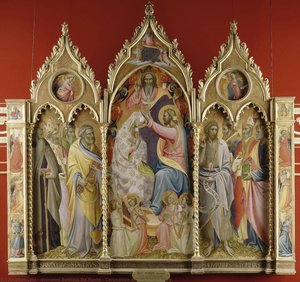
Though a substantial body of work is attributed to Cenni di Francesco, it’s the *Fresco of the True Cross* within the Cappella della Croce di Giorno at the Church of San Francesco in Volterra that stands as his most celebrated achievement—and uniquely, his only known signed work. Completed in 1410, this fresco is a testament to his narrative skill and mastery of technique. The composition unfolds with clarity and grace, depicting key episodes from the legend of the True Cross with meticulous detail and vibrant color. Beyond Volterra, his artistic footprint extends to Florence itself, notably through a fresco attributed to him at the entrance to the Basilica of Santa Maria Novella, likely painted around 1390. This large-scale devotional image showcases his ability to create compelling visual narratives for public consumption. The *Polyptych with Coronation of the Virgin and Saints*, now housed in the Getty Museum, further exemplifies Cenni’s command of complex compositions and rich color palettes—a quintessential example of altarpiece design during that period. Numerous other works, including illuminated manuscripts – notably Antiphonary folios – and panel paintings, continue to be attributed to him based on stylistic analysis, enriching our understanding of his prolific output.A Bridge Between Eras
Cenni di Francesco’s historical significance lies not in radical innovation but in his role as a crucial link between artistic traditions. He wasn't at the forefront of the revolutionary changes sweeping through Florence; rather, he embodied a refined continuation of the Gothic aesthetic while subtly incorporating elements that foreshadowed the Renaissance. This included a growing emphasis on naturalism and emotional expression—a departure from the more stylized conventions of earlier Gothic art. His work helped preserve and refine the International Gothic style, ensuring its continued influence on subsequent generations of artists even as new artistic paradigms emerged. He contributed significantly to the rich artistic heritage of Florence during a period of immense cultural change, offering valuable insights into the artistic landscape of 14th-century Italy. Though perhaps not as widely recognized as some of his contemporaries, Cenni di Francesco’s paintings remain compelling testaments to an artist who skillfully navigated the currents of his time, leaving behind a legacy that continues to resonate with beauty and grace.
cenni di francesco di ser cenni
1369 - 1415 , Italy
Quick Facts
- Artistic Movement Or Style: International Gothic
- Artists Or Movements Influenced By This Artist: Florentine Gothic tradition
- Artists Who Influenced This Artist:
- Orcagna
- Gaddi
- Date Of Birth: 1369
- Date Of Death: 1415
- Full Name: Cenni di Francesco di ser Cenni
- Nationality: Italian
- Notable Artworks:
- Fresco of the True Cross
- Santa Maria Novella Fresco
- Polyptych with Coronation…
- Place Of Birth: Florence, Italy

