 Preview
 Send
Send Share
Share
 Details

 Download
 Similars
 X-Ray
X-Ray Diaporama
 Stats
StatsChristine Choy

 Read More
Giclée / Art Print
Museum-quality giclée or canvas print with fast production and flexible finish options. ( Buy Hand Made Painting Switch to Digital Image)




































Pick from our preset sizes that match the artwork's original proportions.

You may enter your own dimensions to fit a specific frame or space. If your selected size does not match the original image's proportions, we will either crop the artwork or extend the image with a mirrored or solid-fill edge. A digital mockup will be sent for your approval before production begins.
Please note that the on-screen preview does not reflect the actual cropping or extension. Only the mockup will accurately show the final composition.
While custom sizes are available, we recommend selecting a dimension from the predefined list to preserve the original proportions.
Worldwide Delivery () in 2 weeks instead of standard 4/5 weeks. (12 September)

Free Worldwide Express Shipping

High-Quality Linen Canvas

Full Shipping Insurance

Customs Tax Refund Guarantee

True Color Matching Guarantee

100-Day Return Policy (Defects Only)

100% Money-Back Guarantee

Bulk Discount Offer
 Glass option is only available in size under 110 CM

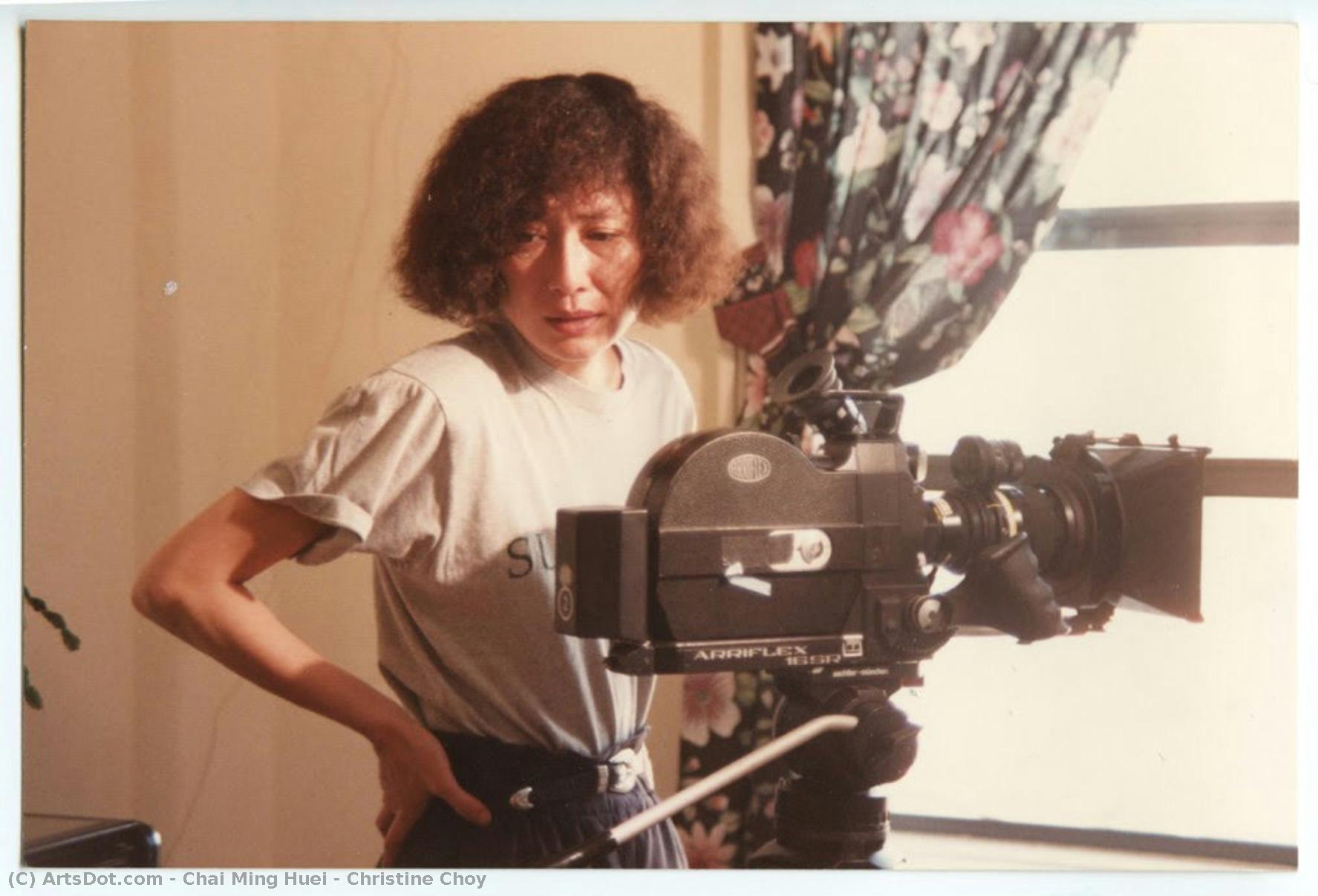
Christine Choy
Giclée / Art Print
Reproduction Size
-


Total Price
$ 63
Related Artworks









Artist Biography
A Lens for Justice: The Cinematic Legacy of Christine Choy
Born as Chai Ming Huei in the vibrant yet tumultuous landscape of Shanghai, the artist and filmmaker known to the world as Christine Choy carried within her a profound sensitivity to the shifting tides of history. Her early years were shaped by the complexities of a family identity—born to a Chinese mother and a Korean father who lived as political exiles during China’s Cultural Revolution. This period of displacement, which saw her journey from Shanghai to South Korea before finally arriving in the bustling heart of New and York City at age fourteen, instilled in her a lifelong preoccupation with themes of migration, identity, and the struggle for visibility. Her arrival in America was not merely a change of geography but an entry into a crucible of radical political thought, where she quickly found herself immersed in the activism of the Black Panther Party, an experience that would forever inform the raw, urgent pulse of her visual storytelling.
Choy’s artistic development was a masterful blend of academic rigor and street-level activism. While her formal education included studies in architecture at Manhattanville College and later specialized training at the American Film Institute, her true classroom was the front lines of social upheaval. She did not merely observe history; she sought to capture its most visceral moments through the lens of a camera. As a co-founder of Third World Newsreel, Choy helped establish a vital platform for voices that had been systematically silenced by mainstream media. Her work during this era was characterized by an unflinching gaze, documenting everything from the 1971 Attica prison uprising to the harrowing struggles for independence in Namibia. Through her films, the periphery became the center, and the marginalized were granted a cinematic stage of immense dignity.
The Power of the Documentary Image
The zenith of Choy’s critical recognition arrived with the release of Who Killed Vincent Chin?, a documentary that remains a cornerstone of Asian American cinematic history. This work, which earned her an Academy Award nomination, transcended the boundaries of traditional journalism to become a profound piece of social art. By meticulously weaving together the facts of a racially motivated murder with the broader systemic prejudices facing the community, Choy created a narrative that galvanized an entire diaspora. Her technique relied on more than just factual reporting; it utilized the emotional weight of human testimony and the rhythmic tension of investigative inquiry to force a national confrontation with injustice.
Beyond her singular directorial triumphs, Choy’s influence extended into the very infrastructure of film culture. Through the co-founding of Asian CineVision and the launch of the Asian American International Film Festival in 1978, she cultivated an ecosystem where new generations of filmmakers could flourish. Her career was a continuous loop of creation and mentorship, evidenced by her long tenure on the faculty at New York University’s Tisch School of the Arts. Even as her students became the subjects of documentaries themselves—such as the acclaimed The Exiles—the lineage of her commitment to truth and social responsibility remained unbroken.
To reflect upon the life of Christine Choy is to witness a lifetime dedicated to the pursuit of visual truth. Her achievements can be summarized through several defining pillars of her career:
- Pioneering Activism: The establishment of Third World Newsreel as a vital conduit for revolutionary and social justice-oriented filmmaking.
- Cultural Catalyst: The creation of spaces like the Asian American International Film Festival, which provided a permanent home for diverse narratives.
- Cinematic Excellence: An Academy Award-nominated body of work that transformed documentary film into a powerful tool for civil rights advocacy.
- Educational Legacy: Decades of shaping the next generation of filmmakers through her leadership and teaching at NYU.
Ultimately, Choy’s work stands as a testament to the idea that art is never neutral. Whether documenting the struggles of Chinese migrants in From Spikes to Spindles or exploring the complexities of prison life, she utilized the medium of film to demand accountability and foster empathy. Her legacy is etched into the very fabric of contemporary documentary practice, reminding us that the most important stories are often those found in the shadows of the mainstream, waiting for a courageous eye to bring them into the light.

chai ming huei
1952 - , People's Republic of China
Quick Facts
- Artistic Movement Or Style: Documentary Filmmaker
- Artists Or Movements Influenced By This Artist: ['Contemporary Chinese Art']
- Artists Who Influenced This Artist: ['Film Noir Style']
- Date Of Birth: Shanghai, People's Republic of China (1952)
- Date Of Death: Living
- Full Name: Christine Choy
- Nationality: Chinese-American
- Notable Artworks:
- Who Killed Vincent Chin?
- Third World Newsreel
- Place Of Birth: Shanghai