 Preview
 Send
Send Share
Share
 Details

 Download
 Similars
 X-Ray
X-Ray Diaporama
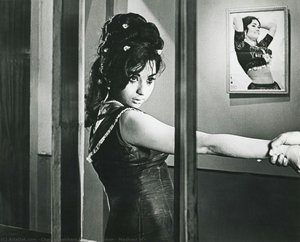
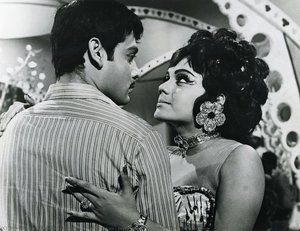
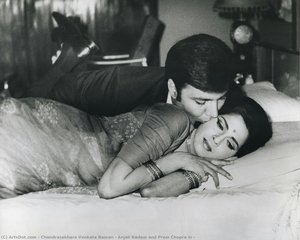
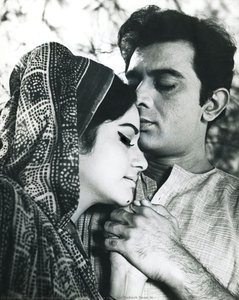
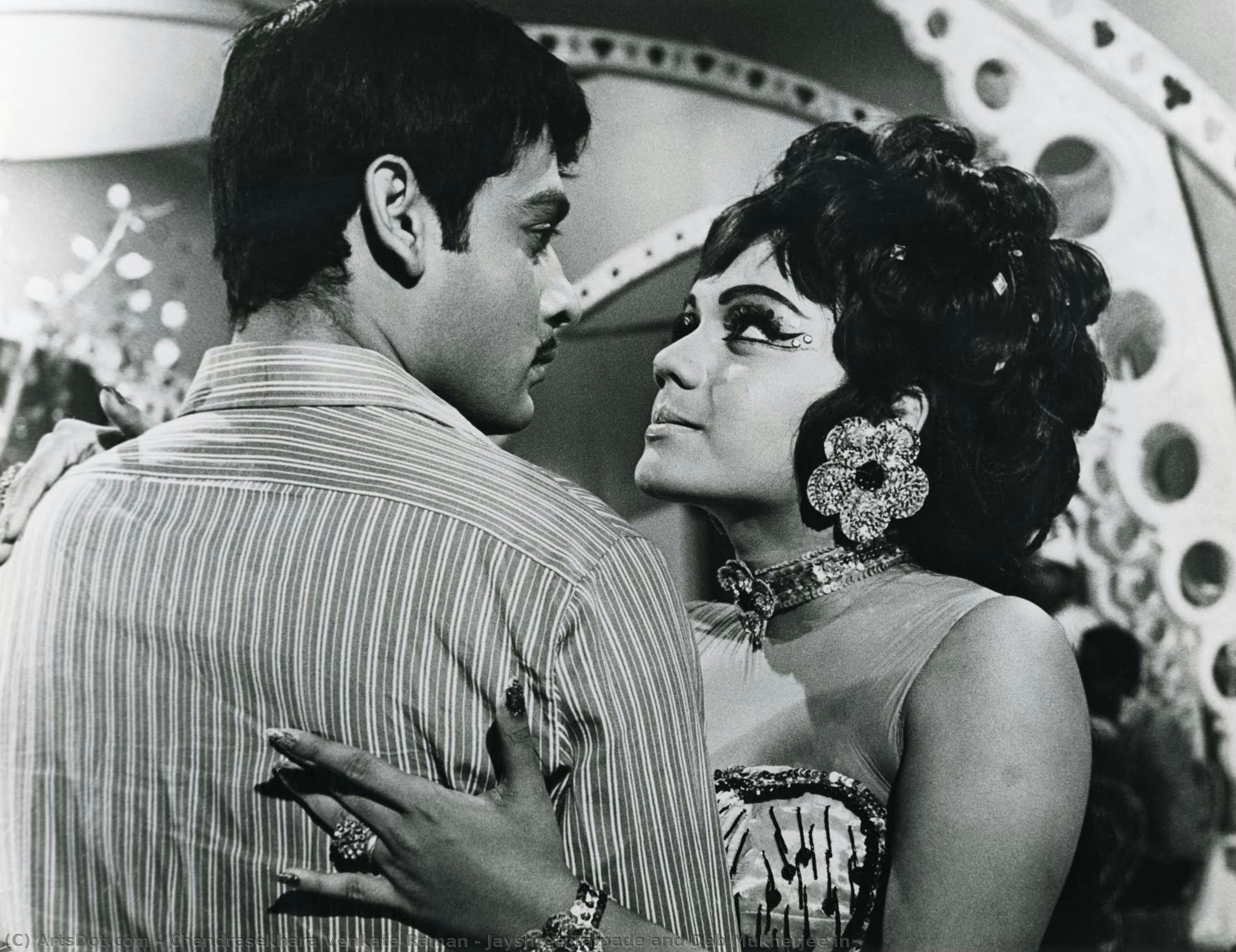
Jayshree Talpade and Deb Mukherjee in


 Read More
Giclée / Art Print
Museum-quality giclée or canvas print with fast production and flexible finish options. ( Buy Hand Made Painting Buy Image)




































Pick from our preset sizes that match the artwork's original proportions.

You may enter your own dimensions to fit a specific frame or space. If your selected size does not match the original image's proportions, we will either crop the artwork or extend the image with a mirrored or solid-fill edge. A digital mockup will be sent for your approval before production begins.
Please note that the on-screen preview does not reflect the actual cropping or extension. Only the mockup will accurately show the final composition.
While custom sizes are available, we recommend selecting a dimension from the predefined list to preserve the original proportions.
Worldwide Delivery () in 2 weeks instead of standard 4/5 weeks. (23 August)

Free Worldwide Express Shipping

High-Quality Linen Canvas

Full Shipping Insurance

Customs Tax Refund Guarantee

True Color Matching Guarantee

60-Day Return Policy (Defects Only)

100% Money-Back Guarantee

Bulk Discount Offer
 Glass option is only available in size under 110 CM

Jayshree Talpade and Deb Mukherjee in
Giclée / Art Print
Reproduction Size
-


Total Price
$ 63
Related Artworks








Artist Biography
Chandrasekhara Venkata Raman: Illuminating the Invisible
Chandrasekhara Venkata Raman, more commonly known as C.V. Raman, wasn’t merely a physicist; he was an architect of light itself. Born in 1888 in Trichinopoly (now Tiruchirappalli), India, into a family steeped in intellectual tradition – his father a respected mathematics and physics professor – Raman’s journey to scientific renown began with an early aptitude for learning that defied conventional timelines. He completed his secondary education at just eleven years old and swiftly progressed through Presidency College, Madras, earning degrees in English and Physics before the age of eighteen. This accelerated trajectory hinted at the brilliance that lay ahead, a mind relentlessly pursuing understanding within the intricate dance of the physical world. His early life wasn’t defined by privilege but by an unwavering commitment to knowledge, a foundation meticulously laid by his father's influence and his own innate curiosity.The Discovery That Reshaped Optics
Raman’s most celebrated achievement – and the one that secured him the 1930 Nobel Prize in Physics – was the discovery of the Raman effect. This phenomenon, a subtle yet profound shift in the wavelength of light as it interacts with matter, fundamentally altered our understanding of how light behaves. Initially working as a civil servant, Raman continued his research in his spare time, driven by an insatiable desire to unravel the mysteries of scattering light. His meticulous experiments, utilizing a spectrograph he himself designed and built, revealed that when light passed through a transparent substance, it didn’t simply reflect; instead, some of its energy was absorbed and re-emitted at different wavelengths. This “modified scattering,” as he initially termed it, became known as the Raman effect – a testament to his pioneering work. The significance of this discovery extended far beyond academia, laying the groundwork for advancements in fields ranging from spectroscopy to laser technology, impacting countless industries and scientific disciplines. It wasn’t simply an isolated observation; it was a key that unlocked a deeper understanding of molecular structure and material properties.A Life Dedicated to Science and Education
Raman's dedication extended beyond the laboratory. Recognizing the limited opportunities for scientific research in India during his time, he played a pivotal role in establishing institutions dedicated to fostering scientific advancement within his homeland. He founded the Raman Research Institute in Bangalore in 1948, providing a vital hub for researchers and contributing significantly to India’s burgeoning scientific community. Furthermore, he was deeply invested in education, recognizing its crucial role in shaping future generations of scientists. His commitment to knowledge wasn't confined to his own research; he actively promoted scientific literacy and encouraged the pursuit of learning across all sectors of society. This multifaceted approach – combining groundbreaking research with a dedication to nurturing talent – cemented his legacy as not only a brilliant physicist but also a champion for science in India.Influences and Techniques
Raman’s work was deeply rooted in the scientific traditions of his time, yet he possessed an innovative spirit that allowed him to transcend conventional approaches. He drew inspiration from figures like Max Planck, whose quantum theory provided a theoretical framework for understanding light as quantized energy packets. However, Raman's strength lay in his meticulous experimental methodology and his ability to translate complex theories into practical applications. His self-designed spectrograph was a crucial tool, enabling him to precisely measure the shifts in wavelength caused by the Raman effect. He also benefited from collaborations with colleagues like K.S. Krishnan, whose assistance proved invaluable during the critical experiments that led to the discovery. The combination of theoretical understanding and rigorous experimentation defined his approach – a testament to his intellectual versatility.A Lasting Legacy
Chandrasekhara Venkata Raman’s impact on science extends far beyond the Nobel Prize. His work fundamentally reshaped our understanding of light scattering, paving the way for countless technological advancements. The Raman effect remains an indispensable tool in various fields, including chemistry, materials science, and biology. Beyond his scientific contributions, Raman's story serves as a powerful symbol of Indian ingenuity and perseverance. He was the first Asian and non-White person to receive the Nobel Prize in Physics – a remarkable achievement that shattered barriers and inspired generations of scientists worldwide. His legacy continues to illuminate the invisible, reminding us of the profound beauty and complexity hidden within the fabric of our universe. He passed away in 1970, leaving behind a body of work that remains at the forefront of scientific knowledge and a lasting tribute to his extraordinary intellect and dedication.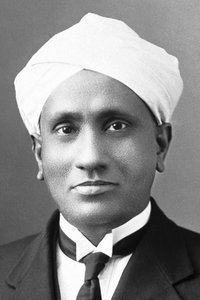
chandrasekhara venkata raman
1888 - 1970 , India
Quick Facts
- Artistic Movement Or Style: Physics/Optics
- Artists Or Movements Influenced By This Artist: ['Raman Effect']
- Artists Who Influenced This Artist: ['Max Planck']
- Date Of Birth: November 7, 1888
- Date Of Death: November 21, 1970
- Full Name: Chandrasekhara Venkata Raman
- Nationality: Indian
- Place Of Birth: Trichinopoly, India