 Preview
 Send
Send Share
Share
 Details

 Download
 Similars
 X-Ray
X-Ray Diaporama
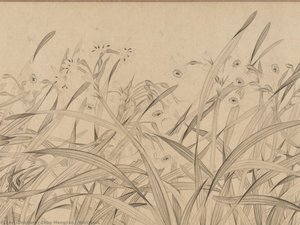
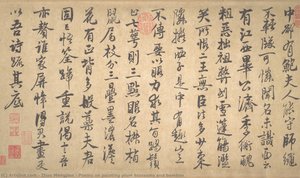
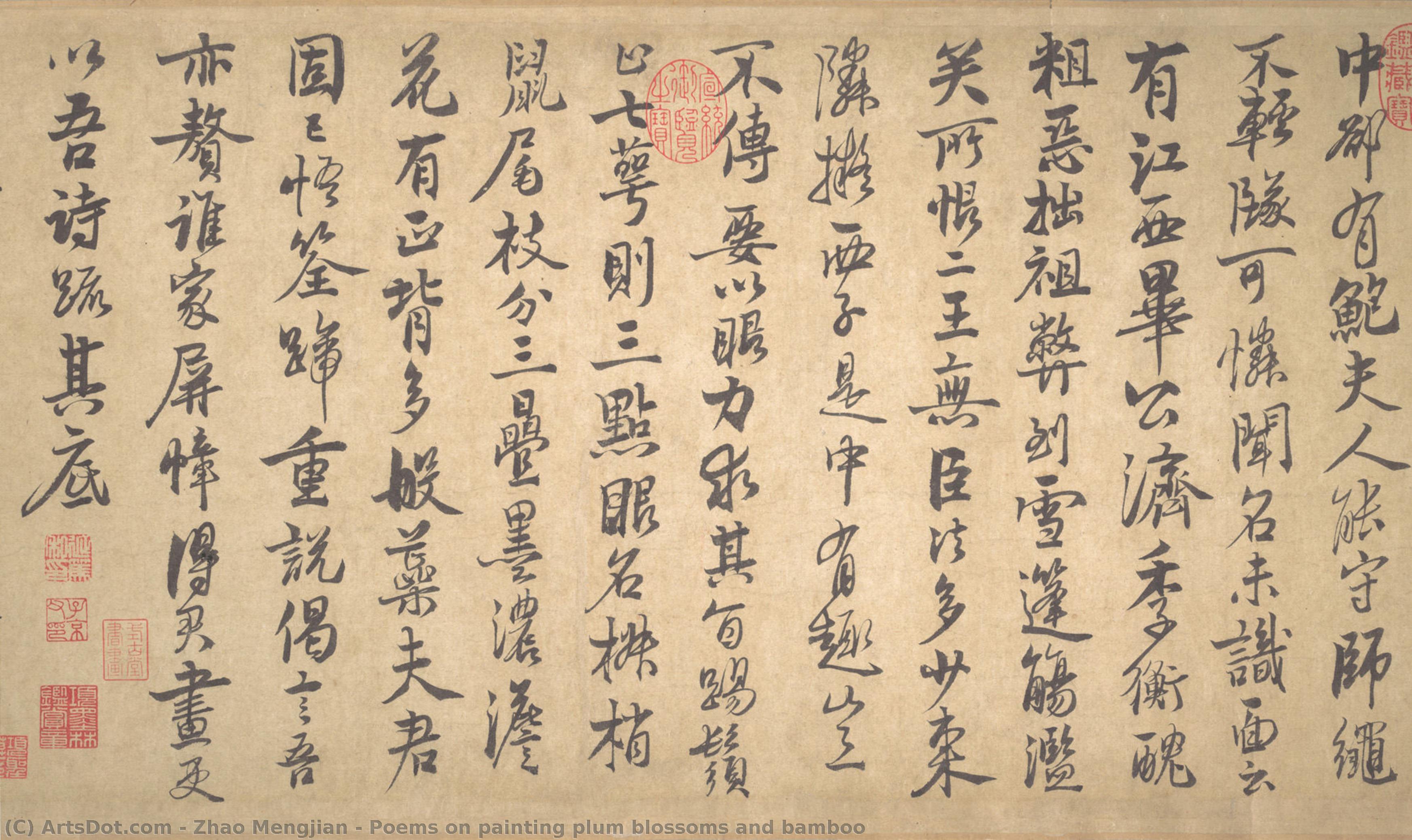
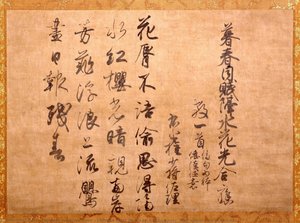
Poems on painting plum blossoms and bamboo
 1260
1260 34.0 x 353.0 cm
 Read More
Hand Made Oil Reproduction
Hand-painted oil on canvas in your size and frame, made to order by our artists. ( Buy Print Buy Image)




































Pick from our preset sizes that match the artwork's original proportions.

You may enter your own dimensions to fit a specific frame or space. If your selected size does not match the original image's proportions, we will either crop the artwork or extend the painting with additional hand-painted elements. A digital mockup will be sent for your approval before production begins.
Please note that the on-screen preview does not reflect the actual cropping or extension. Only the mockup will accurately show the final composition.
While custom sizes are available, we recommend selecting a dimension from the predefined list to preserve the original proportions.
After order, ArtsDot.com team will email client for instructions and provide a mockup preview
Worldwide Delivery () in 3/4 weeks instead of standard 5 weeks. (26 August). No compromise on quality.

Free Worldwide Express Shipping

High-Quality Linen Canvas

Full Shipping Insurance

Customs Tax Refund Guarantee

True Color Matching Guarantee

60-Day Return Policy (Defects Only)

100% Money-Back Guarantee

Bulk Discount Offer
 Glass option is only available in size under 110 CM

Poems on painting plum blossoms and bamboo
Reproduction Medium
Reproduction Size
-


Total Price
$ 263
Artwork Description
Related Artworks


Artist Biography
Zhao Mengjian: A Master of the Ming Dynasty
Born in Haiyan around 1199 and passing away in 1295, Zhao Mengjian, known by the art name Yizhai (彝齋居士), stands as a pivotal figure in the history of Chinese painting. He was more than simply a painter; he was a scholar-official, a calligrapher, and a dedicated advocate for the restoration of traditional literati painting styles during the late Yuan and early Ming dynasties. His life coincided with a period of immense political upheaval – the collapse of the Mongol Yuan dynasty and the subsequent rise of the Hongwu Emperor Zhu Yuanzhang, who ushered in the Ming era. Zhao Mengjian’s work reflects this turbulent time, embodying both a deep respect for established artistic traditions and a desire to refine and elevate them.
Zhao's early life was marked by scholarly pursuits. He received a comprehensive education, mastering not only painting techniques but also calligraphy, poetry, and the Confucian classics. He served in various administrative roles under the Yuan dynasty, gaining valuable experience in governance and diplomacy. However, his true passion lay within the realm of art. Unlike many officials who favored elaborate court styles, Zhao championed the understated elegance and intellectual depth of literati painting – a style characterized by its emphasis on brushwork, ink tones, and evocative landscapes that conveyed personal reflections and philosophical ideas. This preference for literati painting set him apart and ultimately shaped his legacy.
The Restoration Movement & Artistic Style
Following the establishment of the Ming dynasty, Zhao Mengjian was appointed as a court painter in 1348 by Emperor Zhu Yuanzhang. This appointment presented a significant challenge: the imperial court had become dominated by lavish, decorative styles that were far removed from the refined aesthetics of literati painting. Recognizing this imbalance, Zhao embarked on a mission to restore traditional artistic values and principles. He meticulously studied the works of past masters, particularly those of the Song dynasty, and sought to emulate their techniques and spirit.
Zhao’s style is immediately recognizable by its meticulous brushwork, subtle ink tones, and serene landscapes. He favored depicting mountains, rivers, and trees – often in solitary settings – conveying a sense of quiet contemplation and harmony with nature. Unlike the vibrant colors frequently employed in court painting, Zhao primarily utilized monochrome inks, allowing him to focus on capturing texture, light, and atmosphere. His compositions are typically asymmetrical and balanced, reflecting a deep understanding of spatial relationships and visual dynamics. He was particularly adept at portraying the subtle nuances of weather conditions – mist, rain, and snow – adding layers of depth and emotion to his paintings.
- Key Characteristics: Monochromatic ink wash painting, meticulous brushwork, emphasis on texture and atmosphere, asymmetrical compositions, depictions of solitary landscapes.
- Influences: Song Dynasty masters (particularly Mi Fu and Fan Kuan), traditional literati painting principles.
Major Works & Legacy
Zhao Mengjian produced a vast body of work throughout his career, encompassing landscape paintings, bird-and-flower studies, portraits, and calligraphy. Some of his most celebrated works include Mountain Stream (山溪), Pine Trees on Mount Tiantai (天台松), and various depictions of birds and flowers. These pieces demonstrate his mastery of technique and his ability to infuse his paintings with profound philosophical meaning.
Beyond his artistic achievements, Zhao Mengjian played a crucial role in preserving and promoting traditional Chinese painting during a period of significant change. He authored the *Zhengbian Tu Shiqing* (著備圖什清), a comprehensive treatise on painting materials and techniques – a seminal work that remains an invaluable resource for artists to this day. His efforts helped to establish literati painting as the dominant style within the Ming court, influencing generations of subsequent painters.
Historical Significance & Lasting Impact
Zhao Mengjian’s legacy extends far beyond his individual artistic accomplishments. He is revered as a champion of traditional Chinese art and a symbol of intellectual integrity. His commitment to preserving and refining established artistic values during a time of political upheaval underscores the importance of cultural heritage and the role of artists in shaping society. His work continues to inspire artists today, demonstrating that true beauty lies not in ostentation or extravagance but in simplicity, restraint, and profound contemplation.
Zhao Mengjian’s paintings are held in numerous museums worldwide, including the Palace Museum in Beijing, providing a lasting testament to his artistic genius and enduring influence on Chinese art history. His life and work serve as a reminder of the power of art to transcend time and connect us with the wisdom and beauty of the past.
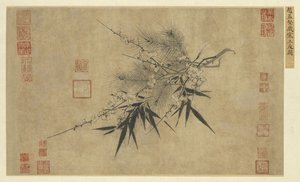
chao meng-chien
1199 - 1295 , China
Quick Facts
- Artistic Movement Or Style: Painter
- Artists Or Movements Influenced By This Artist: ['']
- Artists Who Influenced This Artist: ['Master of Pedret']
- Date Of Birth: 1199
- Date Of Death: 1295
- Full Name: Zhao Mengjian
- Nationality: Chinese
- Notable Artworks: ['']
- Place Of Birth: Haiyan, China