 Preview
 Send
Send Share
Share
 Details

 Download
 Similars
 X-Ray
X-Ray Diaporama
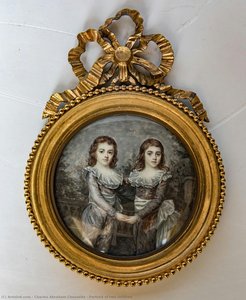
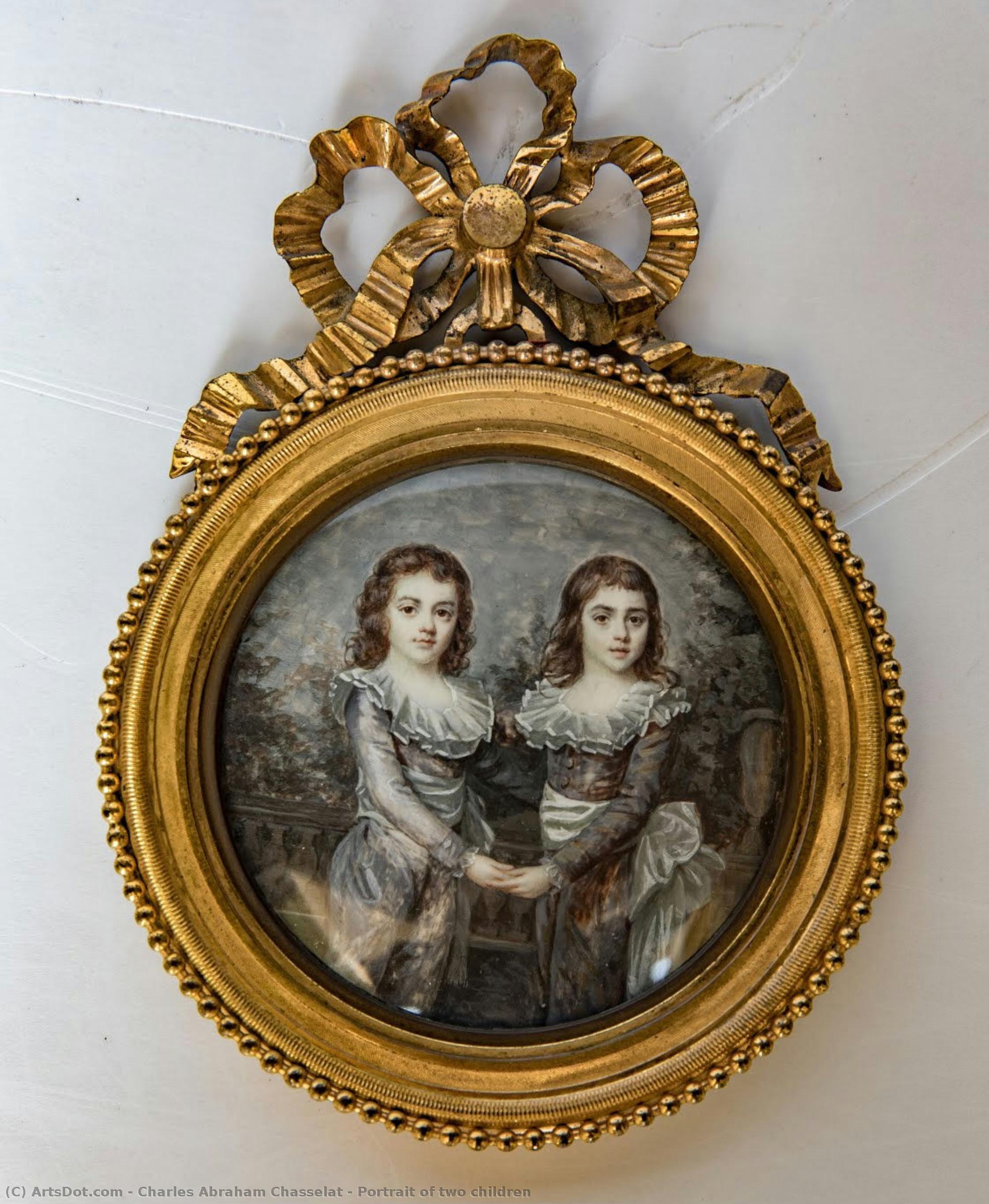
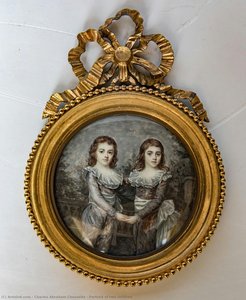
Portrait of two children

 Read More
Giclée / Art Print
Museum-quality giclée or canvas print with fast production and flexible finish options. ( Buy Hand Made Painting Buy Image)




































Pick from our preset sizes that match the artwork's original proportions.

You may enter your own dimensions to fit a specific frame or space. If your selected size does not match the original image's proportions, we will either crop the artwork or extend the image with a mirrored or solid-fill edge. A digital mockup will be sent for your approval before production begins.
Please note that the on-screen preview does not reflect the actual cropping or extension. Only the mockup will accurately show the final composition.
While custom sizes are available, we recommend selecting a dimension from the predefined list to preserve the original proportions.
Worldwide Delivery () in 2 weeks instead of standard 4/5 weeks. (1 September)

Free Worldwide Express Shipping

High-Quality Linen Canvas

Full Shipping Insurance

Customs Tax Refund Guarantee

True Color Matching Guarantee

60-Day Return Policy (Defects Only)

100% Money-Back Guarantee

Bulk Discount Offer
 Glass option is only available in size under 110 CM

Portrait of two children
Giclée / Art Print
Reproduction Size
-


Total Price
$ 63
Related Artworks








Artist Biography
The Illustrative Legacy of Charles Abraham Chasselat
In the vibrant, shifting landscape of early 19th-century France, few artists captured the intersection of royal grandeur and literary intimacy as gracefully as Charles Abraham Chasselat. Born in Paris in 1782, Chasselat was destined for a life steeped in the fine traditions of French art. As the son of the esteemed miniature painter Pierre Chasselat, his very foundation was built upon the delicate precision required by portraiture. This early immersion in the studio environment, guided by his father and further refined under the tutelage of Vincent Legendre, gifted him with a disciplined eye for detail and a profound understanding of composition that would later allow him to navigate both the monumental scale of state ceremonies and the subtle nuances of book illustration.
Chasselat’s emergence on the Parisian art scene was marked by a sophisticated command of the Romantic aesthetic. When he debuted at the exhibition of 1812 with his work “The Repose of Belisarius,” critics were immediately struck by his ability to weave dramatic narrative through masterful brushwork and tonal harmony. He possessed a rare talent for eschewing excessive ornamentation in favor of a refined clarity, a quality that made his historical subjects feel both timeless and tangibly present. His work did not merely recount history; it breathed life into the legends of the past, utilizing light and form to evoke the emotional weight of his chosen themes.
A Bridge Between State Ceremony and Literary Imagination
While many of his contemporaries focused solely on the canvas, Chasselat’s genius lay in his versatility. He became a vital visual chronicler for the French state, tasked with the solemn duty of documenting the era's most significant political transitions. His meticulous drawings of state ceremonials—most notably the Funeral of Louis XVIII and the Coronation of Charles X—served as essential historical records, capturing the rigid dignity and theatrical splendor of the Bourbon Restoration. In these works, Chasselat acted as an observer of power, translating the complex choreography of royal ritual into a visual language accessible to the public.
Yet, there was another, more intimate side to his artistry that revealed a deep intellectual curiosity. Chasselat found profound inspiration in the written word, embarking on ambitious projects to visually interpret the giants of French literature. His illustrations for the philosophical treatises of Voltaire, the tragic plays of Racine, and the comedic masterpieces of Molière were far more than mere accompaniments to text; they were thoughtful, psychological interpretations of character and plot. Perhaps most enchanting was his contribution to the French cultural landscape in the 1820s, when he provided illustrations for the first French translations of Jane Austen’s novels. In these smaller, more delicate works, Chasselat demonstrated an extraordinary ability to capture the subtle social tensions and atmospheric moods of Austen's narratives, proving that his skill was as effective in the quiet corners of a drawing room as it was in the grand halls of a palace.
Artistic Heritage and Enduring Significance
The influence of Chasselat’s lineage continued through the generations, as seen in the work of his son, Henri Jean Saint-Ange Chasselat, who followed in his father's footsteps by painting historical and genre subjects. This continuity of talent underscores the deep-rooted artistic tradition that Charles Abraham Chasselat helped to define during a period of immense French transformation. Though he passed away in Paris in 1843, his contribution remains a vital chapter in the history of Romanticism.
Today, we recognize Chasselat not just as a painter of events, but as an artist who bridged the gap between different modes of storytelling. His ability to move seamlessly from the monumental scale of a royal coronation to the delicate, emotive world of a literary character allows us to appreciate him as a master of both the public and the private. Through his eyes, we see the grandeur of a fading monarchy and the enduring charm of classic literature, preserved forever through his refined and evocative hand.
charles abraham chasselat
1782 - 1843 , France
Quick Facts
- Artistic Movement Or Style: Historical Painting
- Artists Or Movements Influenced By This Artist: ['Henri Jean Saint-Ange Chasselat']
- Artists Who Influenced This Artist:
- Pierre Chasselat
- Vincent
- Date Of Birth: Paris, France (1782)
- Date Of Death: Paris, France (1843)
- Full Name: Charles Abraham Chasselat
- Nationality: French
- Notable Artworks: ['The Repose of Belisarius']
- Place Of Birth: Paris