 Preview
 Send
Send Share
Share
 Details

 Download
 Similars
 X-Ray
X-Ray Diaporama
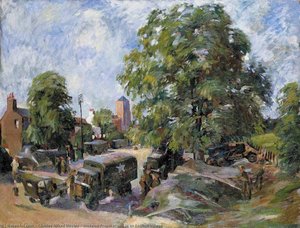
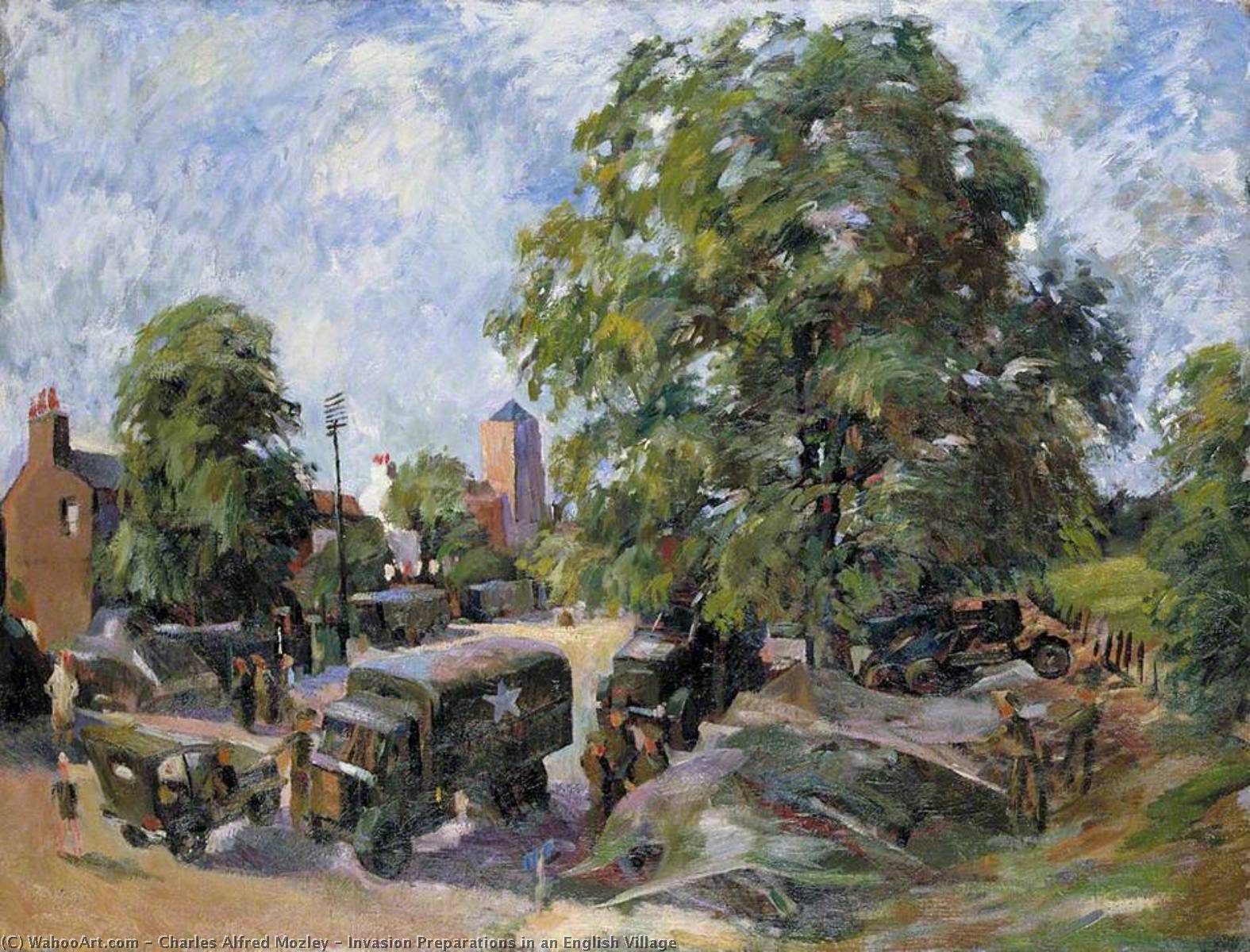
Invasion Preparations in an English Village
 1944
1944 77.0 x 101.0 cm
 Read More
Hand Made Oil Reproduction
Hand-painted oil on canvas in your size and frame, made to order by our artists. ( Buy Print Buy Image)




































Pick from our preset sizes that match the artwork's original proportions.

You may enter your own dimensions to fit a specific frame or space. If your selected size does not match the original image's proportions, we will either crop the artwork or extend the painting with additional hand-painted elements. A digital mockup will be sent for your approval before production begins.
Please note that the on-screen preview does not reflect the actual cropping or extension. Only the mockup will accurately show the final composition.
While custom sizes are available, we recommend selecting a dimension from the predefined list to preserve the original proportions.
After order, ArtsDot.com team will email client for instructions and provide a mockup preview
Worldwide Delivery () in 3/4 weeks instead of standard 5 weeks. (27 August). No compromise on quality.

Free Worldwide Express Shipping

High-Quality Linen Canvas

Full Shipping Insurance

Customs Tax Refund Guarantee

True Color Matching Guarantee

60-Day Return Policy (Defects Only)

100% Money-Back Guarantee

Bulk Discount Offer
 Glass option is only available in size under 110 CM

Invasion Preparations in an English Village
Reproduction Medium
Reproduction Size
-


Total Price
$ 263
Related Artworks










Artist Biography
Marc Chagall: A Life Painted in Dreams
Born Moishe Chagall in Vitebsk, Belarus (then part of the Russian Empire) on July 7, 1887, Marc Chagall’s life was a vibrant tapestry woven with threads of Jewish heritage, artistic experimentation, and profound emotional expression. His early years were marked by poverty and upheaval – his family moved frequently, reflecting the shifting borders of Eastern Europe. This itinerant existence instilled in him a deep appreciation for movement and change, themes that would become central to his art. His father, a herring merchant, provided a modest but loving home, while his mother, Brurya, nurtured his artistic inclinations from a young age, encouraging him to draw and paint.
Chagall’s formal artistic training was initially limited. He briefly attended the Vitebsk Art School in 1907, followed by studies at the St. Petersburg Academy of Arts, but found both institutions stifling. It was through a chance encounter with Léon Bakst, a pioneering designer for Sergei Diaghilev's Ballets Russes, that Chagall’s artistic trajectory shifted dramatically. Bakst recognized his raw talent and introduced him to the revolutionary ideas circulating in Paris – Fauvism, Cubism, and other avant-garde movements. This exposure proved transformative, propelling him towards a radically new style characterized by bold colors, distorted forms, and dreamlike imagery.
In 1911, Chagall secured a grant that enabled him to travel to Paris, where he immersed himself in the city’s vibrant artistic scene. He frequented the studios of Pablo Picasso, Henri Matisse, and other leading artists, absorbing their techniques and experimenting with new approaches. His early Parisian works reflected this influence, incorporating elements of Cubism and Fauvism while retaining a distinctly personal style. He found camaraderie among fellow expatriates – André Salmon, Max Jacob, Guillaume Apollinaire – forming a close-knit circle that fueled his creativity and provided a vital support system.
The outbreak of World War I dramatically altered Chagall’s life. With the Russian Revolution looming, he returned to Vitebsk in 1914, only to find it occupied by German forces. He married Bella Rosenfeld, a fellow artist and his childhood sweetheart, in 1916, and they had one daughter, Ida. The war years were marked by instability and hardship, but also by intense artistic productivity. He continued to paint prolifically, exploring themes of exile, faith, and the human condition. His work during this period is characterized by a poignant blend of memory, emotion, and symbolism – often drawing upon his Jewish heritage and personal experiences.
Following the Russian Revolution, Chagall briefly served as Commissar of Fine Arts in Vitebsk, hoping to use art as a tool for social change. However, his attempts were met with resistance from the new authorities, and he was forced to flee Russia in 1920. He settled in Paris, where he remained until 1933, establishing himself as one of the most celebrated artists of his generation. During this time, he continued to experiment with various styles and mediums, including sculpture, ceramics, and theater design. His paintings from this period are often imbued with a sense of nostalgia for Russia and a longing for home.
In 1937, Chagall moved to America, seeking refuge from the rising tide of anti-Semitism in Europe. He spent several years in New York City, where he continued to paint and teach. His American works are characterized by a sense of optimism and vitality, reflecting his new surroundings. After World War II, he returned to France and established a studio in Vence, on the French Riviera, where he lived until his death in 1983. Throughout his long and prolific career, Chagall’s art remained deeply personal and emotionally resonant, capturing the essence of human experience with unparalleled sensitivity and imagination.
The Language of Dreams: Key Themes and Techniques
Chagall's artistic language is instantly recognizable for its distinctive blend of dreamlike imagery, vibrant color palettes, and symbolic motifs. He frequently drew inspiration from his Jewish heritage, incorporating elements of biblical stories, folklore, and traditional rituals into his paintings. His works are often populated by fantastical figures – dancing couples, musicians, animals – engaged in a timeless dance of love, loss, and longing.
Color plays a crucial role in Chagall’s work. He employed a bold and expressive use of color, often juxtaposing contrasting hues to create dynamic compositions. His palette ranges from the luminous yellows and blues of his early Parisian works to the deeper, more somber tones of his later paintings. He frequently used color not merely descriptively but symbolically, imbuing it with emotional significance.
Chagall’s technique is characterized by a loose, gestural brushstroke that conveys movement and energy. He often employed flattened perspectives and simplified forms, creating an illusion of depth through the use of color and composition. His paintings are not meticulously rendered but rather capture a fleeting moment of emotion or memory. The influence of Fauvism is evident in his bold colors and expressive brushwork, while Cubism informed his fragmented forms and multiple viewpoints.
Beyond these influences, Chagall’s work is deeply rooted in personal experience. His paintings are often autobiographical, reflecting his relationships, memories, and spiritual beliefs. The recurring motif of the dancing couple, for example, represents his marriage to Bella, while the presence of a violin symbolizes his love of music.
Major Works and Recognition
Marc Chagall’s oeuvre is vast and diverse, encompassing paintings, sculptures, ceramics, theater designs, and illustrations. Some of his most celebrated works include:
- I and II (1911): Early Parisian paintings showcasing the influence of Fauvism and Cubism.
- The Yellow Diary (1914-17): A collection of intimate portraits and landscapes reflecting Chagall’s experiences during World War I.
- Fiddler on the Roof (1927): A powerful depiction of Jewish life in rural Russia, inspired by Sholem Aleichem's play.
- America (1940-41): A series of paintings capturing Chagall’s impressions of New York City.
- The Wedding (1928): A monumental canvas depicting a joyous wedding celebration, filled with symbolic imagery and vibrant colors.
Throughout his career, Chagall received numerous accolades and honors, including the Légion d'honneur from the French government in 1967 and the Praemium Pulitzer in 1958. His work is held in major museums around the world, testament to its enduring appeal and artistic significance.
Legacy and Historical Significance
Marc Chagall’s legacy extends far beyond his individual achievements as an artist. He remains one of the most beloved and influential figures of the 20th century, admired for his innovative style, emotional depth, and unwavering commitment to his art. His work continues to inspire artists and audiences alike, reminding us of the power of dreams, memory, and human connection.
Chagall’s artistic explorations resonated deeply with the anxieties and uncertainties of the modern era. His paintings captured a sense of displacement and longing that mirrored the experiences of many individuals during times of upheaval and transition. His willingness to embrace experimentation and challenge conventional notions of representation paved the way for future generations of artists.
Furthermore, Chagall’s work has played an important role in fostering cross-cultural understanding and dialogue. His depictions of Jewish life and traditions have helped to raise awareness of this rich cultural heritage and promote tolerance and respect among diverse communities. Marc Chagall's art continues to be studied, admired, and celebrated as a testament to the enduring power of human creativity.
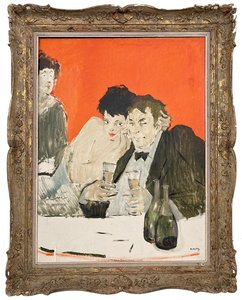
charles alfred mozley
1914 - 1991 , United Kingdom
Quick Facts
- Artistic Movement Or Style: Cubism, Fauvism
- Artists Or Movements Influenced By This Artist:
- Expressionism
- Surrealism
- Artists Who Influenced This Artist:
- Picasso
- Matisse
- Date Of Birth: July 7, 1887
- Date Of Death: 1983
- Full Name: Marc Chagall
- Nationality: French/Russian
- Notable Artworks:
- I and the Village
- Maternity
- The Four Seasons
- Place Of Birth: Witebsk (Belarus)