 Preview
 Send
Send Share
Share
 Details

 Download
 Similars
 X-Ray
X-Ray Diaporama
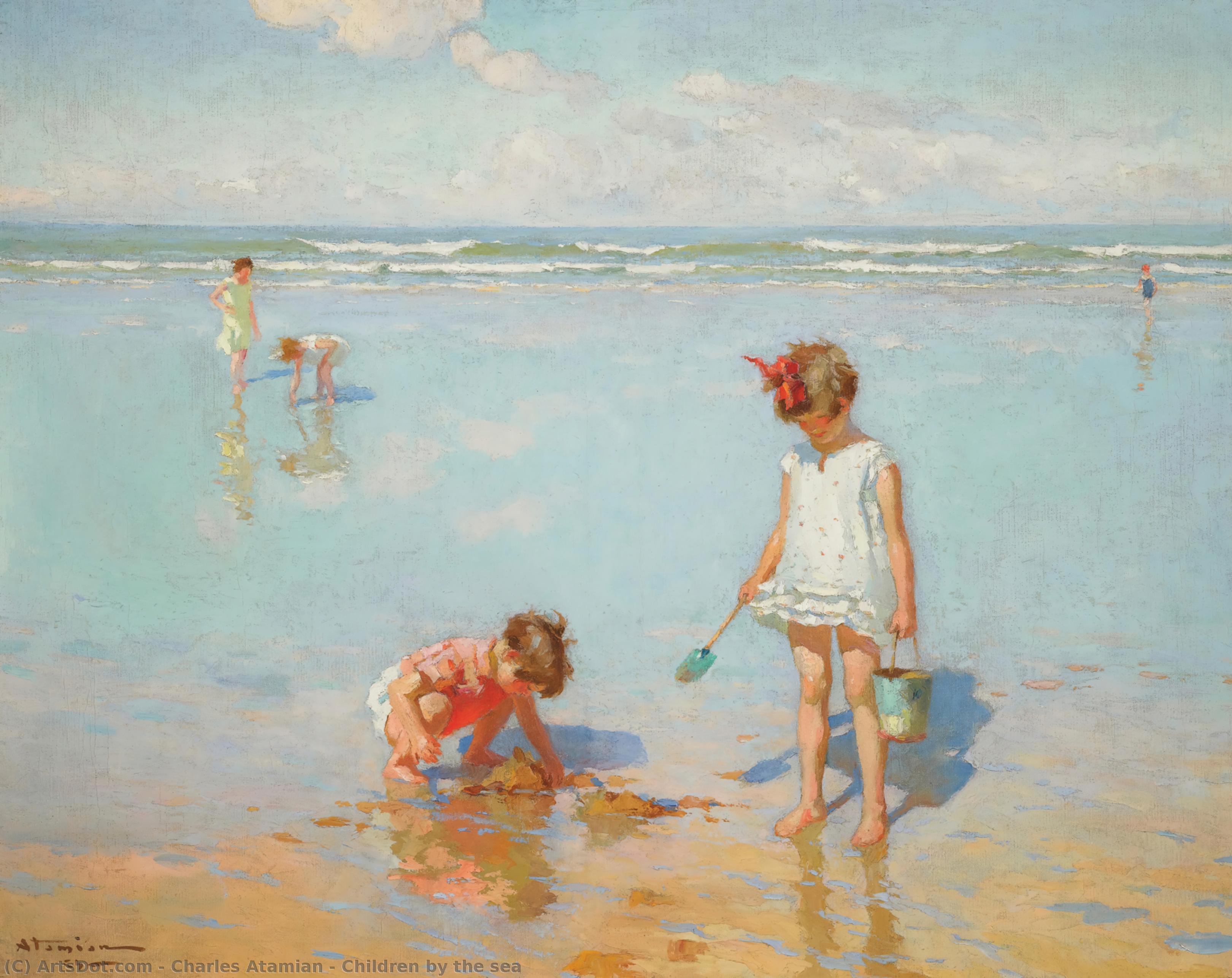
Children by the sea
 Read More
Hand Made Oil Reproduction
Hand-painted oil on canvas in your size and frame, made to order by our artists. ( Buy Print Buy Image)




































Pick from our preset sizes that match the artwork's original proportions.

You may enter your own dimensions to fit a specific frame or space. If your selected size does not match the original image's proportions, we will either crop the artwork or extend the painting with additional hand-painted elements. A digital mockup will be sent for your approval before production begins.
Please note that the on-screen preview does not reflect the actual cropping or extension. Only the mockup will accurately show the final composition.
While custom sizes are available, we recommend selecting a dimension from the predefined list to preserve the original proportions.
After order, ArtsDot.com team will email client for instructions and provide a mockup preview
Worldwide Delivery () in 3/4 weeks instead of standard 5 weeks. (23 August). No compromise on quality.

Free Worldwide Express Shipping

High-Quality Linen Canvas

Full Shipping Insurance

Customs Tax Refund Guarantee

True Color Matching Guarantee

60-Day Return Policy (Defects Only)

100% Money-Back Guarantee

Bulk Discount Offer
 Glass option is only available in size under 110 CM

Children by the sea
Reproduction Medium
Reproduction Size
-


Total Price
$ 313
Related Artworks
Artist Biography
Piet Mondrian: Architect of Abstraction
Piet Mondrian, a name synonymous with modern art’s radical shift towards abstraction, was far more than just a painter; he was a theorist, an architect of visual language, and a fervent believer in the power of pure form to express universal truths. Born Pieter Cornelis Mondriaan on March 7th, 1872, in Amersfoort, Netherlands, his artistic journey began within a family steeped in tradition – his father, a Calvinist schoolmaster, and uncle, an artist associated with the Hague School’s landscape movement. This grounding in both practical education and artistic heritage would profoundly shape his later explorations. Initially pursuing a career in teaching, Mondrian's passion for art ultimately led him to Amsterdam’s Rijksakademie, where he honed his skills and began to develop his distinctive style, influenced by the burgeoning currents of Impressionism and Post-Impressionism. However, it was a pivotal encounter with Cubism in 1911 that irrevocably altered the course of his artistic trajectory, providing him with a framework for dismantling representation and embracing pure abstraction.The Birth of Neo-Plasticism
Mondrian’s evolution wasn't merely a stylistic shift; it represented a fundamental philosophical transformation. He sought to transcend the limitations of traditional art by stripping away all traces of natural imagery, reducing his compositions to their most essential elements: straight lines, right angles, primary colors (red, blue, and yellow), and black, white, and gray. This approach, which he termed “Neo-Plasticism” – meaning ‘new plastic’ – wasn't simply about creating visually striking images; it was a deliberate attempt to construct a universal aesthetic based on geometric harmony. Influenced by the writings of Rudolf Steiner, particularly his theories on spiritual geometry, Mondrian believed that these forms held inherent symbolic significance and could ultimately lead to a more ordered and balanced world. His work during this period, exemplified by pieces like *Composition with Red, Blue and Yellow* (1921), demonstrates an increasing rigor in the application of these principles, showcasing a deliberate reduction of elements towards their most fundamental expression.De Stijl and International Influence
In 1917, Mondrian joined forces with Theo van Doesburg to establish *De Stijl* (The Style), an influential art journal and movement dedicated to exploring the possibilities of abstraction and its application beyond painting. *De Stijl* wasn’t just a publication; it was a manifesto advocating for a holistic approach to design, encompassing architecture, furniture, textiles, and typography – all guided by Mondrian's geometric principles. This collaborative effort significantly broadened his artistic reach, exposing his ideas to a wider international audience. The movement attracted artists from across Europe, including Gerrit Rietveld, who famously designed the iconic *Red and Blue Chair*, embodying *De Stijl’s* reductive aesthetic in furniture design. Mondrian’s influence extended beyond painting; he actively sought to establish a visual language applicable to all aspects of life, believing that art could serve as a catalyst for social and cultural transformation.Key Works and Artistic Development
Mondrian's artistic output spanned several decades, evolving through distinct phases. Early works, such as his landscapes from the 1890s, reveal a grounding in traditional Dutch painting techniques. However, it was after his move to Paris in 1914 that he began to experiment with abstraction, initially influenced by Cubism’s fragmentation of form. *Broadway Boogie Woogie* (1942-43) and *Victory Boogie Woogie* (1942-44), created during World War II, represent a vibrant and dynamic exploration of urban space, utilizing overlapping rectangles and bold color combinations. Later in his career, Mondrian refined his style, emphasizing the purity of lines and colors while incorporating subtle rhythmic variations. Works like *Composition with Yellow, Blue and Red* (1930) demonstrate this shift towards greater simplification and a more meditative quality. Throughout these works, he consistently sought to achieve a state of equilibrium – a visual harmony that reflected his belief in an underlying order within the universe.Legacy and Enduring Significance
Piet Mondrian died on February 1st, 1944, in New York City, leaving behind a remarkably influential body of work. His pioneering exploration of abstraction paved the way for countless artists who followed, shaping the course of modern art and influencing movements ranging from Minimalism to Op Art. His emphasis on geometric form, primary colors, and the reduction of visual elements continues to resonate today, demonstrating the enduring power of his artistic vision. Mondrian’s work is not simply admired for its aesthetic qualities; it represents a profound philosophical statement about the relationship between art, reality, and the human spirit – a testament to an artist who dared to strip away everything superfluous in pursuit of universal beauty. His legacy remains as a cornerstone of 20th-century art, a reminder that true artistic expression lies not in imitation but in the courageous exploration of pure form and its inherent potential for conveying profound meaning.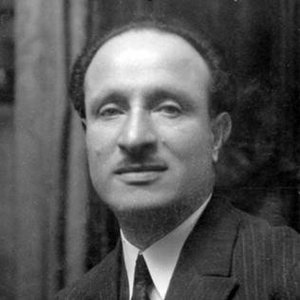
charles atamian
1872 - 1947
Quick Facts
- Artistic Movement Or Style:
- Neo-Plasticism
- De Stijl
- Abstract art
- Artists Or Movements Influenced By This Artist:
- Vasily Kandinsky
- Kazimir Malevich
- Artists Who Influenced This Artist:
- Simon Mans
- Abraham Kuyper
- Date Of Birth: March 7, 1872
- Date Of Death: February 1, 1944
- Full Name: Pieter Cornelis Mondriaan
- Nationality: Dutch
- Notable Artworks:
- Composition with Red Blue and Yellow
- Broadway Boogie Woogie
- Victory Boogie Woogie
- Place Of Birth: Amersfoort, Netherlands