 Preview
 Send
Send Share
Share
 Details

 Download
 Similars
 X-Ray
X-Ray Diaporama
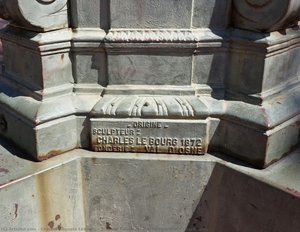
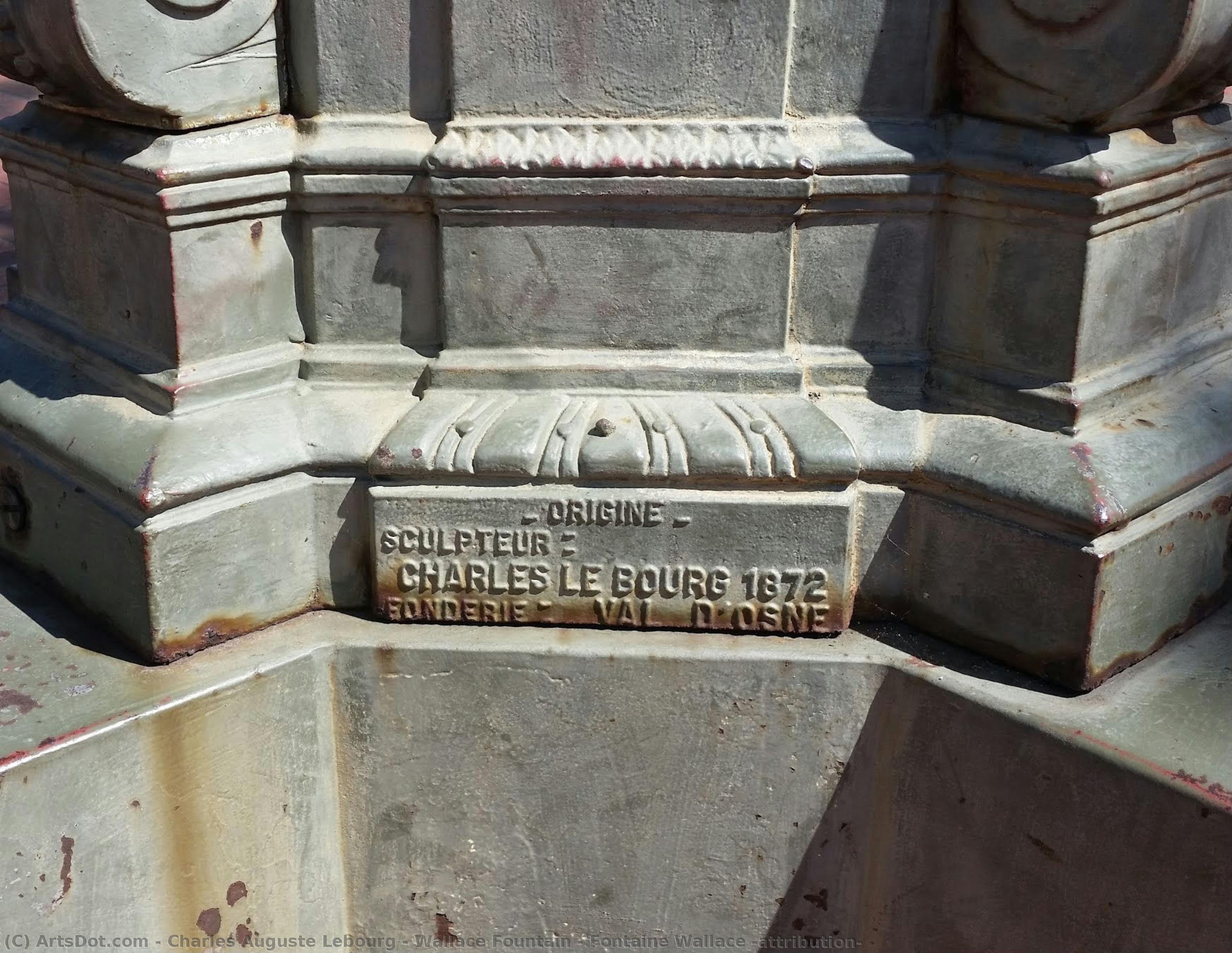
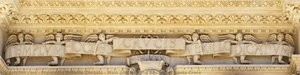
Wallace Fountain / Fontaine Wallace (attribution)


 Read More
Hand Made Oil Reproduction
Hand-painted oil on canvas in your size and frame, made to order by our artists. ( Buy Print Buy Image)




































Pick from our preset sizes that match the artwork's original proportions.

You may enter your own dimensions to fit a specific frame or space. If your selected size does not match the original image's proportions, we will either crop the artwork or extend the painting with additional hand-painted elements. A digital mockup will be sent for your approval before production begins.
Please note that the on-screen preview does not reflect the actual cropping or extension. Only the mockup will accurately show the final composition.
While custom sizes are available, we recommend selecting a dimension from the predefined list to preserve the original proportions.
After order, ArtsDot.com team will email client for instructions and provide a mockup preview
Worldwide Delivery () in 3/4 weeks instead of standard 5 weeks. (23 August). No compromise on quality.

Free Worldwide Express Shipping

High-Quality Linen Canvas

Full Shipping Insurance

Customs Tax Refund Guarantee

True Color Matching Guarantee

60-Day Return Policy (Defects Only)

100% Money-Back Guarantee

Bulk Discount Offer
 Glass option is only available in size under 110 CM

Wallace Fountain / Fontaine Wallace (attribution)
Reproduction Medium
Reproduction Size
-


Total Price
$ 263
Artwork Description
Related Artworks


Artist Biography
The Sculptor of Parisian Elegance and Symbolism
Charles Auguste Lebourg (1829-1906) stands as a pivotal figure in late nineteenth-century French sculpture, largely recognized for his contribution to the Wallace Fountains—an enduring emblem of Paris’s artistic spirit. Born in Nantes, France, Lebourg embarked on a prolific artistic journey marked by meticulous craftsmanship and a profound engagement with classical ideals blended seamlessly with Impressionistic sensibilities. His career spanned decades, culminating in a legacy celebrated across Europe and beyond, leaving an indelible mark on the very fabric of the Parisian landscape.
Lebourg's formative years were steeped in the artistic traditions of Nantes, where he received instruction from Amédée Ménard, a respected sculptor who instilled in him a foundational understanding of form and technique. Recognizing Lebourg’s talent, Ménard encouraged his pursuit of formal education, propelling him to Paris in 1851. There, he honed his skills under the legendary François Rude, whose monumental sculptures—notably the Bastille Monument—profoundly influenced Lebourg's aesthetic vision. Rude championed a sculptural language rooted in Roman grandeur and expressive dynamism, principles that would permeate Lebourg’s subsequent works, instilling a deep appreciation for both classical proportions and dramatic gesture.
Mastery of Form and the Spirit of Paris
Lebourg debuted on the Parisian Salon stage in 1852 with a marble bust of a doctor, but it was his bronze work, Enfant nègre jouant avec un lézard, that truly captured the public imagination. This piece, which garnered an honorable mention at the Exposition Universelle of 1859, demonstrated Lebourg’s ability to capture nuanced emotion and delicate detail. His oeuvre encompasses a diverse range of subjects—from mythological figures to portraits of prominent individuals—characterized by refined modeling and meticulous attention to surface texture. Whether working in polished marble or enduring bronze, his sculptures frequently reflected the prevailing artistic tastes of his era, balancing the weight of tradition with a modern sensitivity.
Perhaps his most enduring achievement resides in his collaboration with Sir Richard Wallace. Following the Franco-Prussian War, when Paris's aqueduct system lay in ruins and clean drinking water was scarce, the wealthy English art collector sought to provide for the city's needs. Lebourg provided the sculptural design for the iconic Wallace Fountains, which are found in virtually every quarter of Paris and various cities throughout the world today. These fountains serve as a testament to his ability to merge functional urban utility with high art, turning a public necessity into a moment of aesthetic grace.
A Legacy Carved in Stone and Bronze
Beyond the fountains, Lebourg's hand can be found decorating some of the most prestigious landmarks in France. His work adorns the Louvre, including pieces such as La Chasse and the bas-relief Vérité et Histoire within the Pavillon Richelieu. He also contributed to the decoration of the Hôtel de Ville in Paris with an allegory of the city of Nantes, and his bronze statue Travail was celebrated at the Paris Exposition Universelle of 1889. His ability to navigate different mediums—from the delicate terra cotta of Games of Love to the monumental equestrian statue of Joan of Arc in Nantes—showcases a versatility that few of his contemporaries could match.
The historical significance of Charles Auguste Lebourg lies in his role as a bridge between the rigid academicism of the early nineteenth century and the more fluid, emotive styles that followed. His work remains on display at the Musée d'Orsay in Paris and the Fine Arts Museum in Nantes, serving as a permanent reminder of an era when sculpture was not merely decoration, but a vital part of the city's soul. Through his mastery of bronze and marble, Lebourg captured the elegance, the struggle, and the enduring beauty of the French spirit.
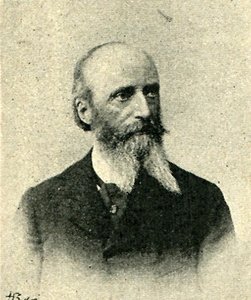
charles auguste lebourg
1829 - 1906 , France
Quick Facts
- Artistic Movement Or Style: Sculpture
- Artists Or Movements Influenced By This Artist: ['Romanticism']
- Artists Who Influenced This Artist: ['François Rude']
- Date Of Birth: February 20, 1829
- Date Of Death: February 1906
- Full Name: Charles Auguste Lebourg
- Nationality: French
- Notable Artworks:
- Enfant nègre jouant avec un lézard
- Wallace Fountain
- Travail
- Place Of Birth: Nantes, France
Related Articles
Renoir's Masterpieces: Explore 25 Iconic Paintings & Bring Art Home | ArtsDot
Explore 25 iconic Pierre-Auguste Renoir paintings! Discover the stories behind Impressionist masterpieces like 'Dance at Le Moulin de la Galette' & 'Luncheon of the Boating Party'. Find museum-quality art reproductions and elevate your home decor with ArtsDot.com.

Bronze Sculptures That Defined Art History | ArtsDot
Journey through art history with our Top 10 bronze sculptures! Explore masterpieces by Rodin, Michelangelo & more. Discover stories behind iconic statues and find museum-quality reproductions for your home decor at ArtsDot.com.

Bronze Age to Modern Masters: 10 Sculptures That Redefined Art | ArtsDot
Journey through art history with 10 legendary bronze sculptures – from Michelangelo's David to Rodin’s Thinker. Explore the stories, techniques & timeless beauty of these masterpieces. Find museum-quality reproductions & elevate your home decor on ArtsDot.com.

The Enduring Form: Exploring Themes & Techniques in Sculpture Across Historical Periods
Explore the rich history of sculpture from ancient masterpieces to contemporary innovations. Discover key techniques, influential artists & investment potential for discerning art collectors.
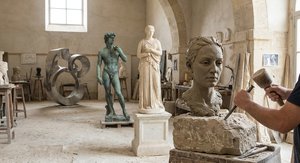
The Enduring Form: Sculpture Across History, Technique & Emotional Resonance
Explore the rich history of sculpture with ArtsDot. Discover key techniques, influential artists & investment potential for discerning collectors. Expert insights into valuing and collecting timeless masterpieces.