

 Preview
 Send
Send Share
Share
 Details

 Download
 Similars
 X-Ray
X-Ray Diaporama
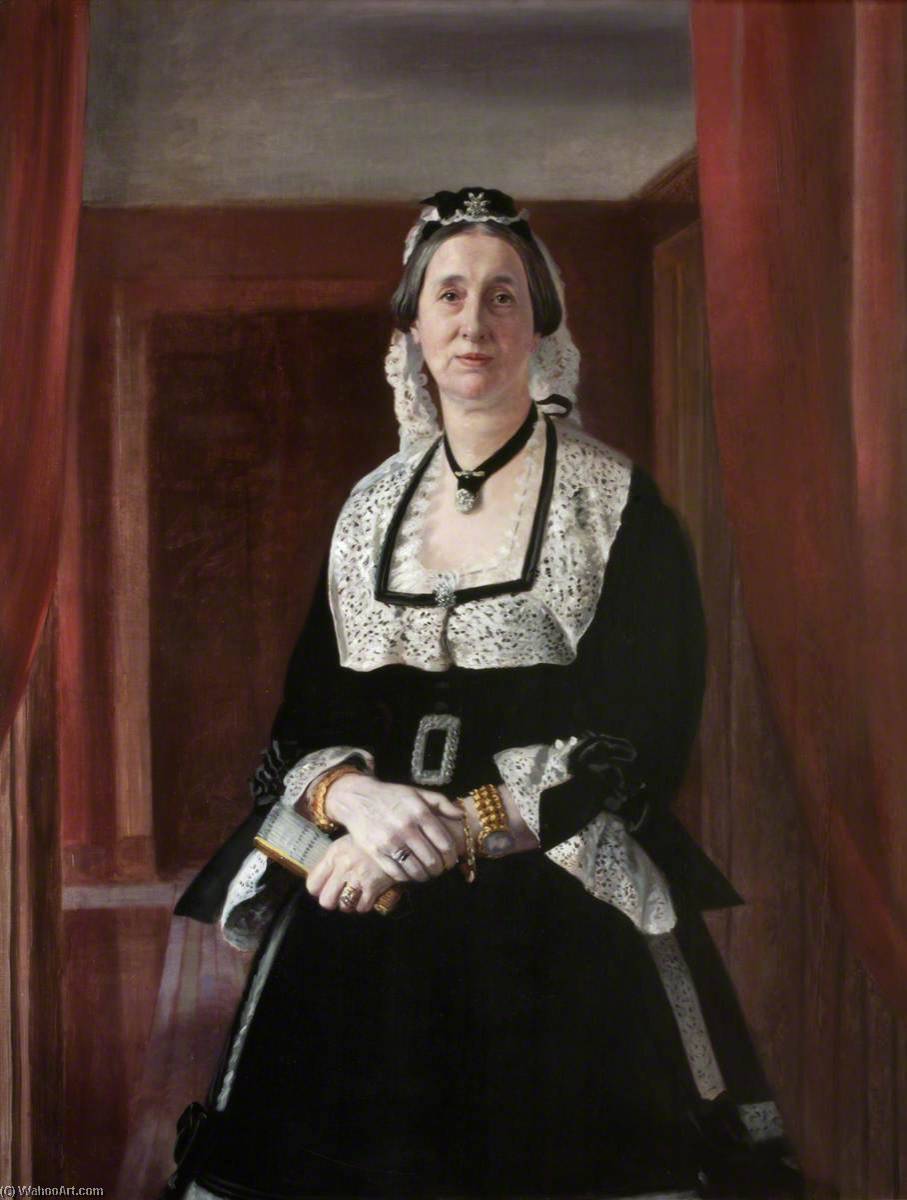
Jean Milne Home
 1870
1870 126.0 x 100.0 cm
 Read More
Purchase a high-resolution, enhanced digital image, far superior to the online preview.
Each file is meticulously prepared by our in-house specialists using advanced tools and expert manual retouching. We ensure every image has exceptional clarity, precise color accuracy, and fine detail.
The final file is delivered via email within 72 hours, optimized for immediate use in professional, editorial, and print environments. This is the same quality trusted by top-tier design studios, publishers, and galleries.
Digital Image
Download a high-resolution file for personal display, printing, and creative projects. ( Buy Print Buy Hand Made Painting)
Included in Every Digital Image Order
Expert Digital Delivery, Guaranteed
When you choose ArtsDot.com, you're not just getting an image - you're receiving a professionally enhanced digital artwork, crafted with precision and backed by a satisfaction guarantee. Here's everything that comes with your order, automatically:

Fast Email Delivery
Your high-resolution digital image file will be emailed to you within 72 hours of ordering - ready for immediate use.

AI-Enhanced Digital File
Your artwork is professionally optimized using advanced AI tools and manual editing, ensuring maximum detail, clarity, and color accuracy.

Free Lifetime Re-Delivery
Accidentally deleted or lost your file? No worries - we'll resend it to you anytime, free of charge.

No Import Fees - Ever
Enjoy your artwork instantly with zero customs, duties, or delivery fees - digital downloads are always tax-free.

Color Accuracy Guarantee
We ensure your digital image reflects the original colors as closely as possible using professional tools and color management.

60-Day Satisfaction Guarantee
If you're not satisfied with your digital image, we'll revise it or refund 100% within 60 days - no questions asked.

100% Money-Back Guarantee
Not satisfied? Get a full refund within 60 days of receiving your digital file - no questions asked.

Bulk Order Discounts
Buy 3 images, save 10% - Buy 5, save 15% - Buy 10+, save 20%. Great for creative projects, galleries, and agencies.
Related Artworks







Artist Biography
The Dual Legacy of a Visionary: Soldier, Painter, and Architect
To contemplate the life of Charles Augustus Henry Lutyens is to traverse the complex landscape of the British imperial era, where the precision of military discipline met the fluid grace of artistic expression. Born in 1829 into a distinguished military lineage, Lutyens was shaped by a heritage of service and structure. As the son of Major Lutyens, a man whose career spanned the Peninsular War and diplomatic missions to Denmark, the young Charles was immersed from birth in an environment where duty and global perspective were paramount. While history often remembers him through the lens of his architectural contributions and his identity as a painter, his very essence was forged in this crucible of Victorian order and expansive colonial ambition.
His early years were marked by a profound intellectual curiosity that transcended the boundaries of a single discipline. Though he initially turned toward the spiritual path of theology during his studies at Oxford University, the call of design and visual storytelling proved irresistible. This transition from the sacred to the aesthetic allowed him to infuse his later works with a sense of monumental permanence and spiritual gravity. His artistic development was deeply influenced by the prevailing movements of his time, particularly the Gothic Revivalism and the Beaux Arts principles that emphasized classical symmetry and intricate ornamentation. This period of formation instilled in him a lifelong reverence for craftsmanship and an ability to see the structural potential within the purely decorative.
A Tapestry of Technique and Memory
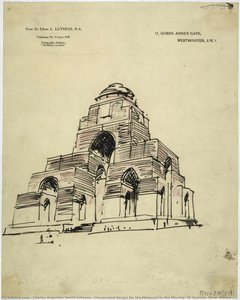
As a painter and draftsman, Lutyens possessed a rare ability to translate the weight of history onto paper. His work often serves as a poignant window into the collective psyche of an era grappling with loss and reconstruction. One can observe this most movingly in his architectural drawings, such as his unexecuted design for the Memorial to the Missing in St Quentin, France. In these monochromatic studies, he utilized the stark, evocative power of black and white line work to create a landscape of memory. Through meticulous hatching and varying line densities, he achieved a sculptural quality that made stone appear almost tactile, capturing the interplay of light and shadow to evoke the somber atmosphere of post-war mourning.
His technical mastery was not merely about precision but about the emotional resonance of scale. By incorporating small, silhouetted figures within his grand architectural visions, Lutyens masterfully established a sense of human vulnerability against the backdrop of monumental structures. This technique grounded his sweeping, imperial ambitions in the intimate reality of individual lives. Whether capturing the delicate beauty of Cupids and Flowers or the imposing geometry of a commemorative tower, his hand remained dedicated to the idea that art should serve as an axis mundi—a bridge between the earthly realm of human experience and the eternal realm of remembrance.
The Architectural Shadow and Historical Significance
While Charles Augustus Henry Lutyens is often discussed in relation to the monumental architectural achievements of his era, his historical significance lies in the foundational aesthetic values he championed. His involvement with the Arts and Crafts movement, alongside figures like William Morris, reinforced a commitment to authenticity and a rejection of mass production. This dedication to meticulous detailing and the use of genuine materials became a hallmark of the period's design language. He viewed architecture not merely as the construction of shelter, but as the creation of spaces that embodied ideals of order, permanence, and authority.
His legacy is inextricably linked to the broader narrative of British architectural evolution, providing a bridge between the traditionalism of the early 19th century and the transformative urban planning seen in projects like New Delhi. Though he shared the spotlight with other great designers of his time, his unique position as both a soldier and an artist allowed him to approach design with a singular perspective—one that understood both the rigid requirements of structure and the delicate necessity of beauty. Today, his works remain vital touchstones for understanding how the visual arts were used to navigate the complexities of identity, empire, and the enduring human desire to leave a lasting mark upon the world.
charles augustus henry lutyens
1829 - 1915
Quick Facts
- Artistic Movement Or Style: Arts and Crafts
- Artists Who Influenced This Artist:
- William Morris
- Gustav Stickley
- Date Of Birth: 1829
- Date Of Death: 1915
- Full Name: Charles Augustus Henry Lutyens
- Nationality: British
- Notable Artworks:
- India Gate
- Houses of Parliament
- Scottish Rite Temple
- Place Of Birth: London, England

