 Preview
 Send
Send Share
Share
 Details

 Download
 Similars
 X-Ray
X-Ray Diaporama
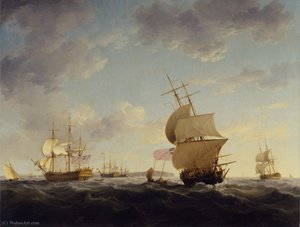
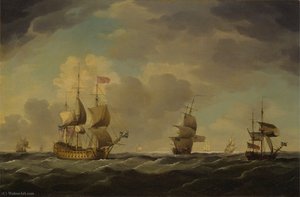
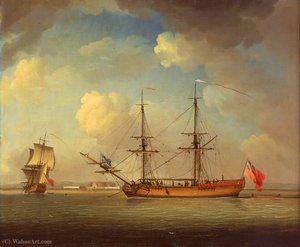
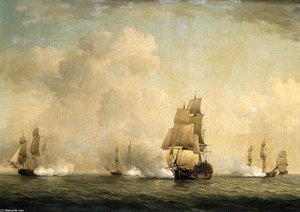
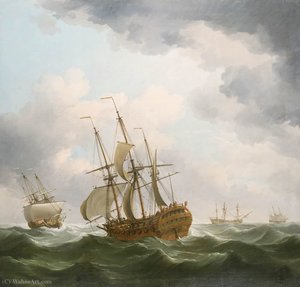
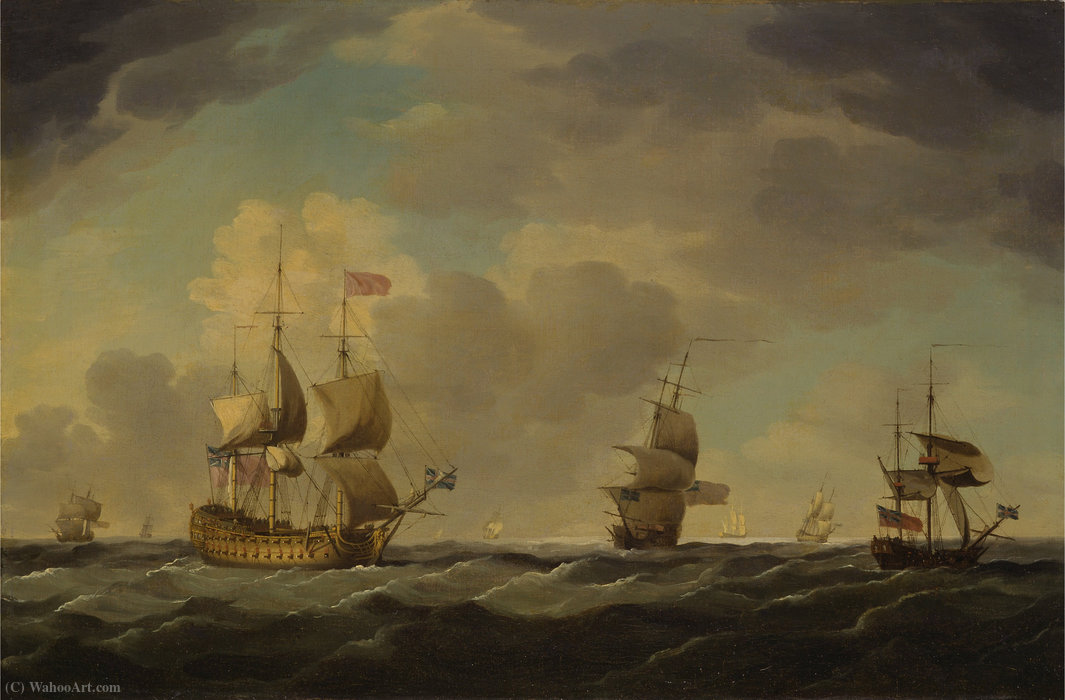
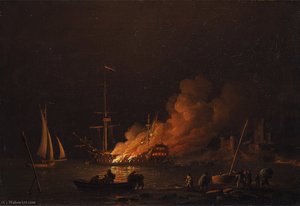
An English Flagship Under Easy Sail in a Moderate Breeze
 Read More
Giclée / Art Print
Museum-quality giclée or canvas print with fast production and flexible finish options. ( Buy Hand Made Painting Buy Image)




































Pick from our preset sizes that match the artwork's original proportions.

You may enter your own dimensions to fit a specific frame or space. If your selected size does not match the original image's proportions, we will either crop the artwork or extend the image with a mirrored or solid-fill edge. A digital mockup will be sent for your approval before production begins.
Please note that the on-screen preview does not reflect the actual cropping or extension. Only the mockup will accurately show the final composition.
While custom sizes are available, we recommend selecting a dimension from the predefined list to preserve the original proportions.
Worldwide Delivery () in 2 weeks instead of standard 4/5 weeks. (26 August)

Free Worldwide Express Shipping

High-Quality Linen Canvas

Full Shipping Insurance

Customs Tax Refund Guarantee

True Color Matching Guarantee

60-Day Return Policy (Defects Only)

100% Money-Back Guarantee

Bulk Discount Offer
 Glass option is only available in size under 110 CM

An English Flagship Under Easy Sail in a Moderate Breeze
Giclée / Art Print
Reproduction Size
-


Total Price
$ 63
Related Artworks









Artist Biography
The Master of the Mid-Century Seas
In the mid-18th century, as Britain’s maritime influence began to surge across the globe, a new kind of visual language was emerging on canvas—one that moved away from static academicism toward a more visceral, breathing realism. At the heart of this transition stood Charles Brooking (c. 1723–1759), an artist whose brief but luminous career helped define the dawn of naval Romanticism. To look upon a Brooking seascape is to feel the salt spray and the tension of the wind; his work does not merely document ships, but captures the very soul of the ocean’s unpredictable temperament.
Brooking’s artistic DNA was deeply rooted in the traditions of craftsmanship and meticulous observation. Born in London, he was the son of Charles Brooking Sr., a skilled painter and decorator associated with the prestigious Greenwich Hospital. This early exposure to the maritime atmosphere of Greenwich provided more than just a livelihood; it offered a masterclass in topographical accuracy. Through his apprenticeship under his father, Brooking developed an exacting eye for the structural complexities of naval vessels, a skill that would later allow him to imbulate his paintings with a profound sense of authenticity that resonated with both sailors and connoisseurs alike.
A Breakthrough of Light and Scale
The trajectory of Brooking’s career was irrevocably altered in 1754 by a landmark commission from the Foundling Hospital in London. Tasked with creating “A Flagship Before the Wind Under Easy Sail,” Brooking moved beyond the realm of mere maritime illustration into the territory of monumental fine art. This undertaking, supported by Treasurer Taylor White, required him to engage deeply with the contemporary masters of his era. He drew inspiration from the works of Peter Monamy, whose depictions of fleets provided a blueprint for capturing movement, yet Brooking infused these scenes with a burgeoning emotional intensity that hinted at the Romantic movement to come.
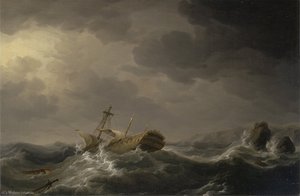
His development was further enriched by his relationship with artists like Dominic Serres, who acknowledged Brooking’s significant influence on his own evolving style. This period of his life was marked by an increasing ability to balance the technical rigors of ship portraiture with the atmospheric drama of the elements. Whether depicting a cutter caught in a strong breeze or the terrifying majesty of a shipwreck against a rocky coast, Brooking possessed a unique talent for using light and shadow to suggest the immense, often overwhelming power of the sea.
Legacy of the Naval Romantic
Though his life was tragically short, ending in 1759, the impact of Charles Brooking’s work echoed through the subsequent generations of British marine painters. He bridged the gap between the documentary precision of the early 18th century and the sweeping, emotive landscapes of the later Romantic era. His ability to render the textures of canvas, wood, and churning water with such fidelity ensured that his paintings served as both historical records and emotional experiences.
Today, Brooking’s significance is preserved in the collections of great institutions like the Tate, where his works continue to captivate viewers with their dramatic tension. His legacy remains defined by several key artistic contributions:
- Technical Realism: The seamless integration of accurate naval architecture with fluid, naturalistic environments.
- Atmospheric Innovation: A pioneering use of light to convey the shifting moods of the maritime climate, from tranquil doldrums to tempestuous storms.
- Historical Resonance: Capturing the visual essence of Britain’s burgeoning naval identity during a period of immense imperial expansion.
In the annals of art history, Charles Brooking remains a pivotal figure—a painter who looked upon the sea not just as a subject for study, but as a living, breathing protagonist in the grand drama of human endeavor.
charles brooking
1723 - 1759
Quick Facts
- Artistic Movement Or Style: Marine Painting
- Artists Or Movements Influenced By This Artist: ['Peter Monamy']
- Artists Who Influenced This Artist: ['Dominic Serres']
- Date Of Birth: 1723
- Date Of Death: 1759
- Full Name: Charles Brooking
- Nationality: English
- Notable Artworks:
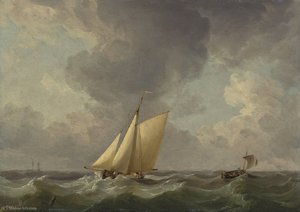
- A Cutter in a Strong Breeze
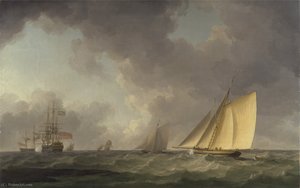
- Cutter Close Hauled in a Fresh Breeze, with Other Shipping