

 Preview
 Send
Send Share
Share
 Details

 Download
 Similars
 X-Ray
X-Ray Diaporama
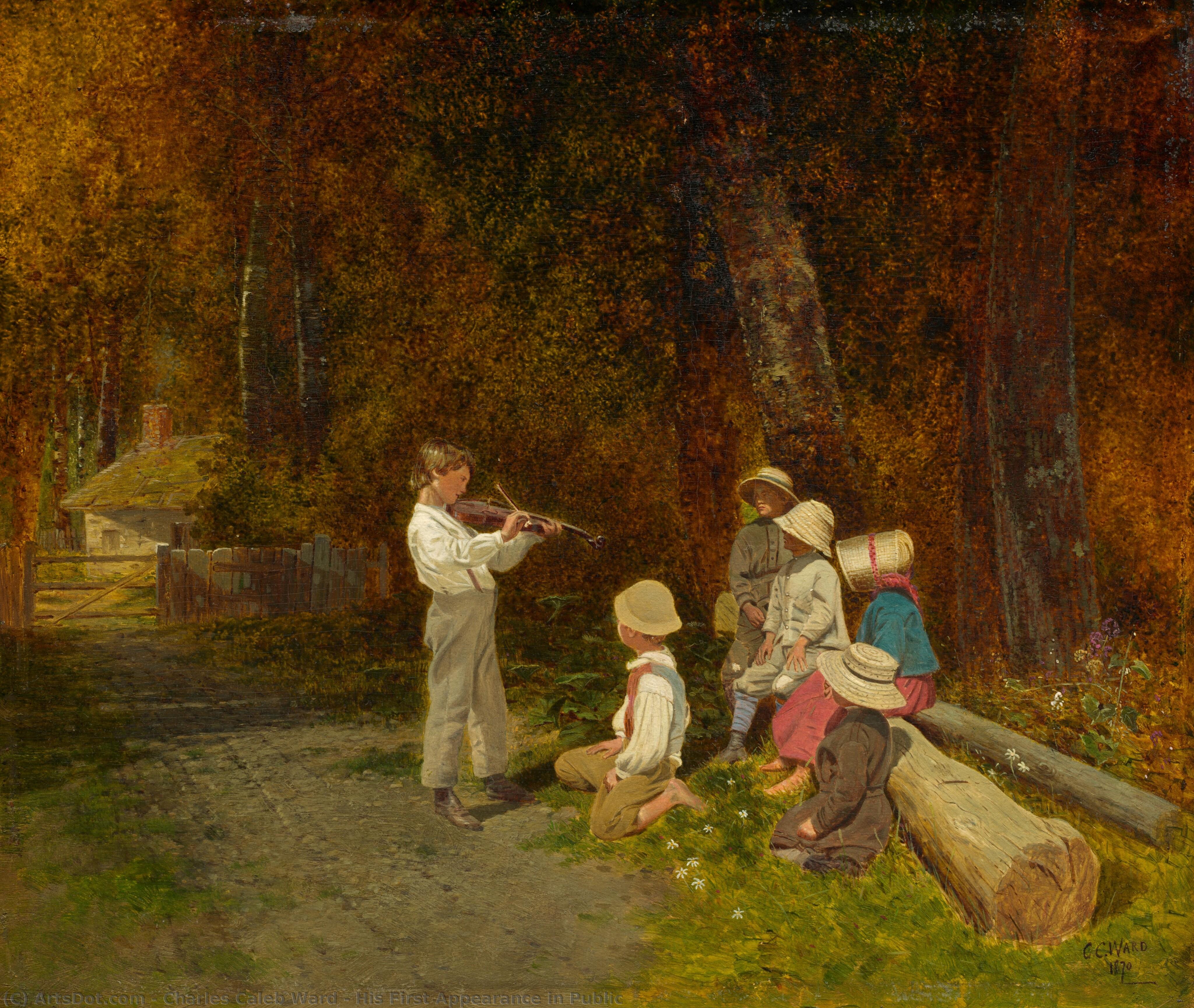
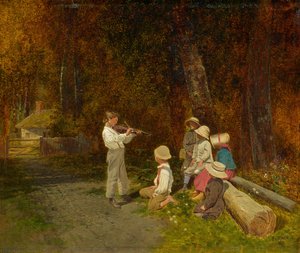
His First Appearance in Public
 1870
1870 49.0 x 54.0 cm
 Read More
Hand Made Oil Reproduction
Hand-painted oil on canvas in your size and frame, made to order by our artists. ( Buy Print Buy Image)




































Pick from our preset sizes that match the artwork's original proportions.

You may enter your own dimensions to fit a specific frame or space. If your selected size does not match the original image's proportions, we will either crop the artwork or extend the painting with additional hand-painted elements. A digital mockup will be sent for your approval before production begins.
Please note that the on-screen preview does not reflect the actual cropping or extension. Only the mockup will accurately show the final composition.
While custom sizes are available, we recommend selecting a dimension from the predefined list to preserve the original proportions.
After order, ArtsDot.com team will email client for instructions and provide a mockup preview
Worldwide Delivery () in 3/4 weeks instead of standard 5 weeks. (28 August). No compromise on quality.

Free Worldwide Express Shipping

High-Quality Linen Canvas

Full Shipping Insurance

Customs Tax Refund Guarantee

True Color Matching Guarantee

60-Day Return Policy (Defects Only)

100% Money-Back Guarantee

Bulk Discount Offer
 Glass option is only available in size under 110 CM

His First Appearance in Public
Reproduction Medium
Reproduction Size
-


Total Price
$ 263
Related Artworks







Artist Biography
A Life Between Continents
The story of Charles Caleb Ward is one of movement, much like the transient subjects he so lovingly captured on canvas. Born in 1831 in the maritime air of Saint John, New Brunswick, Ward’s heritage was deeply rooted in the Loyalist tradition; his grandfather had journeyed from Poughkeepsie, New York, to establish a merchant legacy in Canada. This blend of North American roots and international exposure would later define his artistic soul. While traveling to Liverpool, England, to master the intricacies of the family shipping business, Ward found himself unexpectedly captivated by the world of fine art. It was in this bustling English port that he began studying figure painting under the guidance of William Henry Hunt, a Pre-Raphaelite master known for his delicate watercolors and genre scenes. This early encounter with British precision would forever haunt the edges of his compositions.
His artistic journey was never stationary. After absorbing the light and technique of Europe and spending time in Paris, Ward returned to the United States, seeking further refinement. In New York, he immersed himself in the study of landscape painting under the legendary Asher B. Durand, a pivotal figure of the Hudson River School. This period of intense study allowed him to bridge the gap between the structured realism of his English training and the expansive, atmospheric grandeur of American landscape traditions. Between 1868 and 1872, Ward maintained a studio in New York City, establishing himself as a versatile talent capable of navigating the diverse demands of the nineteenth-century art market.
The Versatility of a Victorian Visionary
To view the body of work left by C.C. Ward is to witness a remarkable breadth of medium and subject. He was far more than a mere painter; he was a true polymath of the visual arts, working with oil, watercolor, photography, illustration, and printmaking. His ability to transition from the delicate textures of an albumen print to the robust presence of an oil portrait speaks to a profound technical dexterity. His subjects were as varied as his tools, ranging from intimate portraits and tender depictions of children to the rugged majesty of Native American figures and the kinetic energy of sporting scenes.
One of his most enduring legacies lies in his ability to capture the ephemeral. His illustrations for prestigious publications such as The Illustrated London News, Century Magazine, and St. Nicholas Magazine brought his keen observations to a wide public audience. Through these hand-colored wood engravings and sketches, he documented the natural world—wildlife and fishing scenes—with an eye that was both scientific and poetic. His work often possessed a unique tension; critics have noted that even in his most genre-focused pieces, there is a sense of Eakins-like intensity, a rigorous commitment to observing the truth of a moment, whether it be the quietude of a landscape or the bustling anticipation of a crowd.
Legacy and the Art of Observation
As the decades progressed, Ward returned to his New Brunswick roots, living in St. George and eventually settling in Rothesay. Despite his international travels and New York prominence, his heart remained tethered to the Atlantic landscape. His masterpiece, "The Circus Is Coming," serves as a perfect testament to his stylistic evolution. The work has been described by modern eyes as tantalizingly elusive, suggesting a sensitive, spare design that balances composition with an almost haunting level of detail. It captures not just a scene, but a feeling—the electric atmosphere of arrival and the structured beauty of a well-composed moment.
Though fewer than fifty of his works are known to survive today, the impact of Charles Caleb Ward remains etched in the history of nineteenth-century Canadian and American art. His ability to weave together the influences of the Pre-Raphaelites, the Hudson River School, and the burgeoning field of photography makes him a singular figure of his era. Today, his contributions are preserved in institutions such as the New Brunswick Museum in Saint John, where his paintings continue to offer a window into a world of Victorian realism, meticulous observation, and the enduring beauty of the natural and human form.
charles caleb ward
1831 - 1896 , Canada
Quick Facts
- Artistic Movement Or Style: Victorian realism
- Artists Who Influenced This Artist:
- William Henry Hunt
- Asher B. Durand
- Date Of Birth: 1831
- Date Of Death: 1896
- Full Name: Charles Caleb Ward
- Nationality: Canadian
- Notable Artworks: ['The Circus is Coming']
- Place Of Birth: Saint John, Canada

