 Preview
 Send
Send Share
Share
 Details

 Download
 Similars
 X-Ray
X-Ray Diaporama
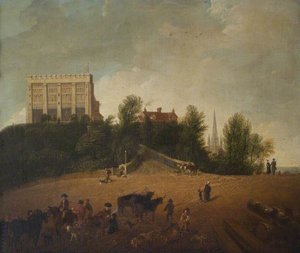
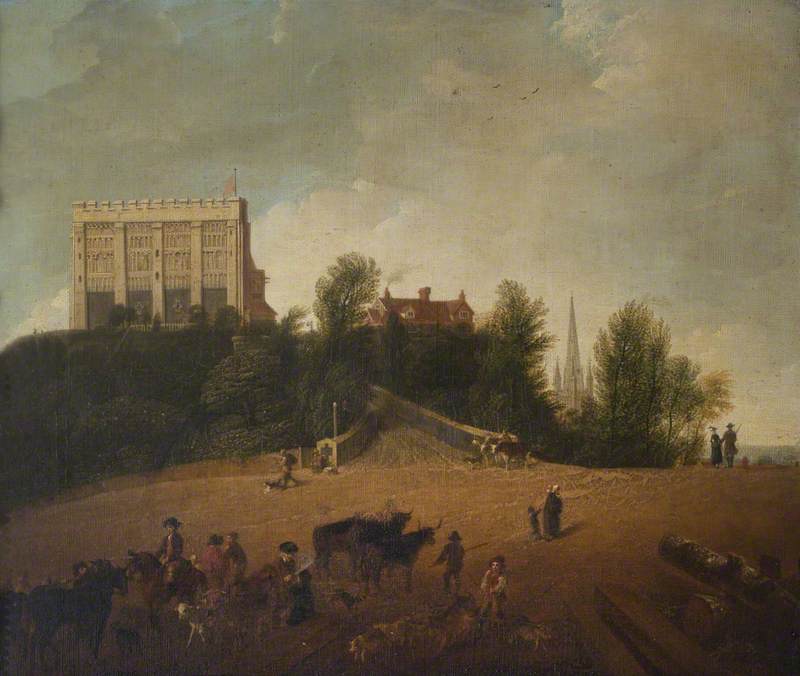
A View of Norwich Castle
 50.0 x 61.0 cm
 National Trust
 Read More
Hand Made Oil Reproduction
Hand-painted oil on canvas in your size and frame, made to order by our artists. ( Buy Print Buy Image)




































Pick from our preset sizes that match the artwork's original proportions.

You may enter your own dimensions to fit a specific frame or space. If your selected size does not match the original image's proportions, we will either crop the artwork or extend the painting with additional hand-painted elements. A digital mockup will be sent for your approval before production begins.
Please note that the on-screen preview does not reflect the actual cropping or extension. Only the mockup will accurately show the final composition.
While custom sizes are available, we recommend selecting a dimension from the predefined list to preserve the original proportions.
After order, ArtsDot.com team will email client for instructions and provide a mockup preview
Worldwide Delivery () in 3/4 weeks instead of standard 5 weeks. (23 August). No compromise on quality.

Free Worldwide Express Shipping

High-Quality Linen Canvas

Full Shipping Insurance

Customs Tax Refund Guarantee

True Color Matching Guarantee

60-Day Return Policy (Defects Only)

100% Money-Back Guarantee

Bulk Discount Offer
 Glass option is only available in size under 110 CM

A View of Norwich Castle
Reproduction Medium
Reproduction Size
-


Total Price
$ 263
Related Artworks










Artist Biography
Charles Catton the Younger: A Pioneer of Watercolor Landscape Painting
Charles Catton the Younger (1756–1819) stands as a fascinating figure in British art history—a man whose artistic talent was inextricably linked to troubling ethical considerations. Born into a wealthy London family, he benefited from an aristocratic education and formal training at the Royal Academy Schools, establishing him firmly within the artistic circles of his time. His early life foreshadowed a trajectory marked by both creative brilliance and moral compromise, shaping his legacy as one of Britain’s most celebrated topographical artists alongside a deeply unsettling chapter concerning slavery.- Early Life & Education: Catton's father, Charles Catton the Elder, instilled in him a passion for art and provided substantial financial support for his studies. This privileged upbringing allowed him to immerse himself in classical scholarship and artistic pursuits, equipping him with the foundational knowledge necessary for his future endeavors.
- Royal Academy Years: From 1775 to 1800, Catton’s membership at the Royal Academy cemented his reputation as a landscape painter. He produced an impressive oeuvre of watercolors and etchings depicting scenes across England and Scotland—remarkable for their accuracy and detail—capturing the beauty of the British countryside with unprecedented subtlety.
- Notable Works: Among his most celebrated paintings are views of Stonehenge, Richmond Park, and Edinburgh Castle—each rendered with breathtaking precision and imbued with a palpable sense of grandeur. These landscapes exemplify Catton’s commitment to capturing the essence of British scenery while adhering to established artistic conventions.
- Theatrical Collaborations: Beyond landscape painting, Catton excelled as a theatrical scene-painter, collaborating extensively with playwrights like John Gay and contributing significantly to the visual spectacle of Covent Garden’s opera house. His designs showcased his versatility and demonstrated his ability to adapt his artistic skills to diverse creative contexts.
- Legacy & Controversy: Despite the troubling revelations surrounding his personal life, Catton remains recognized as a pivotal figure in British watercolor landscape painting—a pioneer who elevated the genre to new heights of artistic sophistication. Nevertheless, historians continue to grapple with questions about how to assess his contribution to art history while acknowledging the devastating consequences of his participation in slavery.
charles catton the younger
1756 - 1819
Quick Facts
- Artistic Movement Or Style: Topographical Art
- Artists Or Movements Influenced By This Artist: ['Aquatint prints']
- Artists Who Influenced This Artist: ['Royal Academy']
- Date Of Birth: 1756
- Date Of Death: 1819
- Full Name: Charles Catton the Younger
- Nationality: English
- Notable Artworks:
- View from Blackfriars Bridge
- Westminster Bridge
- Place Of Birth: London, England