 Preview
 Send
Send Share
Share
 Details

 Download
 Similars
 X-Ray
X-Ray Diaporama
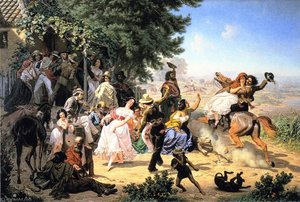
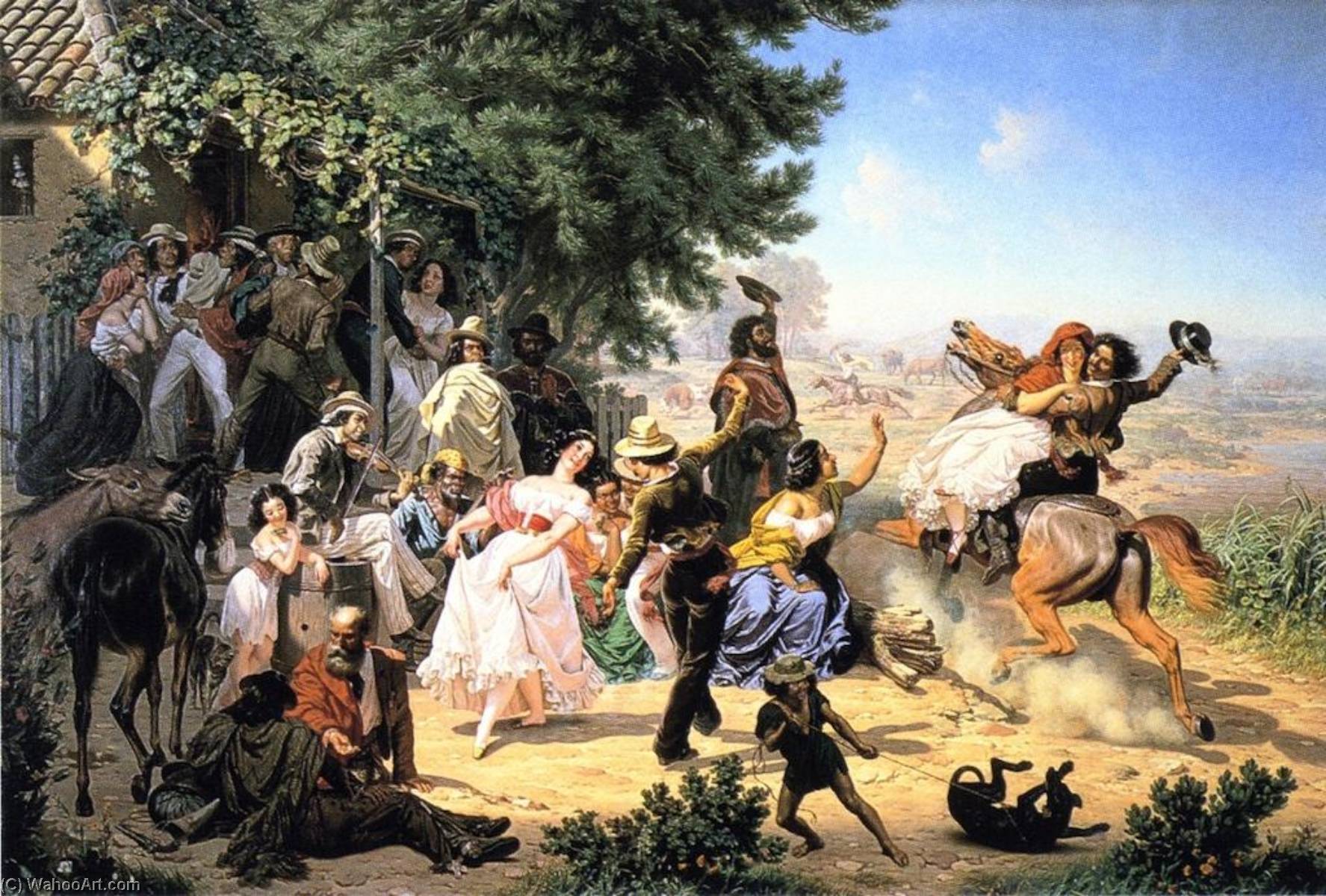
The Fandango


 Read More
Hand Made Oil Reproduction
Hand-painted oil on canvas in your size and frame, made to order by our artists. ( Buy Print Buy Image)




































Pick from our preset sizes that match the artwork's original proportions.

You may enter your own dimensions to fit a specific frame or space. If your selected size does not match the original image's proportions, we will either crop the artwork or extend the painting with additional hand-painted elements. A digital mockup will be sent for your approval before production begins.
Please note that the on-screen preview does not reflect the actual cropping or extension. Only the mockup will accurately show the final composition.
While custom sizes are available, we recommend selecting a dimension from the predefined list to preserve the original proportions.
After order, ArtsDot.com team will email client for instructions and provide a mockup preview
Worldwide Delivery () in 3/4 weeks instead of standard 5 weeks. (17 August). No compromise on quality.

Free Worldwide Express Shipping

High-Quality Linen Canvas

Full Shipping Insurance

Customs Tax Refund Guarantee

True Color Matching Guarantee

60-Day Return Policy (Defects Only)

100% Money-Back Guarantee

Bulk Discount Offer
 Glass option is only available in size under 110 CM

The Fandango
Reproduction Medium
Reproduction Size
-


Total Price
$ 263
Related Artworks
Artist Biography
Charles Christian Nahl – California’s Pioneer Painter
Charles Christian Nahl (1818-1878) stands as a pivotal figure in the artistic landscape of California, recognized primarily for his evocative depictions of the Gold Rush era and his contribution to establishing Sacramento as an early center of American art. Born in Kassel, Germany, into a family steeped in artistic tradition—his father, Georg Valentin Friedrich Nahl, was himself a celebrated sculptor—Nahl’s formative years instilled within him a profound appreciation for visual representation and meticulous craftsmanship. This heritage would profoundly shape his artistic trajectory and solidify his legacy as one of the state's foremost painters. ### Early Life and Artistic Training Nahl’s formal education commenced at the Cassel Academy, where he honed his skills in drawing and painting under the tutelage of Horace Vernet and Paul Delaroche—influential figures who championed Romanticism and emphasized dramatic composition and emotional intensity. These formative experiences instilled in him a stylistic sensibility that would characterize much of his subsequent oeuvre. Notably, Nahl’s great-grandfather was Johann August Nahl, a German sculptor renowned for monumental works like the Langhans brass, further cementing the artistic lineage within his family. This familial connection served as an enduring source of inspiration and shaped his understanding of sculptural technique and artistic expression. ### The Parisian Years and Artistic Evolution Driven by intellectual curiosity and a desire to immerse himself in the burgeoning artistic milieu of Paris, Nahl embarked on a transformative journey in 1846 alongside his brother Hugo Wilhelm Arthur Nahl. Their relocation coincided with the fervor surrounding the February Revolution, propelling them into a period of political upheaval and fostering an environment conducive to artistic experimentation. During this time, Nahl adopted the moniker “Charles,” reflecting his ambition to forge a distinct identity within the cosmopolitan landscape of Parisian society. He diligently cultivated connections with fellow artists and frequented salons—institutions dedicated to showcasing emerging talent—where he gained exposure and honed his artistic sensibilities. His stylistic evolution mirrored broader trends in European art during the mid-19th century, embracing Romantic ideals while simultaneously incorporating elements of Neoclassicism. ### Sacramento and The Gold Rush Legacy The allure of California’s burgeoning gold rush captivated Nahl's imagination and spurred him to relocate to Nevada City in 1850, followed by a move to Rough and Ready shortly thereafter. Recognizing the transformative potential of this frontier region—a crucible of innovation and entrepreneurial spirit—Nahl established a studio with his brother Hugo, capitalizing on the influx of prospectors eager to stake their claims. This venture yielded remarkable results: Nahl’s paintings captured the dynamism of the era with unparalleled accuracy and emotional resonance, documenting scenes of mining activity, social interactions, and the daily lives of California settlers. His depictions of rugged landscapes—particularly “Incident on the Chagres River”—became iconic representations of the Gold Rush experience, cementing his place in California art history. Furthermore, Nahl’s involvement in establishing Sacramento's Olympic Club—a testament to his commitment to fostering community spirit and promoting physical fitness—underscored his multifaceted contributions beyond artistic pursuits. ### Artistic Style and Notable Works Nahl’s artistic style distinguished itself through meticulous attention to detail, masterful use of light and shadow, and a penchant for dramatic composition—traits inherited from his artistic mentors Vernet and Delaroche. He excelled in capturing the grandeur of California's wilderness vistas, portraying them with breathtaking realism and conveying their emotional impact with profound sensitivity. Among his most celebrated works are “The Lone Prospector,” “Evening on the Sacrament River,” and “Peter Quivey Killed a Mountain Lion”—each piece embodying Nahl’s artistic prowess and reflecting his unwavering fascination with capturing the essence of American frontier life. His paintings—particularly "La Plaza de Toros Sunday Morning"—remain treasured artifacts of California art history, offering invaluable insights into the cultural and social milieu of the 1850s. ### Legacy and Recognition Charles Christian Nahl’s artistic legacy extends far beyond his individual achievements; he profoundly shaped Sacramento's identity as a hub for American art and culture. His influence can be discerned in subsequent generations of California painters who embraced Romantic ideals while simultaneously striving for technical precision—a stylistic convergence that epitomized the state’s artistic spirit during the latter half of the 19th century. Today, Nahl’s paintings reside prominently within the Crocker Art Museum's collection—a testament to his enduring artistic significance and a beacon of California art heritage. His contribution to documenting the Gold Rush era continues to inspire artists and scholars alike, ensuring that Charles Christian Nahl’s name remains synonymous with California’s pioneering spirit and artistic excellence.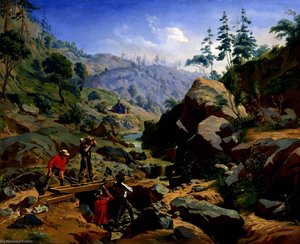
charles christian nahl
1818 - 1878
Quick Facts
- Artistic Movement Or Style: Neoclassical
- Artists Or Movements Influenced By This Artist: ['Romanticism']
- Artists Who Influenced This Artist: ['Johann August Nahl the Elder']
- Date Of Death: March 1, 1878
- Full Name: Charles Christian Heinrich Nahl
- Nationality: German
- Notable Artworks:
- La Plaza de Toros Sunday Morning
- Indian Encampment
- Evening on the Sacrament River
- Place Of Birth: Kassel, Germany