

 Preview
 Send
Send Share
Share
 Details

 Download
 Similars
 X-Ray
X-Ray Diaporama
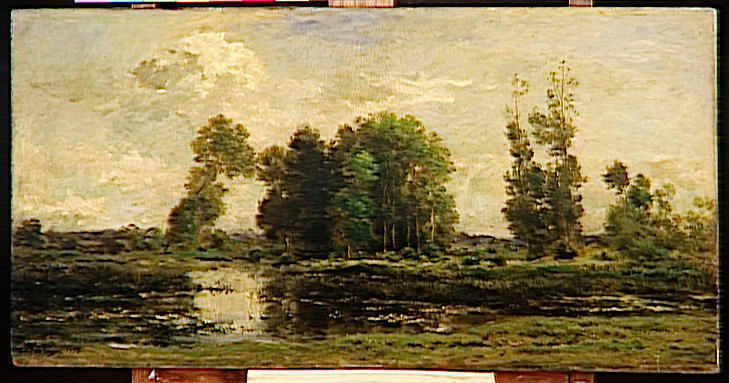
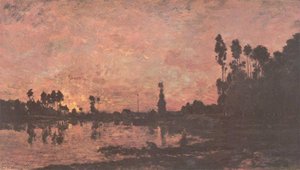
L'ETANG


 Read More
Purchase a high-resolution, enhanced digital image, far superior to the online preview.
Each file is meticulously prepared by our in-house specialists using advanced tools and expert manual retouching. We ensure every image has exceptional clarity, precise color accuracy, and fine detail.
The final file is delivered via email within 72 hours, optimized for immediate use in professional, editorial, and print environments. This is the same quality trusted by top-tier design studios, publishers, and galleries.
Digital Image
Download a high-resolution file for personal display, printing, and creative projects. ( Buy Print Buy Hand Made Painting)
Included in Every Digital Image Order
Expert Digital Delivery, Guaranteed
When you choose ArtsDot.com, you're not just getting an image - you're receiving a professionally enhanced digital artwork, crafted with precision and backed by a satisfaction guarantee. Here's everything that comes with your order, automatically:

Fast Email Delivery
Your high-resolution digital image file will be emailed to you within 72 hours of ordering - ready for immediate use.

AI-Enhanced Digital File
Your artwork is professionally optimized using advanced AI tools and manual editing, ensuring maximum detail, clarity, and color accuracy.

Free Lifetime Re-Delivery
Accidentally deleted or lost your file? No worries - we'll resend it to you anytime, free of charge.

No Import Fees - Ever
Enjoy your artwork instantly with zero customs, duties, or delivery fees - digital downloads are always tax-free.

Color Accuracy Guarantee
We ensure your digital image reflects the original colors as closely as possible using professional tools and color management.

60-Day Satisfaction Guarantee
If you're not satisfied with your digital image, we'll revise it or refund 100% within 60 days - no questions asked.

100% Money-Back Guarantee
Not satisfied? Get a full refund within 60 days of receiving your digital file - no questions asked.

Bulk Order Discounts
Buy 3 images, save 10% - Buy 5, save 15% - Buy 10+, save 20%. Great for creative projects, galleries, and agencies.
Collectible Description
A Tranquil Reflection of Impressionistic Vision
Charles-François Daubigny’s “L'ETANG” – a deceptively simple landscape depicting a serene pond nestled amongst verdant foliage – transcends mere visual representation; it embodies the very spirit of Impressionism. Painted around 1867, this artwork captures not just what the eye perceives but also how light dances upon the surface of water and vegetation, offering viewers an immersive experience reminiscent of fleeting moments in nature. Daubigny’s artistic journey began with formal training under Paul Delaroche, yet it was his independent exploration of Italy in 1836 – accompanied by Henri Mignan – that fundamentally shaped his aesthetic sensibilities and instilled within him a lifelong fascination for capturing the essence of outdoor scenes.- Composition & Perspective: The painting’s horizontal orientation emphasizes the expansive tranquility of the pond, guiding the gaze towards a cluster of trees mirroring their reflections in the water. Shallow perspective enhances intimacy, creating an illusion of closeness to the natural world and subtly conveying depth through atmospheric haze.
- Color Palette & Texture: Dominated by shades of emerald green and sapphire blue, the color palette faithfully reproduces the hues of the pond’s environment. Loose brushstrokes imbue the foliage and water surface with palpable texture—a deliberate rejection of academic precision—suggesting movement and capturing the ephemeral quality of sunlight filtering through the trees.
- Style & Technique: Daubigny adhered to Impressionistic principles, prioritizing rapid application of paint in short, broken strokes to build up layers of color and atmosphere. This technique skillfully mimics how light interacts with surfaces, resulting in a luminous effect that prioritizes sensory experience over meticulous detail.
- Historical Context: Produced during the height of Impressionism’s artistic fervor—a movement that challenged traditional conventions and championed subjective perception—this painting exemplifies the stylistic innovations of its time. Daubigny's work aligns with a broader cultural shift toward valuing sensory experience and prioritizing emotional resonance over idealized representation.
- Emotional Impact: Viewing “L’ETANG” evokes feelings of serenity, peace, and wonder – mirroring the artist’s intention to capture not just visual accuracy but also the profound beauty of the natural world. Its muted palette and textured brushstrokes contribute to a contemplative mood, encouraging viewers to appreciate the subtleties of light and color.
Related Artworks
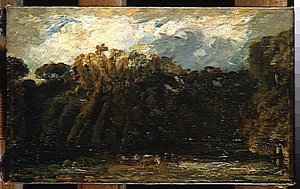
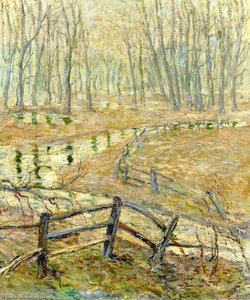
Artist Biography
A Pioneer of Atmospheric Impressionism: The Life and Art of Charles-François Daubigny
Charles-François Daubigny, born in Paris in 1817, emerged from a family steeped in artistic tradition—his father, Edmé François Daubigny, and uncle, Pierre Daubigny, both painters, laid the foundation for his early training. However, young Charles quickly sought to forge his own path, moving beyond academic constraints toward a more direct engagement with the natural world. His initial studies under Paul Delaroche provided technical skill, but it was a journey through Italy in 1836, undertaken independently with fellow artist Henri Mignan, that truly ignited his artistic vision. This experience instilled within him a profound appreciation for landscape and a desire to capture its essence not as idealized scenery, but as a living, breathing entity. Returning to Paris, Daubigny balanced commercial work—illustrating books and decorative panels—with his burgeoning passion for plein air painting, a practice that would define his career. He was part of an artistic community at the Rue des Amandiers-Popincourt, fostering collaboration and shared exploration of new approaches to art.The Barbizon Circle and the Embrace of Nature
Daubigny’s artistic trajectory took a pivotal turn in 1843 when he settled in Barbizon, a small hamlet nestled within the Forest of Fontainebleau. This marked his formal association with the Barbizon School, a group of artists who rejected the polished artifice of academic painting in favor of direct observation and honest representation of rural life and landscape. Unlike earlier landscape painters who often sketched outdoors and finished their works in the studio, the Barbizon artists—including Théodore Rousseau, Jean-François Millet, and Camille Corot—embraced *en plein air* painting as a fundamental principle. Daubigny’s friendship with Corot proved particularly influential; together they explored the forests of Fontainebleau, capturing the subtle nuances of light and atmosphere. It was during this period that Daubigny conceived of his innovative “Botin,” a studio boat he used to navigate the rivers of France—the Seine and the Oise especially—allowing him unparalleled access to diverse landscapes and fostering an intimate connection with nature. This mobile studio became synonymous with his artistic practice, symbolizing his commitment to painting directly from life.A Bridge Between Realism and Impressionism
Daubigny’s work occupies a unique position in 19th-century art history, serving as a crucial link between the realism of the Barbizon School and the emerging impressionistic movement. While firmly rooted in the Barbizon tradition of depicting nature with fidelity and sincerity, his paintings increasingly emphasized atmospheric effects, fleeting moments of light, and subjective perception—qualities that foreshadowed the innovations of Monet, Renoir, and their contemporaries. He experimented with techniques like *cliché verre*, a process combining photography and printmaking, demonstrating an openness to new technologies and artistic possibilities. His landscapes are characterized by broad, loose brushstrokes, a muted palette, and a focus on capturing the ephemeral qualities of light and weather. Paintings such as “Harvest” (1857) and “The Ponds of Gylieu” (1864) exemplify his ability to evoke a sense of mood and atmosphere, transporting the viewer into the heart of the French countryside. He wasn’t merely recording what he saw; he was conveying *how* it felt to be present in that moment.Legacy and Lasting Influence
Charles-François Daubigny passed away in Paris in 1878, leaving behind a rich artistic legacy that continues to resonate today. His influence extended beyond his immediate circle of students—including his son Karl, Achille Oudinot, and Hippolyte Camille Delpy—to inspire generations of landscape painters. He was instrumental in fostering connections between the Barbizon School and the burgeoning Impressionist movement, introducing Claude Monet and Paul Cézanne to new ways of seeing and painting. His commitment to *plein air* painting, his exploration of atmospheric effects, and his willingness to embrace innovation paved the way for the radical artistic transformations that would define the late 19th century. Daubigny’s paintings are now held in major museums around the world, including the Musée d'Orsay in Paris and the Cincinnati Art Museum, serving as a testament to his enduring contribution to the history of art. He remains a pivotal figure—a master of atmospheric realism who anticipated the arrival of Impressionism and helped shape the course of modern painting.Notable Works
- Harvest (1857): A quintessential example of Daubigny’s ability to capture rural life and atmosphere, now housed in the Musée d'Orsay.
- The Ponds of Gylieu (1864): Demonstrates his mastery of landscape painting and atmospheric perspective, currently at the Cincinnati Art Museum.
- Moonlight (1865): Showcases Daubigny’s skill in rendering nocturnal scenes with subtle light effects.
- Auvers-sur-Oise (1868): A captivating depiction of the French countryside, reflecting his deep connection to the region.
- Seascape (1876): An impressionistic depiction of waves and coastal beauty.
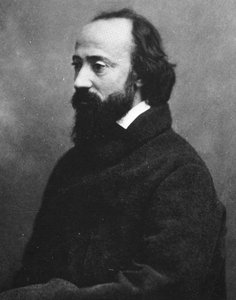
Charles-François Daubigny
1817 - 1878 , France
Quick Facts
- Artistic Movement Or Style: Barbizon School, Impressionism
- Artists Or Movements Influenced By This Artist:
- Impressionism
- Claude Monet
- Paul Cézanne
- Artists Who Influenced This Artist:
- Camille Corot
- Gustave Courbet
- Date Of Birth: February 15, 1817
- Date Of Death: February 19, 1878
- Full Name: Charles-François Daubigny
- Nationality: French
- Notable Artworks:
- Harvest (1857)
- Ponds of Gylieu (1864)
- Moonlight (1865)
- Auvers-sur-Oise (1868)
- Place Of Birth: Paris, France

