 Preview
 Send
Send Share
Share
 Details

 Download
 Similars
 X-Ray
X-Ray Diaporama
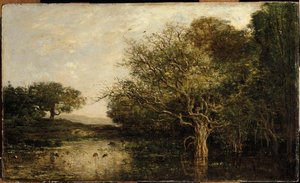
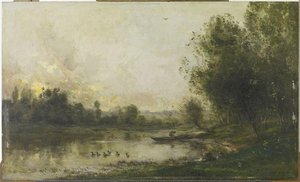
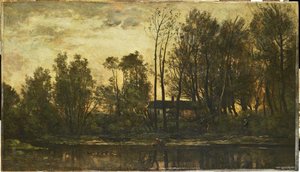
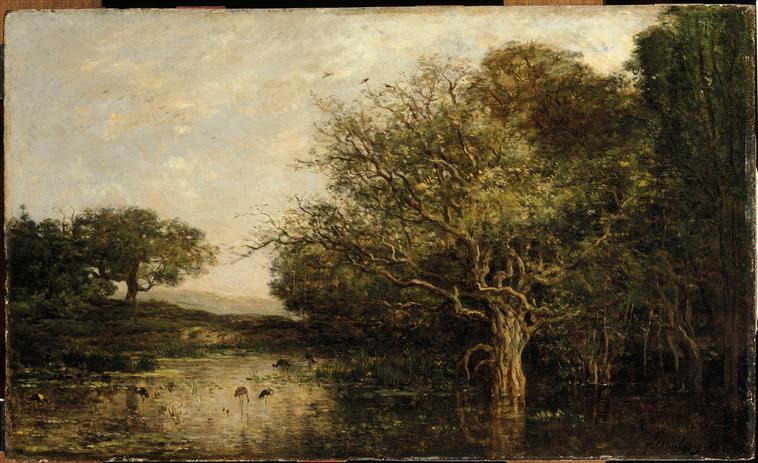
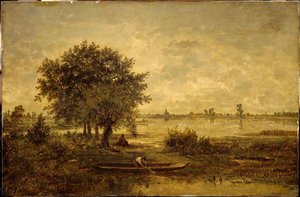
LA MARE AUX HERONS


 Read More
Hand Made Oil Reproduction
Hand-painted oil on canvas in your size and frame, made to order by our artists. ( Buy Print Buy Image)




P118B $10

P118H $10

P118W $10

P438Z $10

P508JH $12

P508YH $12

P805H $10

P805Z $10

P919BZ $10

P919G $10

P919XJ $10

P959ZH $10

P968JZ $12

W106C $8

W218G $10

W218JH $8

W218Y $10

W307PJ $10

W316G $10

W316PJ $8

W316Y $10

W398PJ $8

W4111J $10

W500HY $15

W500JH $15

W692G $12

W849H $8

W940BG $15

W953PJ $8




Pick from our preset sizes that match the artwork's original proportions.

You may enter your own dimensions to fit a specific frame or space. If your selected size does not match the original image's proportions, we will either crop the artwork or extend the painting with additional hand-painted elements. A digital mockup will be sent for your approval before production begins.
Please note that the on-screen preview does not reflect the actual cropping or extension. Only the mockup will accurately show the final composition.
While custom sizes are available, we recommend selecting a dimension from the predefined list to preserve the original proportions.
After order, ArtsDot.com team will email client for instructions and provide a mockup preview
Worldwide Delivery () in 3/4 weeks instead of standard 5 weeks. (22 August). No compromise on quality.

Free Worldwide Express Shipping

High-Quality Linen Canvas

Full Shipping Insurance

Customs Tax Refund Guarantee

True Color Matching Guarantee

60-Day Return Policy (Defects Only)

100% Money-Back Guarantee

Bulk Discount Offer
 Glass option is only available in size under 110 CM

LA MARE AUX HERONS
Reproduction Medium
Reproduction Size
-


Total Price
$ 263
Artwork Description
A Symphony of Tranquility: The Ethereal World of Daubigny
In the quiet corners of art history, few works capture the fleeting breath of nature as intimately as Charles-François Daubigny’s 1857 masterpiece, "LA MARE AUX HERONS". This evocative landscape is far more than a mere depiction of a pond; it is a profound meditation on light, atmosphere, and the silent rhythms of the natural world. As a pioneer of the Barbizon School and a vital precursor to Impressionism, Daubigny invites the viewer into a realm where the boundaries between water, sky, and earth dissolve into a soft, painterly haze. The scene presents a tranquil marshland, dominated by a central, weathered tree trunk that rises from the water like an ancient sentinel, framed by lush, verdant foliage that whispers of the hidden life within the reeds.
To gaze upon this work is to experience a moment of profound stillness. The artist utilizes a subdued, earthy palette—rich mossy greens, deep umbers, and misty grays—to mirror the contemplative mood of an overcast afternoon. There are no jarring highlights or aggressive shadows here; instead, Daubinity employs a masterful use of diffused lighting that bathes the entire composition in a gentle, pearlescent glow. This soft illumination creates an almost ethereal quality, where the water’s surface becomes a mirror for the heavy, moisture-laden sky, evoking a sense of melancholic beauty that resonates deeply with the soul.
Mastery of Technique and Impressionistic Spirit
The technical brilliance of "LA MARE AUX HERONS" lies in its textured vitality. Daubigny was a master of the impasto technique, applying oil paint with a visible, rhythmic brushstroke that lends a tactile dimension to the canvas. One can almost feel the roughness of the bark on the central tree and the delicate, layered weight of the surrounding leaves. This deliberate texture does not merely represent form; it captures movement and the physical presence of nature itself. Through the skillful layering of pigments, Daubigny achieves a remarkable depth, using atmospheric perspective to allow distant hills to recede into a soft, blue-gray blur, thereby expanding the perceived horizon of the pond.
This approach marks a revolutionary departure from the rigid, polished finish of the academic tradition. By prioritizing the sensory experience of light over meticulous, photographic detail, Daubigny paved the way for the Impressionist revolution. The herons, though subtly rendered and nearly hidden within the landscape, serve as symbols of grace and quiet vigilance, adding a layer of narrative mystery to the composition. For the collector or interior designer, this painting offers a sophisticated anchor for any space—a piece that does not demand attention through loud colors, but rather commands respect through its nuanced complexity and its ability to instill a sense of peace and timelessness in a modern setting.
Related Artworks
Artist Biography
A Pioneer of Atmospheric Impressionism: The Life and Art of Charles-François Daubigny
Charles-François Daubigny, born in Paris in 1817, emerged from a family steeped in artistic tradition—his father, Edmé François Daubigny, and uncle, Pierre Daubigny, both painters, laid the foundation for his early training. However, young Charles quickly sought to forge his own path, moving beyond academic constraints toward a more direct engagement with the natural world. His initial studies under Paul Delaroche provided technical skill, but it was a journey through Italy in 1836, undertaken independently with fellow artist Henri Mignan, that truly ignited his artistic vision. This experience instilled within him a profound appreciation for landscape and a desire to capture its essence not as idealized scenery, but as a living, breathing entity. Returning to Paris, Daubigny balanced commercial work—illustrating books and decorative panels—with his burgeoning passion for plein air painting, a practice that would define his career. He was part of an artistic community at the Rue des Amandiers-Popincourt, fostering collaboration and shared exploration of new approaches to art.The Barbizon Circle and the Embrace of Nature
Daubigny’s artistic trajectory took a pivotal turn in 1843 when he settled in Barbizon, a small hamlet nestled within the Forest of Fontainebleau. This marked his formal association with the Barbizon School, a group of artists who rejected the polished artifice of academic painting in favor of direct observation and honest representation of rural life and landscape. Unlike earlier landscape painters who often sketched outdoors and finished their works in the studio, the Barbizon artists—including Théodore Rousseau, Jean-François Millet, and Camille Corot—embraced *en plein air* painting as a fundamental principle. Daubigny’s friendship with Corot proved particularly influential; together they explored the forests of Fontainebleau, capturing the subtle nuances of light and atmosphere. It was during this period that Daubigny conceived of his innovative “Botin,” a studio boat he used to navigate the rivers of France—the Seine and the Oise especially—allowing him unparalleled access to diverse landscapes and fostering an intimate connection with nature. This mobile studio became synonymous with his artistic practice, symbolizing his commitment to painting directly from life.A Bridge Between Realism and Impressionism
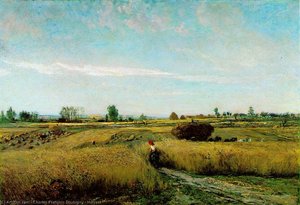
Daubigny’s work occupies a unique position in 19th-century art history, serving as a crucial link between the realism of the Barbizon School and the emerging impressionistic movement. While firmly rooted in the Barbizon tradition of depicting nature with fidelity and sincerity, his paintings increasingly emphasized atmospheric effects, fleeting moments of light, and subjective perception—qualities that foreshadowed the innovations of Monet, Renoir, and their contemporaries. He experimented with techniques like *cliché verre*, a process combining photography and printmaking, demonstrating an openness to new technologies and artistic possibilities. His landscapes are characterized by broad, loose brushstrokes, a muted palette, and a focus on capturing the ephemeral qualities of light and weather. Paintings such as “Harvest” (1857) and “The Ponds of Gylieu” (1864) exemplify his ability to evoke a sense of mood and atmosphere, transporting the viewer into the heart of the French countryside. He wasn’t merely recording what he saw; he was conveying *how* it felt to be present in that moment.Legacy and Lasting Influence
Charles-François Daubigny passed away in Paris in 1878, leaving behind a rich artistic legacy that continues to resonate today. His influence extended beyond his immediate circle of students—including his son Karl, Achille Oudinot, and Hippolyte Camille Delpy—to inspire generations of landscape painters. He was instrumental in fostering connections between the Barbizon School and the burgeoning Impressionist movement, introducing Claude Monet and Paul Cézanne to new ways of seeing and painting. His commitment to *plein air* painting, his exploration of atmospheric effects, and his willingness to embrace innovation paved the way for the radical artistic transformations that would define the late 19th century. Daubigny’s paintings are now held in major museums around the world, including the Musée d'Orsay in Paris and the Cincinnati Art Museum, serving as a testament to his enduring contribution to the history of art. He remains a pivotal figure—a master of atmospheric realism who anticipated the arrival of Impressionism and helped shape the course of modern painting.Notable Works
- Harvest (1857): A quintessential example of Daubigny’s ability to capture rural life and atmosphere, now housed in the Musée d'Orsay.
- The Ponds of Gylieu (1864): Demonstrates his mastery of landscape painting and atmospheric perspective, currently at the Cincinnati Art Museum.
- Moonlight (1865): Showcases Daubigny’s skill in rendering nocturnal scenes with subtle light effects.
- Auvers-sur-Oise (1868): A captivating depiction of the French countryside, reflecting his deep connection to the region.
- Seascape (1876): An impressionistic depiction of waves and coastal beauty.
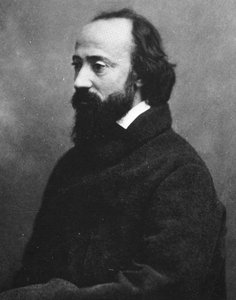
Charles-François Daubigny
1817 - 1878 , France
Quick Facts
- Artistic Movement Or Style: Barbizon School, Impressionism
- Artists Or Movements Influenced By This Artist:
- Impressionism
- Claude Monet
- Paul Cézanne
- Artists Who Influenced This Artist:
- Camille Corot
- Gustave Courbet
- Date Of Birth: February 15, 1817
- Date Of Death: February 19, 1878
- Full Name: Charles-François Daubigny
- Nationality: French
- Notable Artworks:
- Harvest (1857)
- Ponds of Gylieu (1864)
- Moonlight (1865)
- Auvers-sur-Oise (1868)
- Place Of Birth: Paris, France
Related Articles
Impressionist Landscapes: 10 Masterpieces for Your Home | ArtsDot
Journey through 10 iconic Impressionist landscapes by Monet, Renoir & Degas. Explore the history, techniques & emotions behind these masterpieces. Find museum-quality reproductions for your home at ArtsDot.com – where art comes to life! Discover all masterpieces on ArtsDot.com
Impressionistic Landscapes: 10 Masterpieces That Changed Art & Decor
Journey into the heart of Impressionism! Explore 10 masterpieces by Monet, Renoir & Degas that revolutionized landscape art. Discover their stories, techniques & find museum-quality reproductions to elevate your home decor on ArtsDot.com.

Hokusai's Masterpieces: 25 Iconic Prints & Paintings for Art Lovers | ArtsDot
Journey through Katsushika Hokusai’s 25 most iconic artworks, including *The Great Wave*. Explore the ukiyo-e master's history, style & timeless Japanese woodblock prints. Find museum-quality reproductions for your home at ArtsDot.com.
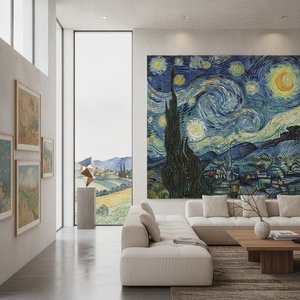
Beyond the Horizon: A Curated Guide to Integrating Post-Impressionist Landscapes into Modern Interiors
Transform your home with the emotive power of Post-Impressionist landscapes. Discover expert tips on selecting hand-painted oil reproductions to create a soulful, vibrant interior that reflects your unique style and connection to nature.

Romantic Landscapes: 10 Masterpieces for Your Home | ArtsDot
Journey through 10 Romantic landscape masterpieces by Friedrich, Turner & Cole. Explore emotional art, sublime nature scenes & iconic 19th-century paintings. Find museum-quality reproductions for your home at ArtsDot.com – discover the full collection online!