 Preview
 Send
Send Share
Share
 Details

 Download
 Similars
 X-Ray
X-Ray Diaporama
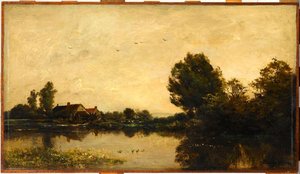
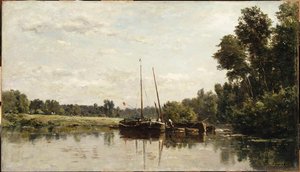
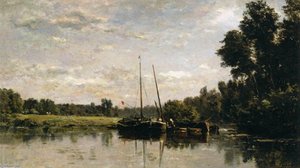
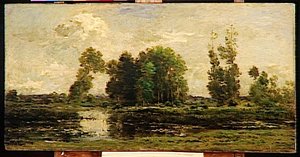
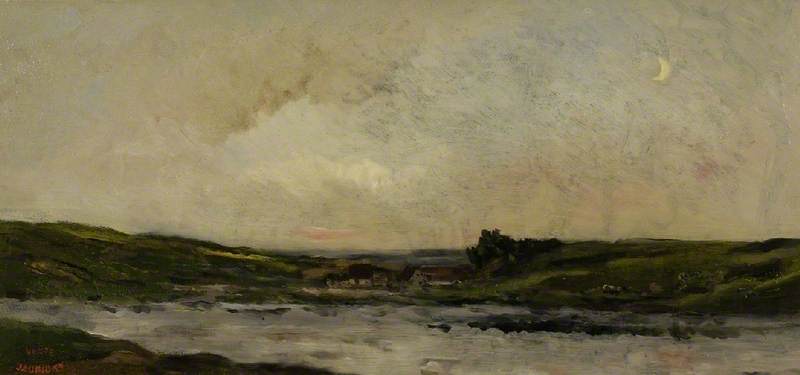
On the River Oise
 Oil On Canvas
- WallArt
- Barbizon School
 24.0 x 46.0 cm
 Fitzwilliam College
 Read More
Hand Made Oil Reproduction
Hand-painted oil on canvas in your size and frame, made to order by our artists. ( Buy Print Buy Image)




P118B $10

P118H $10

P118W $10

P438Z $10

P508JH $12

P508YH $12

P805H $10

P805Z $10

P919BZ $10

P919G $10

P919XJ $10

P959ZH $10

P968JZ $12

W106C $8

W218G $10

W218JH $8

W218Y $10

W307PJ $10

W316G $10

W316PJ $8

W316Y $10

W398PJ $8

W4111J $10

W500HY $15

W500JH $15

W692G $12

W849H $8

W940BG $15

W953PJ $8




Pick from our preset sizes that match the artwork's original proportions.

You may enter your own dimensions to fit a specific frame or space. If your selected size does not match the original image's proportions, we will either crop the artwork or extend the painting with additional hand-painted elements. A digital mockup will be sent for your approval before production begins.
Please note that the on-screen preview does not reflect the actual cropping or extension. Only the mockup will accurately show the final composition.
While custom sizes are available, we recommend selecting a dimension from the predefined list to preserve the original proportions.
After order, ArtsDot.com team will email client for instructions and provide a mockup preview
Worldwide Delivery () in 3/4 weeks instead of standard 5 weeks. (16 August). No compromise on quality.

Free Worldwide Express Shipping

High-Quality Linen Canvas

Full Shipping Insurance

Customs Tax Refund Guarantee

True Color Matching Guarantee

60-Day Return Policy (Defects Only)

100% Money-Back Guarantee

Bulk Discount Offer
 Glass option is only available in size under 110 CM

On the River Oise
Reproduction Medium
Reproduction Size
-


Total Price
$ 263
Artwork Description
Charles-François Daubigny’s “On the River Oise”: A Symphony of Light and Tranquility
Charles-François Daubigny's "On the River Oise," painted in 1863, isn’t merely a landscape; it’s an immersion into a fleeting moment of serene beauty. This captivating work, now residing within the Reading Public Museum, offers a glimpse into the heart of the Barbizon school and the burgeoning Impressionist movement—a testament to Daubigny's pioneering approach to capturing the essence of nature through light and atmosphere. The painting immediately draws the viewer in with its soft, diffused light, reminiscent of a hazy summer afternoon, and invites contemplation of the river’s gentle flow.
Daubigny, born in Paris in 1817, was a pivotal figure bridging the gap between academic tradition and the revolutionary techniques of his contemporaries. Initially trained under Paul Delaroche, he quickly rejected the rigid formality of classical painting, embarking on a journey to paint directly from nature—a radical shift at the time. His decision to relocate to Auvers-sur-Oise in 1860 marked a turning point, allowing him to spend countless hours observing and documenting the river’s ever-changing moods. This intimate connection with his subject matter is palpable in “On the River Oise,” where every brushstroke seems imbued with a deep understanding of the landscape.
A Masterclass in Atmospheric Impressionism
The painting's style exemplifies atmospheric impressionism, a technique championed by Daubigny and others who sought to capture not just the appearance of a scene but its very feeling. He employed loose, visible brushstrokes—a hallmark of the Barbizon school—to render the water’s surface with shimmering reflections and subtle gradations of color. Notice how he avoids sharp outlines, instead blending hues seamlessly to create an illusion of depth and movement. The distant mountains are rendered in muted blues and purples, while the foreground is bathed in a warmer, golden light, drawing the eye into the heart of the composition.
Daubigny’s masterful use of color is particularly noteworthy. He doesn't rely on precise representation but rather on capturing the *impression* of color—the way it shifts and changes with the interplay of light and shadow. The dominant palette consists of greens, blues, and browns, creating a harmonious and calming effect. The subtle variations in tone – from the vibrant greens of the riverbank to the hazy blues of the distant hills – contribute significantly to the painting’s overall sense of tranquility.
Symbolism and Emotional Resonance
Beyond its technical brilliance, “On the River Oise” is rich in symbolic meaning. The washerwoman kneeling by the water's edge—a recurring motif in Daubigny’s work—represents a connection to everyday life and the rhythms of nature. Her presence adds a touch of human warmth to the otherwise serene landscape, reminding us of our own place within the natural world. The river itself symbolizes fluidity, change, and the passage of time – themes that resonate deeply with the Impressionist sensibility.
Furthermore, the painting evokes a profound sense of peace and contemplation. The stillness of the water, the muted colors, and the absence of any dramatic elements create an atmosphere of quiet beauty—a refuge from the hustle and bustle of modern life. It’s a scene that invites us to slow down, breathe deeply, and appreciate the simple pleasures of nature. “On the River Oise” is more than just a painting; it's an invitation to experience a moment of profound serenity.
A Legacy of Light and Observation
Charles-François Daubigny’s "On the River Oise" stands as a pivotal work in the transition from academic art to the Impressionist movement. His dedication to painting *en plein air*, his innovative use of color, and his ability to capture the fleeting effects of light have left an enduring legacy on generations of artists. Reproductions of this stunning piece offer a remarkable opportunity to bring its tranquil beauty into any interior space, fostering a sense of calm and connection with the natural world—a timeless reminder of Daubigny’s profound understanding of light, color, and the human spirit.
Related Artworks
Artist Biography
A Pioneer of Atmospheric Impressionism: The Life and Art of Charles-François Daubigny
Charles-François Daubigny, born in Paris in 1817, emerged from a family steeped in artistic tradition—his father, Edmé François Daubigny, and uncle, Pierre Daubigny, both painters, laid the foundation for his early training. However, young Charles quickly sought to forge his own path, moving beyond academic constraints toward a more direct engagement with the natural world. His initial studies under Paul Delaroche provided technical skill, but it was a journey through Italy in 1836, undertaken independently with fellow artist Henri Mignan, that truly ignited his artistic vision. This experience instilled within him a profound appreciation for landscape and a desire to capture its essence not as idealized scenery, but as a living, breathing entity. Returning to Paris, Daubigny balanced commercial work—illustrating books and decorative panels—with his burgeoning passion for plein air painting, a practice that would define his career. He was part of an artistic community at the Rue des Amandiers-Popincourt, fostering collaboration and shared exploration of new approaches to art.The Barbizon Circle and the Embrace of Nature
Daubigny’s artistic trajectory took a pivotal turn in 1843 when he settled in Barbizon, a small hamlet nestled within the Forest of Fontainebleau. This marked his formal association with the Barbizon School, a group of artists who rejected the polished artifice of academic painting in favor of direct observation and honest representation of rural life and landscape. Unlike earlier landscape painters who often sketched outdoors and finished their works in the studio, the Barbizon artists—including Théodore Rousseau, Jean-François Millet, and Camille Corot—embraced *en plein air* painting as a fundamental principle. Daubigny’s friendship with Corot proved particularly influential; together they explored the forests of Fontainebleau, capturing the subtle nuances of light and atmosphere. It was during this period that Daubigny conceived of his innovative “Botin,” a studio boat he used to navigate the rivers of France—the Seine and the Oise especially—allowing him unparalleled access to diverse landscapes and fostering an intimate connection with nature. This mobile studio became synonymous with his artistic practice, symbolizing his commitment to painting directly from life.A Bridge Between Realism and Impressionism
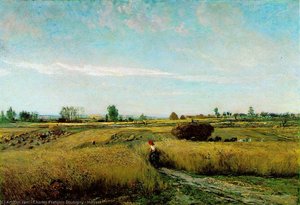
Daubigny’s work occupies a unique position in 19th-century art history, serving as a crucial link between the realism of the Barbizon School and the emerging impressionistic movement. While firmly rooted in the Barbizon tradition of depicting nature with fidelity and sincerity, his paintings increasingly emphasized atmospheric effects, fleeting moments of light, and subjective perception—qualities that foreshadowed the innovations of Monet, Renoir, and their contemporaries. He experimented with techniques like *cliché verre*, a process combining photography and printmaking, demonstrating an openness to new technologies and artistic possibilities. His landscapes are characterized by broad, loose brushstrokes, a muted palette, and a focus on capturing the ephemeral qualities of light and weather. Paintings such as “Harvest” (1857) and “The Ponds of Gylieu” (1864) exemplify his ability to evoke a sense of mood and atmosphere, transporting the viewer into the heart of the French countryside. He wasn’t merely recording what he saw; he was conveying *how* it felt to be present in that moment.Legacy and Lasting Influence
Charles-François Daubigny passed away in Paris in 1878, leaving behind a rich artistic legacy that continues to resonate today. His influence extended beyond his immediate circle of students—including his son Karl, Achille Oudinot, and Hippolyte Camille Delpy—to inspire generations of landscape painters. He was instrumental in fostering connections between the Barbizon School and the burgeoning Impressionist movement, introducing Claude Monet and Paul Cézanne to new ways of seeing and painting. His commitment to *plein air* painting, his exploration of atmospheric effects, and his willingness to embrace innovation paved the way for the radical artistic transformations that would define the late 19th century. Daubigny’s paintings are now held in major museums around the world, including the Musée d'Orsay in Paris and the Cincinnati Art Museum, serving as a testament to his enduring contribution to the history of art. He remains a pivotal figure—a master of atmospheric realism who anticipated the arrival of Impressionism and helped shape the course of modern painting.Notable Works
- Harvest (1857): A quintessential example of Daubigny’s ability to capture rural life and atmosphere, now housed in the Musée d'Orsay.
- The Ponds of Gylieu (1864): Demonstrates his mastery of landscape painting and atmospheric perspective, currently at the Cincinnati Art Museum.
- Moonlight (1865): Showcases Daubigny’s skill in rendering nocturnal scenes with subtle light effects.
- Auvers-sur-Oise (1868): A captivating depiction of the French countryside, reflecting his deep connection to the region.
- Seascape (1876): An impressionistic depiction of waves and coastal beauty.
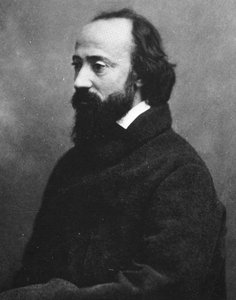
Charles-François Daubigny
1817 - 1878 , France
Quick Facts
- Artistic Movement Or Style: Barbizon School, Impressionism
- Artists Or Movements Influenced By This Artist:
- Impressionism
- Claude Monet
- Paul Cézanne
- Artists Who Influenced This Artist:
- Camille Corot
- Gustave Courbet
- Date Of Birth: February 15, 1817
- Date Of Death: February 19, 1878
- Full Name: Charles-François Daubigny
- Nationality: French
- Notable Artworks:
- Harvest (1857)
- Ponds of Gylieu (1864)
- Moonlight (1865)
- Auvers-sur-Oise (1868)
- Place Of Birth: Paris, France
Related Articles
Flowing Narratives: Rivers in Painting – A Historical Exploration
Explore the rich history of rivers in painting! Discover masterpieces from ancient times to Impressionism & beyond. Learn about symbolism, artists like Monet & Daubigny, and find your perfect serene artwork at ArtsDot.
Charles-François Daubigny: Pioneering Atmospheric Light & Barbizon Realism
Explore the life & art of Charles-François Daubigny, a pivotal Barbizon School painter. Discover his innovative landscapes, mastery of light, and influence on Impressionism. High-quality reproductions available.

Beyond the Horizon: 10 Landscape Masterpieces for Your Home Decor
Journey through 10 breathtaking landscape paintings by Monet, Van Gogh & more! Explore iconic artworks, artistic techniques & find inspiration for your home decor. Museum-quality reproductions at ArtsDot.com. Discover all masterpieces on ArtsDot.com
Evocations of Place: A Historical Journey Through Landscape Art
Explore the rich history of landscape art with ArtsDot. Discover renowned artists, movements like Impressionism & tonalism, and expert guidance for collecting timeless pieces. Find your perfect serene escape today!
Evoking Nature's Sublime: A Comprehensive Exploration of 19th-Century Landscape Painting
Explore the captivating world of 19th-century landscape painting! Discover renowned artists like Friedrich & Monet, key movements, and find the perfect artwork to bring nature's serenity into your home. Expert insights at ArtsDot.