

 Preview
 Send
Send Share
Share
 Details

 Download
 Similars
 X-Ray
X-Ray Diaporama
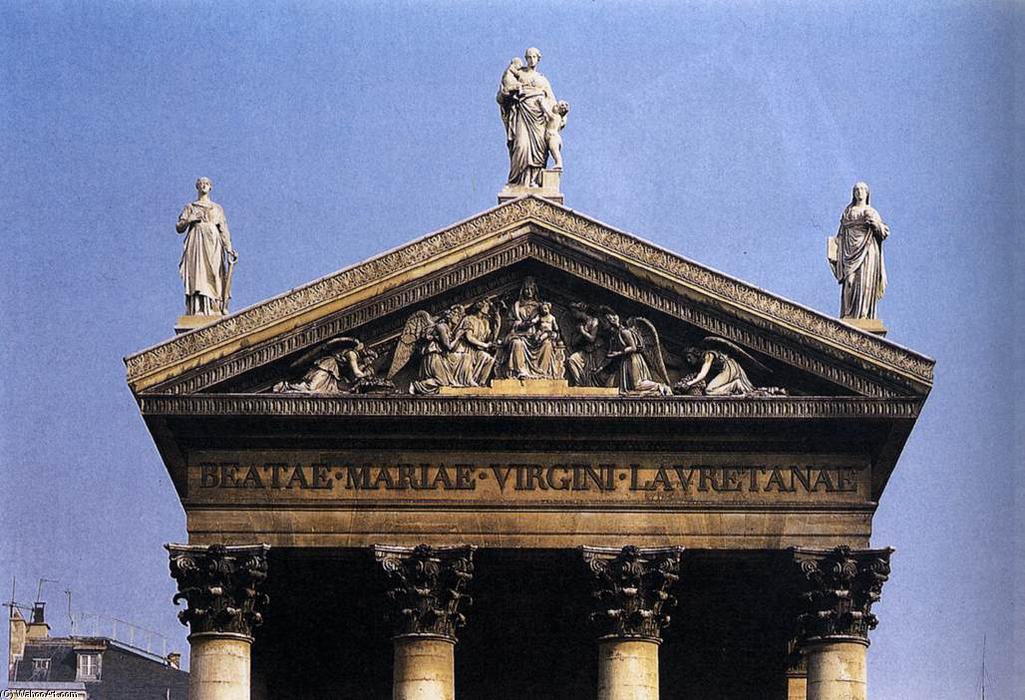
The Virgin and Child with Adoring Angels
 1830
1830 300.0 x 1200.0 cm
 Notre-Dame-de-Lorette
 Read More
Purchase a high-resolution, enhanced digital image, far superior to the online preview.
Each file is meticulously prepared by our in-house specialists using advanced tools and expert manual retouching. We ensure every image has exceptional clarity, precise color accuracy, and fine detail.
The final file is delivered via email within 72 hours, optimized for immediate use in professional, editorial, and print environments. This is the same quality trusted by top-tier design studios, publishers, and galleries.
Digital Image
Download a high-resolution file for personal display, printing, and creative projects. ( Buy Print Buy Hand Made Painting)
Included in Every Digital Image Order
Expert Digital Delivery, Guaranteed
When you choose ArtsDot.com, you're not just getting an image - you're receiving a professionally enhanced digital artwork, crafted with precision and backed by a satisfaction guarantee. Here's everything that comes with your order, automatically:

Fast Email Delivery
Your high-resolution digital image file will be emailed to you within 72 hours of ordering - ready for immediate use.

AI-Enhanced Digital File
Your artwork is professionally optimized using advanced AI tools and manual editing, ensuring maximum detail, clarity, and color accuracy.

Free Lifetime Re-Delivery
Accidentally deleted or lost your file? No worries - we'll resend it to you anytime, free of charge.

No Import Fees - Ever
Enjoy your artwork instantly with zero customs, duties, or delivery fees - digital downloads are always tax-free.

Color Accuracy Guarantee
We ensure your digital image reflects the original colors as closely as possible using professional tools and color management.

60-Day Satisfaction Guarantee
If you're not satisfied with your digital image, we'll revise it or refund 100% within 60 days - no questions asked.

100% Money-Back Guarantee
Not satisfied? Get a full refund within 60 days of receiving your digital file - no questions asked.

Bulk Order Discounts
Buy 3 images, save 10% - Buy 5, save 15% - Buy 10+, save 20%. Great for creative projects, galleries, and agencies.
The Artist and His Work
Charles François Nanteuil was a French sculptor born in Paris in 1792. He studied at the École des Beaux-Arts under the guidance of Pierre Cartellier and went on to win the prestigious Prix de Rome in 1817. His work is characterized by its neoclassical style, which was popular during the 19th century. The Virgin and Child with Adoring Angels is one of his most notable works, showcasing his ability to create beautiful and intricate sculptures.The Sculpture
The sculpture depicts the Virgin Mary and the Christ child surrounded by adoring angels. The level of detail and craftsmanship that has gone into creating this piece is truly remarkable. The Notre-Dame-de-Lorette church in Paris, where the sculpture is located, provides a stunning backdrop for this beautiful work of art. The sculpture is a prime example of neoclassical art, with its emphasis on simplicity, proportion, and harmony.- The sculpture is made of stone, which gives it a sense of solidity and permanence.
- The level of detail in the sculpture is impressive, with intricate carvings and textures that add depth and complexity to the piece.
- The Virgin and Child with Adoring Angels is a beautiful example of French art from the 19th century, showcasing the country's rich cultural heritage.
The Virgin and Child with Adoring Angels is a truly beautiful piece of art that showcases the skill and craftsmanship of Charles François Nanteuil. Its stunning detail and intricate carvings make it a must-see for anyone interested in art history or sculpture. For more information on this artist and his work, visit https://ArtsDot.com or check out the Wikipedia page on Charles François Nanteuil.
Related Artworks
Artist Biography
A Life Sculpted in Stone: The World of Charles François Nanteuil
Charles François Nanteuil, a name often veiled by the passage of time, represents a pivotal figure in 19th-century French sculpture. Born in Paris in 1792 as Charles-François Lebœuf, he adopted “Nanteuil” as his artistic pseudonym—a practice not uncommon among artists seeking to establish a distinct identity. His journey began within the hallowed halls of the École des Beaux-Arts, where he studied under Pierre Cartellier, quickly demonstrating a talent that would soon earn him recognition on a national level. Nanteuil’s early promise culminated in 1817 with his triumph at the prestigious Grand Prix de Rome for sculpture. This award, bestowed upon him for his gypsum figure of *Agis, Dying by His Own Arms*, wasn't merely an accolade; it was a passport to artistic immersion, granting him a period of study at the Villa Medici in Rome—a crucible where generations of French artists had honed their skills and absorbed the classical traditions.From Roman Inspiration to Parisian Commissions
The years spent within the Villa Medici proved transformative for Nanteuil. It was there he created his marble masterpiece, *Dying Eurydice* (1822), a work that immediately established him as a sculptor of considerable sensitivity and technical prowess upon its debut at the Paris Salon in 1824. The sculpture, now residing within the Musée du Louvre, is not simply a depiction of grief; it’s an exploration of vulnerability and mortal beauty—a theme deeply resonant with the Romantic sensibilities emerging during that era. Dying Eurydice would later inspire Auguste Clésinger's *Woman Bitten by a Snake* (1847), demonstrating Nanteuil’s lasting influence on subsequent generations. Returning to Paris, Nanteuil found himself in demand, securing numerous commissions from the French government—a testament to his burgeoning reputation and skill. These weren’t merely decorative projects; they were opportunities to contribute to the visual narrative of a nation undergoing significant political and social change.Monuments to History and Faith
Nanteuil's career unfolded against a backdrop of shifting power dynamics in France, from the Restoration to the Second Empire. His work reflects this era’s fascination with history, civic virtue, and religious devotion. One of his most significant achievements was the sculptural group *Commerce and Industry*, created for the French Senate within the Palais du Luxembourg. Inspired by the ancient Roman sculpture of Castor and Pollux, Nanteuil's interpretation imbued these figures with a distinctly French character, symbolizing the nation’s economic strength and industrial progress. Beyond civic monuments, Nanteuil also undertook significant religious commissions. The pediment sculptures for the Church of Notre Dame de Lorette (*Homage to the Virgin*, 1830) and the Church of Saint-Vincent-de-Paul (*The Glorification of Saint Vincent de Paul*, 1846) showcase his ability to translate spiritual themes into compelling visual forms. These works reveal a clear influence from early Renaissance Italian sculpture, as well as ancient Greek models like those found in Aegina and the Parthenon—evidence of Nanteuil’s deep engagement with art historical precedents. He also created seated statue of Montesquieu (1840) now at the Palace of Versailles and the bronze commemorative statue of General Desaix (1844), located at the Place de Jaude in Clermont-Ferrand.A Lasting Legacy Etched in Stone
Nanteuil’s contributions extended beyond standalone sculptures; his work became integrated into the very fabric of Parisian architecture during the Second Empire. He contributed to the decorative schemes of iconic landmarks such as the Gare du Nord, the Palais Garnier (the Paris Opera), and the rebuilt Palais du Louvre—leaving an indelible mark on the city's aesthetic landscape. His ability to blend classical forms with contemporary sensibilities ensured his relevance in a rapidly changing world. Charles François Nanteuil passed away in Paris in 1865, leaving behind a body of work that continues to inspire and captivate. While perhaps not as widely celebrated as some of his contemporaries, his sculptures stand as powerful reminders of an era defined by artistic ambition, national pride, and a profound reverence for the past. His legacy is one sculpted in stone—a testament to his skill, dedication, and enduring contribution to French art.
Charles François Nanteuil
1792 - 1865 , France
Quick Facts
- Artistic Movement Or Style: Neoclassical sculpture
- Artists Or Movements Influenced By This Artist: ['Auguste Clésinger']
- Date Of Birth: August 9, 1792
- Date Of Death: November 1, 1865
- Full Name: Charles François Nanteuil
- Nationality: French
- Notable Artworks:
- Dying Eurydice
- Commerce and Industry
- Montesquieu statue
- Place Of Birth: Paris, France

