 Preview
 Send
Send Share
Share
 Details

 Download
 Similars
 X-Ray
X-Ray Diaporama
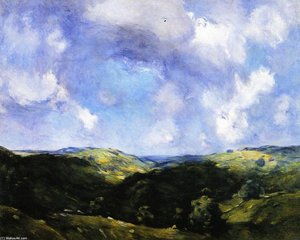
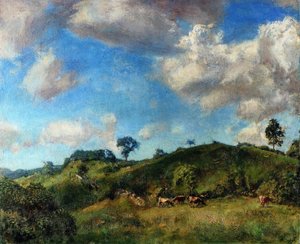
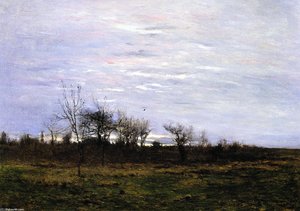
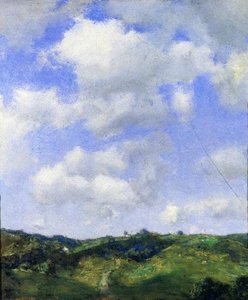
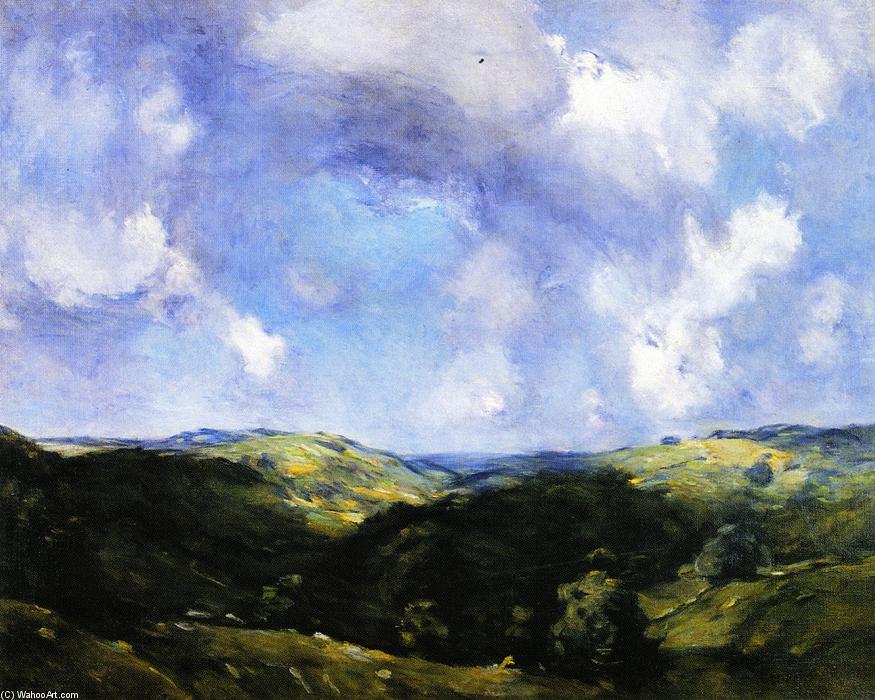
Clouds and Hills (also known as August)


 Read More
Hand Made Oil Reproduction
Hand-painted oil on canvas in your size and frame, made to order by our artists. ( Buy Print Buy Image)




P118B $10

P118H $10

P118W $10

P438Z $10

P508JH $12

P508YH $12

P805H $10

P805Z $10

P919BZ $10

P919G $10

P919XJ $10

P959ZH $10

P968JZ $12

W106C $8

W218G $10

W218JH $8

W218Y $10

W307PJ $10

W316G $10

W316PJ $8

W316Y $10

W398PJ $8

W4111J $10

W500HY $15

W500JH $15

W692G $12

W849H $8

W940BG $15

W953PJ $8




Pick from our preset sizes that match the artwork's original proportions.

You may enter your own dimensions to fit a specific frame or space. If your selected size does not match the original image's proportions, we will either crop the artwork or extend the painting with additional hand-painted elements. A digital mockup will be sent for your approval before production begins.
Please note that the on-screen preview does not reflect the actual cropping or extension. Only the mockup will accurately show the final composition.
While custom sizes are available, we recommend selecting a dimension from the predefined list to preserve the original proportions.
After order, ArtsDot.com team will email client for instructions and provide a mockup preview
Worldwide Delivery () in 3/4 weeks instead of standard 5 weeks. (16 August). No compromise on quality.

Free Worldwide Express Shipping

High-Quality Linen Canvas

Full Shipping Insurance

Customs Tax Refund Guarantee

True Color Matching Guarantee

60-Day Return Policy (Defects Only)

100% Money-Back Guarantee

Bulk Discount Offer
 Glass option is only available in size under 110 CM

Clouds and Hills (also known as August)
Reproduction Medium
Reproduction Size
-


Total Price
$ 263
Artwork Description
A Serene Vision of the American Landscape
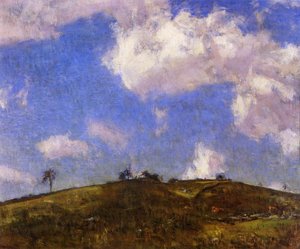
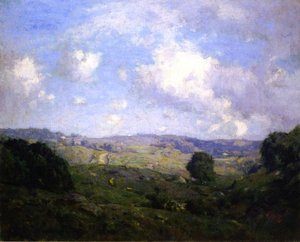
Charles Harold Davis’s “Clouds and Hills,” painted in 1908, isn't merely a depiction of a rural vista; it’s an immersion into a mood—a quiet contemplation of nature’s enduring beauty. The painting captures a valley bathed in the soft light of late summer, a scene rendered with a meticulous attention to detail that speaks volumes about Davis’s dedication to his craft and his deep connection to the American landscape. The composition is deceptively simple: rolling hills, punctuated by scattered trees, stretch towards a sky dominated by billowing clouds – not violent storm formations, but rather gentle, luminous masses that seem to drift with an almost ethereal grace.
Davis’s style firmly places him within the Tonalist movement, a trend prominent in late 19th and early 20th-century American art. Tonalists sought to capture the essence of a scene through subtle gradations of tone and color, prioritizing atmosphere and mood over sharp outlines or dramatic contrasts. This is evident here in the muted palette—a symphony of blues, greens, and browns—that evokes a sense of tranquility and timelessness. The artist skillfully employs atmospheric perspective, with distant hills fading into a hazy blue, creating an illusion of depth that draws the viewer into the scene.
The Influence of Barbizon and Impressionism
Davis’s artistic journey reveals a fascinating blend of influences. His time in Paris, particularly his studies under Jules Lefebvre and Gustave Boulanger at the Académie Julian, provided him with a rigorous grounding in traditional academic techniques. However, his sojourn in Barbizon, a region renowned for its landscape painting tradition, profoundly shaped his approach. The Barbizon school emphasized capturing the fleeting effects of light and atmosphere on nature, mirroring Davis’s own desire to convey a sense of immediacy and feeling. Yet, unlike many Barbizon painters who adhered strictly to traditional methods, Davis embraced elements of Impressionism, particularly in his treatment of color and light – a shift that became increasingly pronounced throughout his career.
Notice the subtle shifts in hue as the eye moves across the canvas. The clouds aren’t uniformly white; they possess delicate shades of grey, pink, and lavender, suggesting the interplay of sunlight and shadow. The trees are rendered with a loose, expressive brushstroke, capturing their form without sacrificing detail. This technique, combined with Davis's masterful use of atmospheric perspective, creates a remarkably realistic yet emotionally resonant image.
Symbolism and the American Spirit
“Clouds and Hills” resonates deeply with the American spirit—a reverence for nature, a sense of vastness, and an appreciation for the simple beauty of the everyday. The painting can be interpreted as a meditation on the relationship between humanity and the natural world. The distant figures, barely discernible in the landscape, represent the human presence within this grand panorama, suggesting our smallness yet also our connection to something larger than ourselves. The title itself—"Clouds and Hills"—is deliberately understated, inviting the viewer to contemplate the scene without imposing a specific interpretation.
Interestingly, Davis’s work often reflects a sense of nostalgia for a bygone era – a longing for a simpler time when life was closely tied to the rhythms of nature. The painting evokes a feeling of peace and serenity, offering a momentary escape from the complexities of modern life. It's a testament to the enduring power of landscape art to transport us to another place and time.
A Legacy Preserved
Today, “Clouds and Hills” is held within the Metropolitan Museum of Art in New York City, a testament to Davis’s artistic merit. Reproductions of this evocative painting continue to inspire collectors and interior designers alike, offering a touch of timeless beauty to any space. Its quiet elegance and masterful technique make it a truly exceptional example of American landscape art—a window into the soul of a bygone era.
Related Artworks

Artist Biography
early life and training
charles harold davis, an american landscape painter, was born on january 7, 1856, in amesbury, massachusetts. as a pupil of the boston museum of fine arts, he was sent to paris in 1880 to hone his craft. under the tutelage of jules joseph lefebvre and gustave boulanger at the académie julian, davis developed a deep understanding of the european art scene.artistic style and influences
davis's work is characterized by its serene and idyllic depictions of landscapes, often capturing the beauty of nature with utmost precision. his time in barbizon, where he painted extensively, had a profound influence on his style, which eventually shifted towards impressionism. this transformation is evident in his cloudscapes, for which he became renowned.notable achievements and affiliations
- became a full member of the national academy of design in 1906.
- received a silver medal at the paris exhibition of 1889.
- his works are represented in prominent museums, including the metropolitan museum of art (new york), corcoran gallery of art (washington), and boston museum of fine arts.
legacy
davis's legacy extends beyond his artistic contributions. he played a pivotal role in establishing the mystic art association in 1913, making him a leading figure in the art colony that developed in mystic, connecticut. view charles harold davis's artworks on ArtsDot: https://ArtsDot.com/@/charles-harold-davis read more about charles harold davis on wikipedia: https://en.wikipedia.org/wiki/charles_harold_davis
Charles Harold Davis
1856 - 1933 , United States of America
Quick Facts
- Artistic Movement Or Style: Impressionism & Tonalist
- Artists Or Movements Influenced By This Artist: ['Mystic Art Colony']
- Artists Who Influenced This Artist:
- Gustave Boulanger
- Jules Joseph Lefebvre
- Date Of Birth: January 7, 1856
- Date Of Death: 1933
- Full Name: Charles Harold Davis
- Nationality: American
- Notable Artworks:
- A Path along the River
- Rural Landscape
- A Clearing
- Place Of Birth: Amesbury, United States
Related Articles

Beyond the Horizon: 10 Landscape Masterpieces for Your Home Decor
Journey through 10 breathtaking landscape paintings by Monet, Van Gogh & more! Explore iconic artworks, artistic techniques & find inspiration for your home decor. Museum-quality reproductions at ArtsDot.com. Discover all masterpieces on ArtsDot.com

Evocations of Place: A Historical Journey Through Landscape Art
Explore the rich history of landscape art with ArtsDot. Discover renowned artists, movements like Impressionism & Romanticism, and expert guidance for collecting timeless pieces. Find your perfect serene escape today!

John Constable's Masterpieces: Explore 25 Iconic Landscapes for Your Home
Journey through John Constable's 25 most celebrated landscapes. Explore Romanticism, Dedham Vale & his masterful use of light in iconic paintings like 'Hay Wain'. Find museum-quality art reproductions and elevate your home decor on ArtsDot.com.

Cézanne's Masterpieces: 25 Iconic Artworks to Transform Your Space
Journey through 25 iconic artworks by Paul Cézanne – a master of Impressionism and Post-Impressionism. Explore his landscapes, still lifes, and the stories behind these timeless masterpieces. Discover museum-quality reproductions & curated decor at ArtsDot.com.

Evocations of Place: A Historical Journey Through Landscape Art
Explore the rich history of landscape art with ArtsDot. Discover renowned artists, movements like Impressionism & tonalism, and expert guidance for collecting timeless pieces. Find your perfect serene escape today!