 Preview
 Send
Send Share
Share
 Details

 Download
 Similars
 X-Ray
X-Ray Diaporama
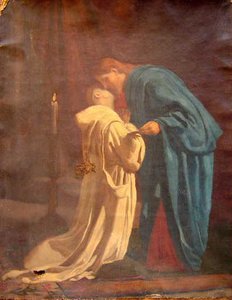
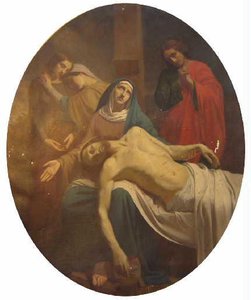
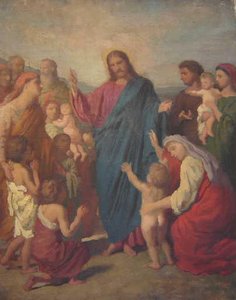
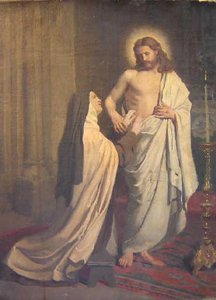
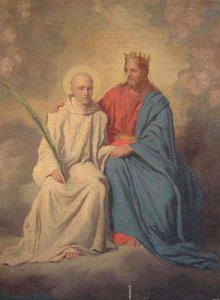
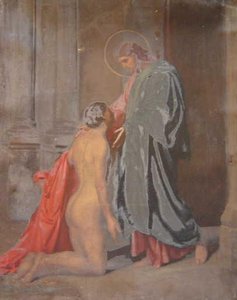
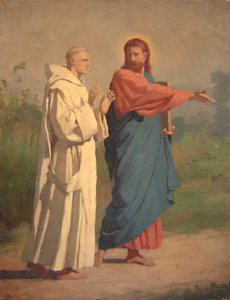
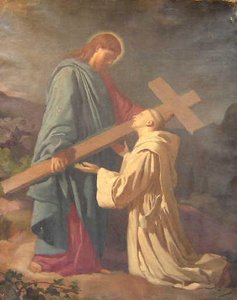
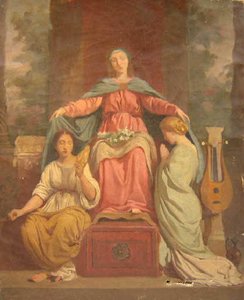
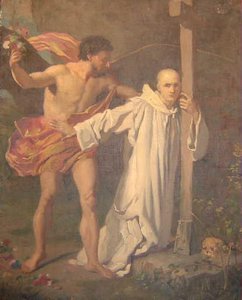
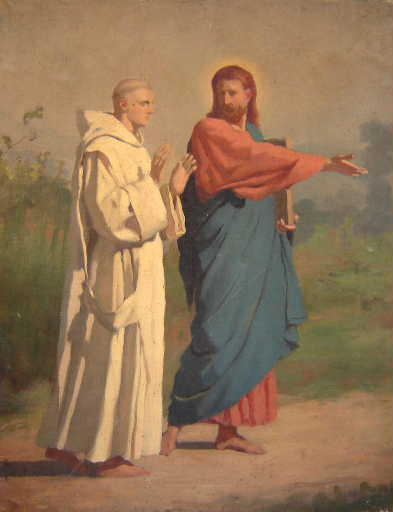
Jésus, la Voie, la Vérité
 Read More
Hand Made Oil Reproduction
Hand-painted oil on canvas in your size and frame, made to order by our artists. ( Buy Print Buy Image)




































Pick from our preset sizes that match the artwork's original proportions.

You may enter your own dimensions to fit a specific frame or space. If your selected size does not match the original image's proportions, we will either crop the artwork or extend the painting with additional hand-painted elements. A digital mockup will be sent for your approval before production begins.
Please note that the on-screen preview does not reflect the actual cropping or extension. Only the mockup will accurately show the final composition.
While custom sizes are available, we recommend selecting a dimension from the predefined list to preserve the original proportions.
After order, ArtsDot.com team will email client for instructions and provide a mockup preview
Worldwide Delivery () in 3/4 weeks instead of standard 5 weeks. (25 August). No compromise on quality.

Free Worldwide Express Shipping

High-Quality Linen Canvas

Full Shipping Insurance

Customs Tax Refund Guarantee

True Color Matching Guarantee

60-Day Return Policy (Defects Only)

100% Money-Back Guarantee

Bulk Discount Offer
 Glass option is only available in size under 110 CM

Jésus, la Voie, la Vérité
Reproduction Medium
Reproduction Size
-


Total Price
$ 288
Related Artworks








Artist Biography
The Visionary of Normandy: The Life and Art of Charles-Henri Michel
In the tapestry of nineteenth-century French art, few threads are as delicately woven with light and atmosphere as those left by Charles-Henri Michel. Born in 1817 in the Somme region, specifically in Fins, Michel’s life was a journey from the humble roots of a farming family to the prestigious salons of Paris. His early years were marked by hardship; losing his father at the young age of nine, he was thrust into a world of responsibility that might have stifled a lesser spirit. Before finding his true calling in the brush and pastel, he even worked as a clerk for a lawyer in Péronne. Yet, it was this very groundedness—a connection to the earth and the quiet rhythms of rural life—that would later infuse his landscapes with an unparalleled sense of authenticity and soul.
As his talent blossomed, Michel’s artistic identity began to coalesce under the influence of the great masters of his era. He drew profound inspiration from the dramatic, emotional fervor of Eugène Delacroix, whose Romanticism taught him how to use color as a vessel for feeling. Simultaneously, the burgeoning Realism championed by Gustave Courbet encouraged him to look closely at the world around him, finding majesty in the unadorned and the everyday. This duality—the ability to marry the precise observation of reality with a poetic, almost spiritual interpretation of light—became the hallmark of his mature style. His work transitioned from mere representation to an evocative exploration of the ephemeral, capturing the way mist clings to a meadow or how the sun dissolves into the horizon at dusk.
A Mastery of Light and Landscape
Michel’s true legacy resides in his breathtaking depictions of the French landscape, particularly the rugged and ethereal coastlines of Normandy. He possessed an extraordinary sensitivity to the coastal light of Étretat and Honfleur, places where the sea meets the sky in a constant dance of movement and shadow. His technique was nothing short of masterful; he utilized thin glazes of color layered upon toned canvases to create a luminous depth that seemed to glow from within. Through swirling brushstrokes and a vibrant palette, he captured the very essence of the air itself, making the viewer feel the salt spray and the cool breeze of the Atlantic.
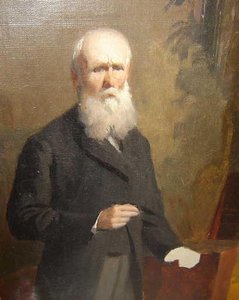
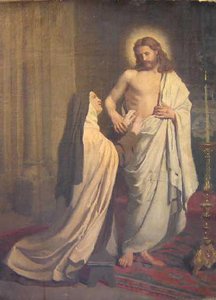
Beyond his landscapes, Michel was a versatile creator whose oeuvre included poignant portraits and deeply moving religious scenes. His ability to imbue subjects with dignity and spiritual weight is evident in works such as La Vision de Sainte Thérèse d'Avila and La Sainte Communion. In these pieces, he employed dramatic lighting and an almost tactile impasto texture to evoke themes of devotion, vulnerability, and the divine. Whether painting a quiet portrait of an elderly man or a sweeping vista of the Norman countryside, his hand was always guided by a desire to communicate the profound emotional resonance of the subject matter.
Legacy and Historical Significance
The historical significance of Charles-Henri Michel lies in his role as a bridge between the Romanticism of the early nineteenth century and the revolutionary Impressionism that would follow. While he maintained a respect for classical foundations, his dedication to capturing the fleeting qualities of light and atmosphere prefigured the breakthroughs of the Impressionist movement. His life, which saw him move from the rural landscapes of France to even spending time in Milwaukee, Wisconsin, reflects a broader era of artistic exchange and the universal appeal of his vision.
Today, Michel’s works serve as vital windows into a vanished era of French pastoral beauty. His contributions are preserved in esteemed collections, such as the Péronne museum, where his connection to his roots remains palpable. To look upon a Michel painting is to experience more than just a view of nature; it is to witness a profound dialogue between the artist’s eye and the living, breathing world. His ability to translate the sensory experience of the landscape into a permanent, emotive medium ensures that his name remains etched in the annals of art history as a true visionary of the Norman spirit.
charles-henri michel
1817 - 1905
Quick Facts
- Artistic Movement Or Style: Romanticism
- Artists Or Movements Influenced By This Artist: ['Gustave Moreau']
- Artists Who Influenced This Artist:
- Eugène Delacroix
- Jean-Auguste Dominique Ingres
- Date Of Birth: 1817
- Date Of Death: 1905
- Full Name: Charles-Henri Michel
- Nationality: French
- Notable Artworks:
- The Shepherdess
- The Moulin Rouge
- Place Of Birth: Paris, France